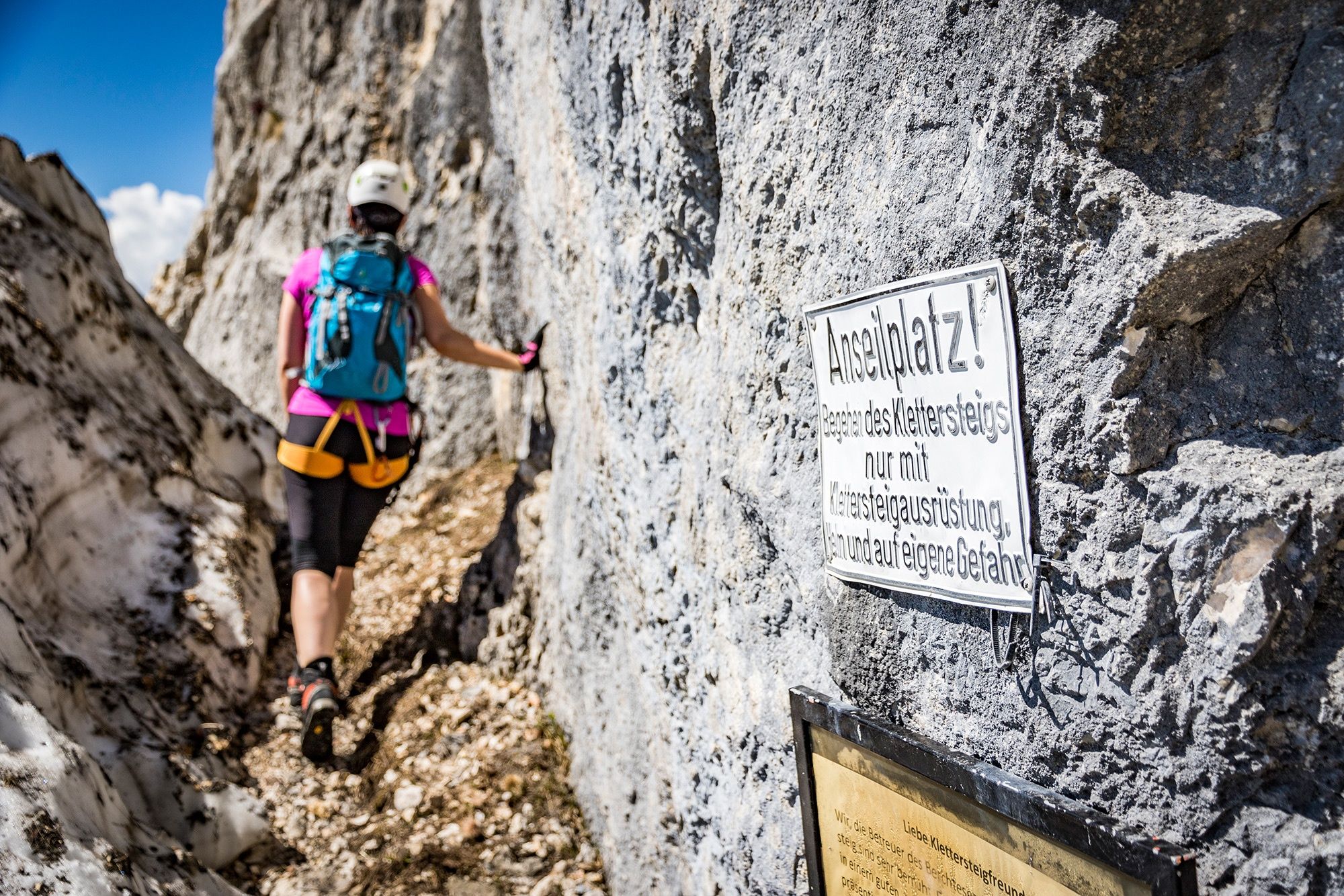
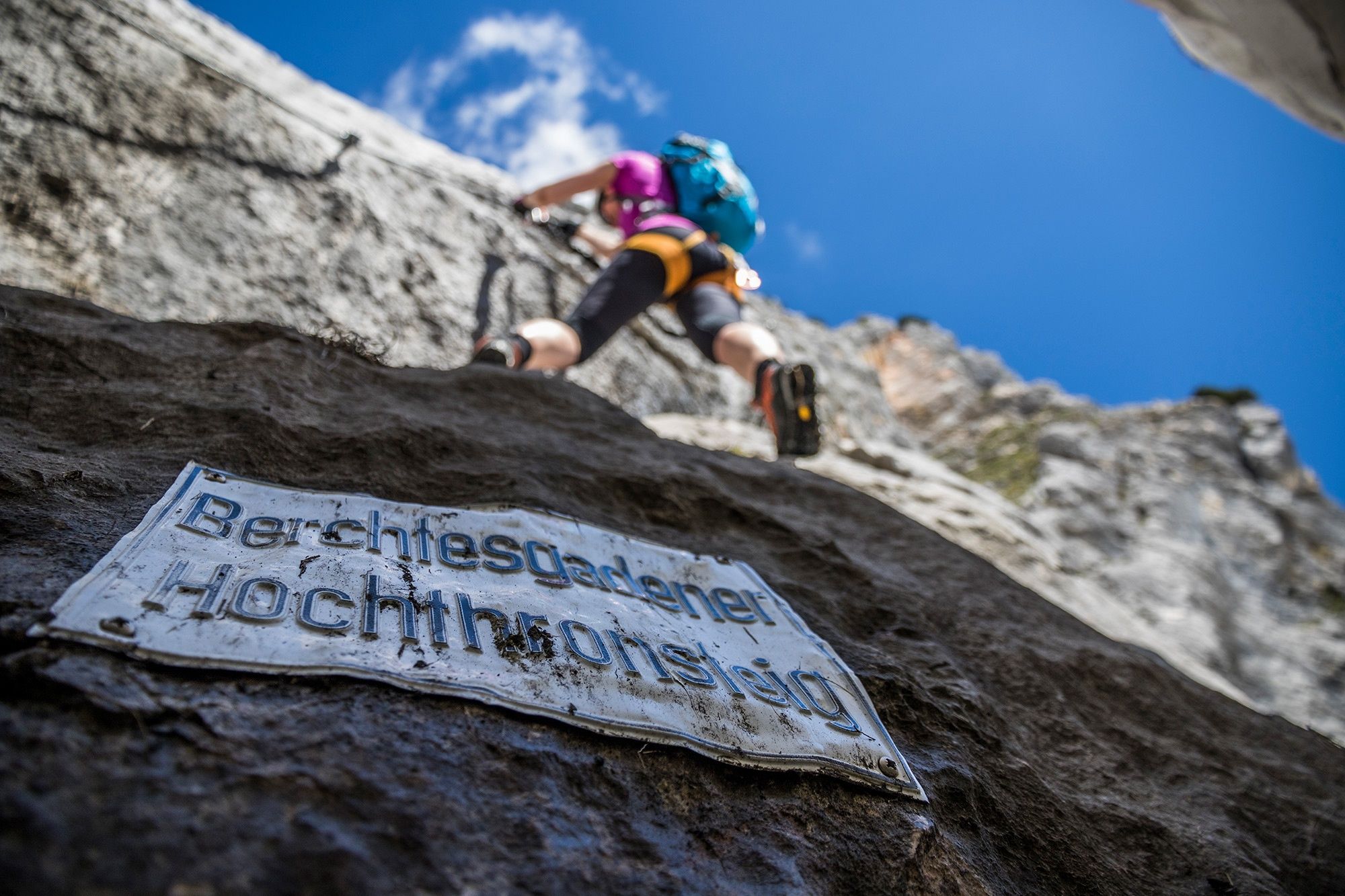
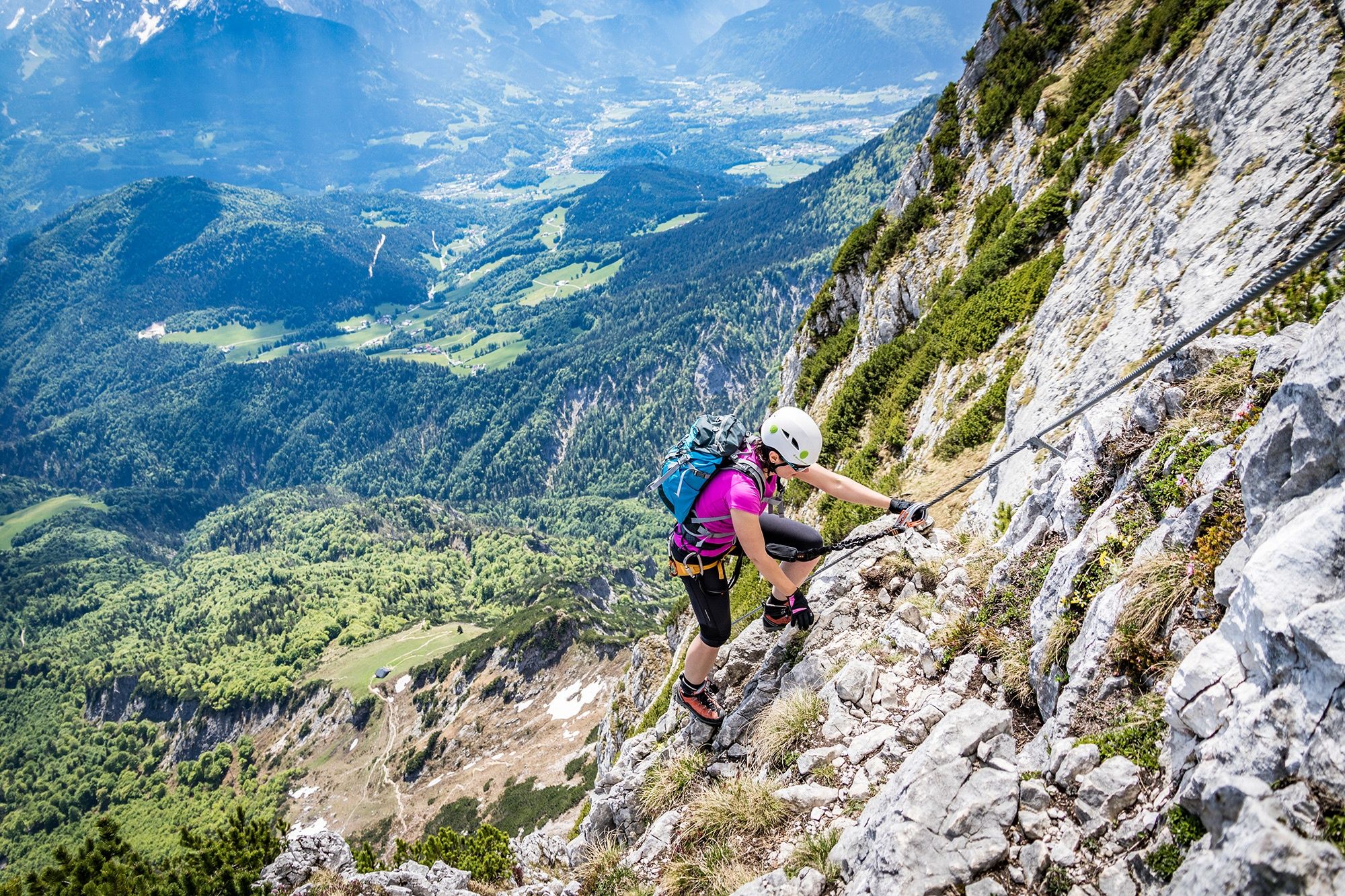
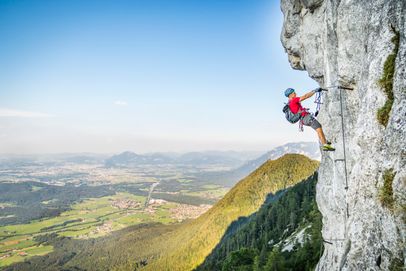
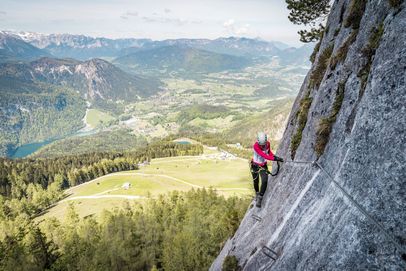
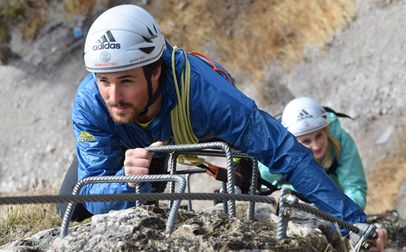
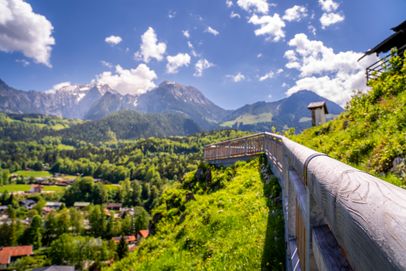
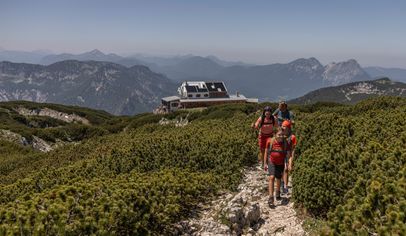
A little over two hours of ascent brings you to the gear-up point in a rocky recess at the foot of the wall. One look upward builds the anticipation. Shortly after the entry point, you’ll see a warning sign advising anyone who feels unsure to turn back—there is no emergency exit. From here, it’s pure climbing enjoyment: elegant, challenging, varied, and packed with spectacular views, the route demands your full commitment. From the end of the via ferrata, continue via the summit to Stöhrhaus for a well-earned break. For the return, take the route via Scheibenkaser back to the Hinterrossboden parking lot.
From the gear-up point at the foot of the wall, continue uphill to the marked start of the via ferrata. Follow the steel cable diagonally up and to the right past a rock flake, then climb a zigzag section (C) to a ramp (B). If you’re already having difficulty here, turn back, as the route becomes more challenging higher up and there is no emergency exit.
Follow the ramp diagonally upward to the right, then climb relatively easy, well-stepped terrain (B) to a vertical rock face. Climb straight up rough, water-eroded rock, make a short, exposed traverse to the left (C/D), then continue over slightly less steep terrain to the start of “Gamsband.”
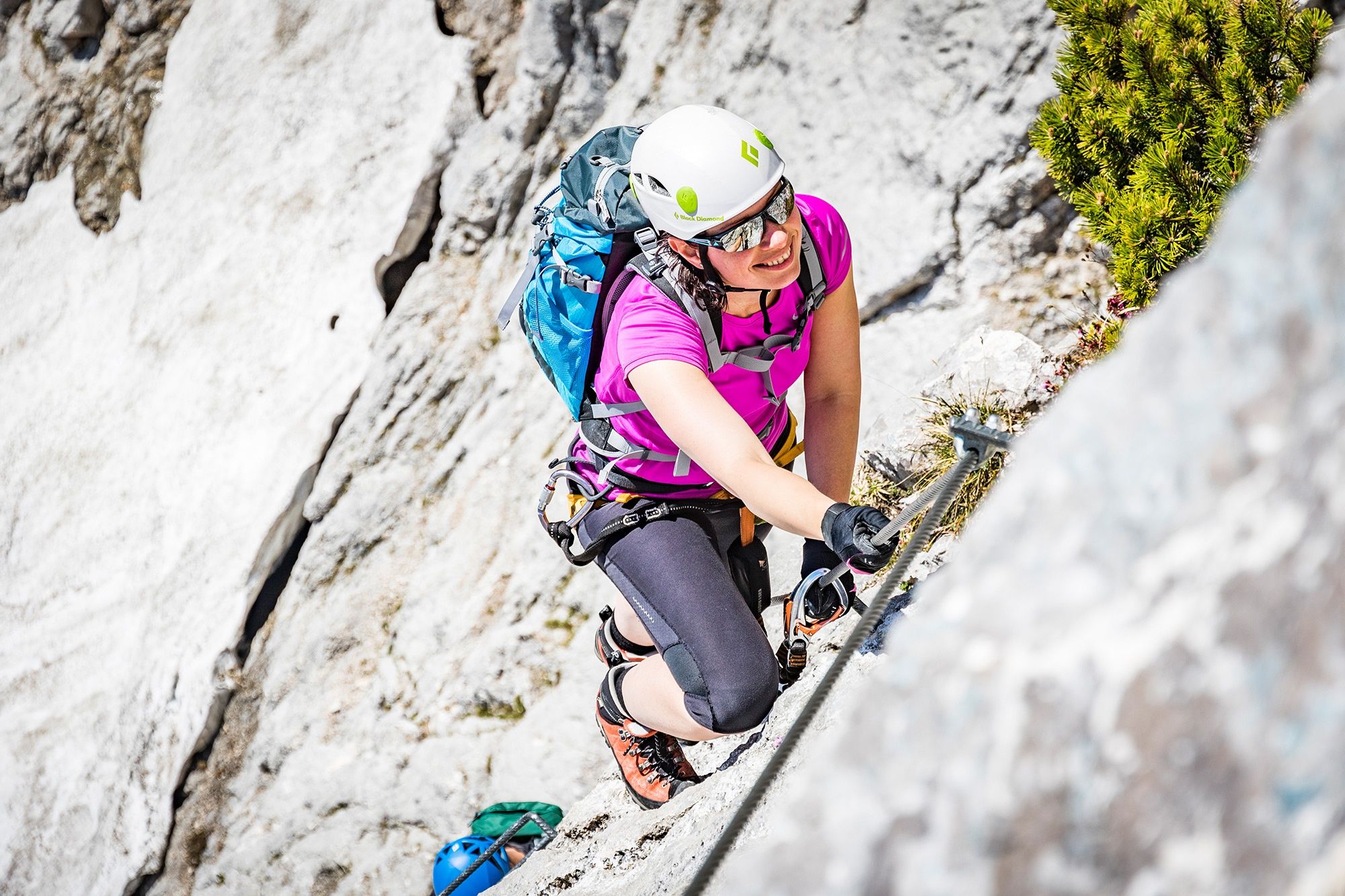
“Gamsband” (B) traverses the huge slab ramp as it angles upward and leads to the start of “Pfeiler.” From here, the route follows a clearly visible diagonal line from right to left across the pillar face, using several metal footholds (C). After about 30 meters, the terrain eases slightly. Keep a little to the right and use more metal footholds to reach the top of the pillar (C).
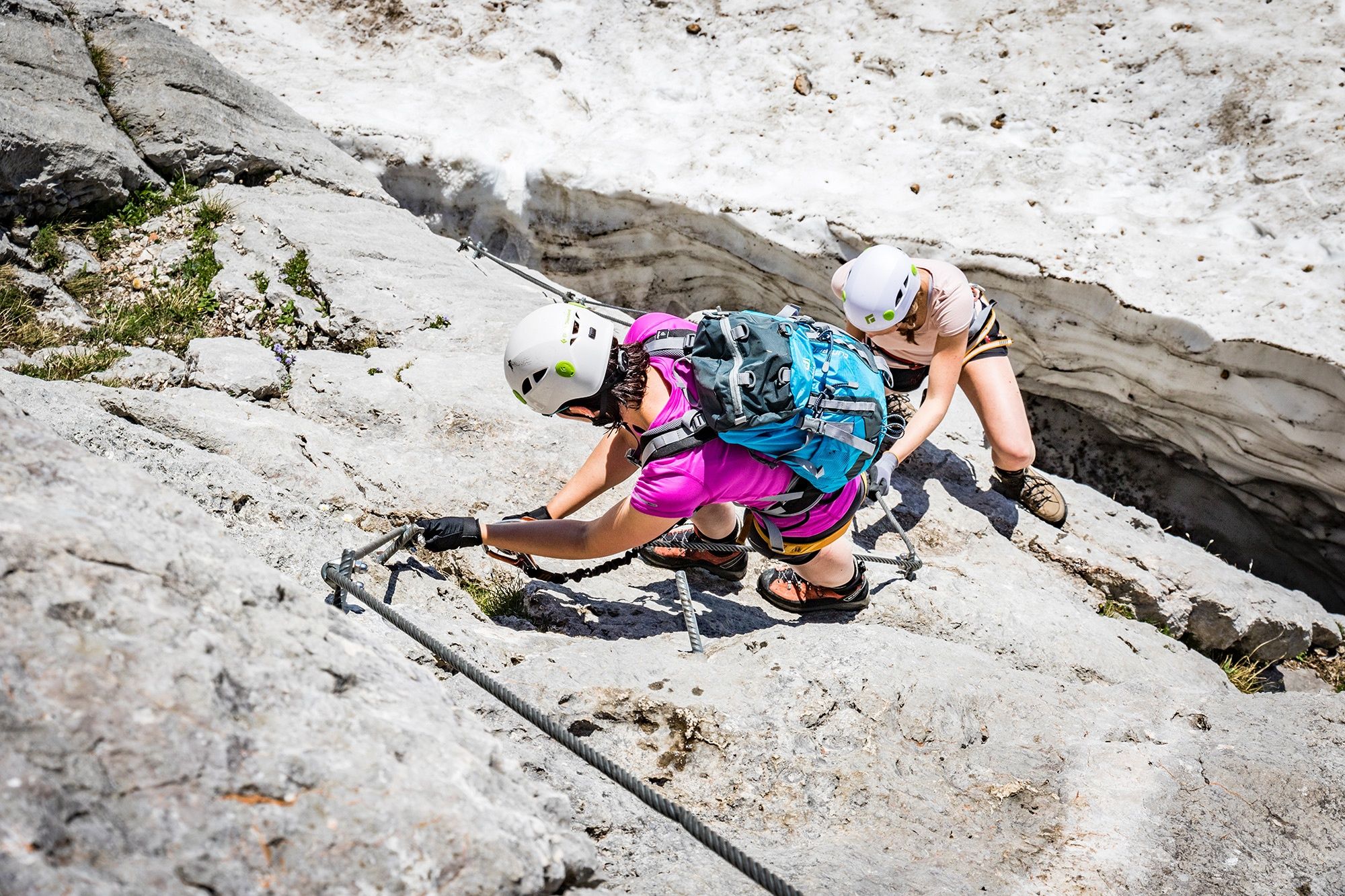
The next 50 meters, known as “Genusswandl,” offer enjoyable climbing over slabs and water grooves (B/C). You now enter the section known as “Schlucht.” The 10-meter crossing from one side of the gully to the other is normally straightforward, so there is no steel cable here. However, especially in early summer, frozen old snow can make this crossing difficult. A short rock face (B/C) then takes you to “Schluchtrampe.”
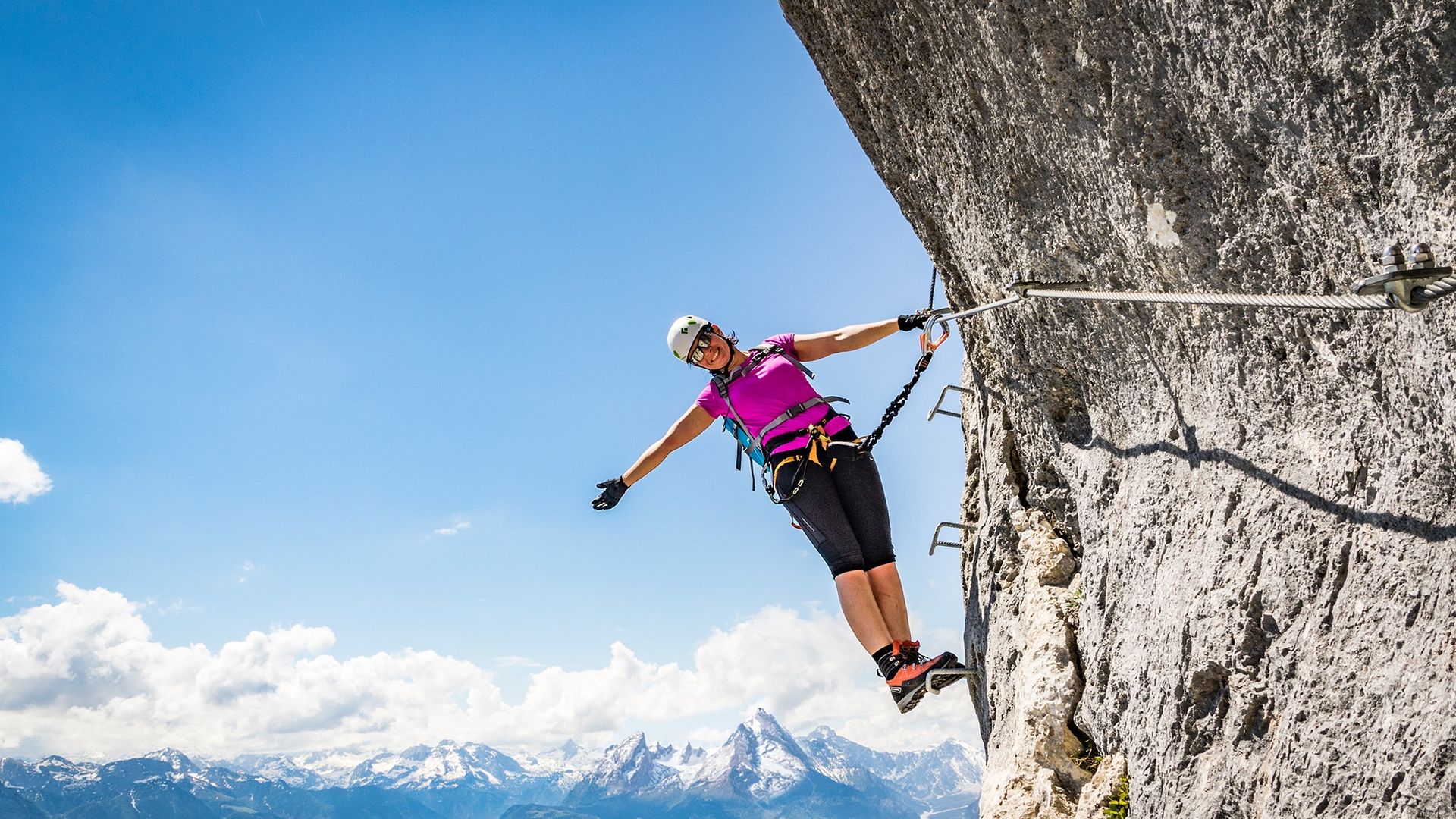
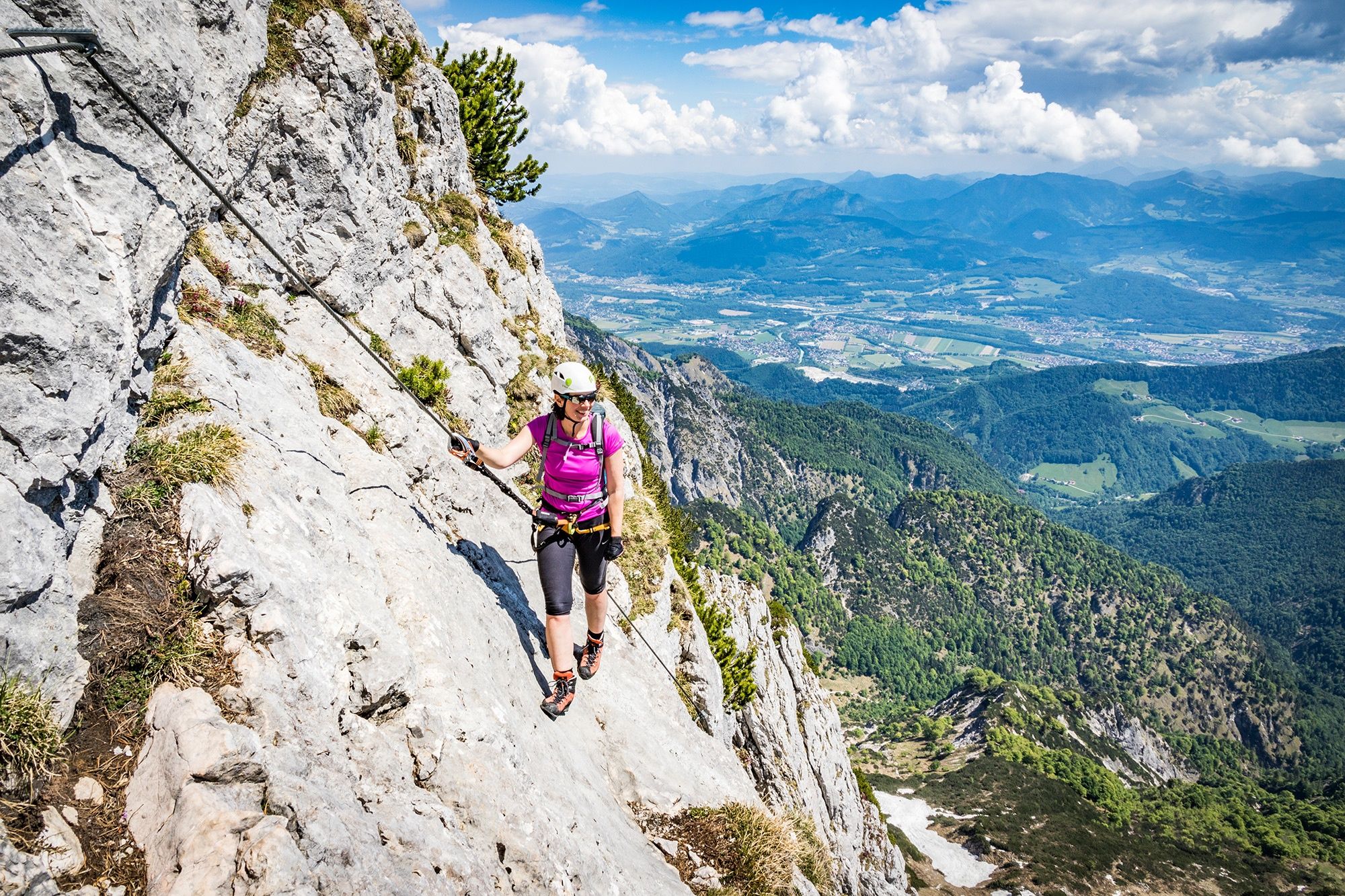
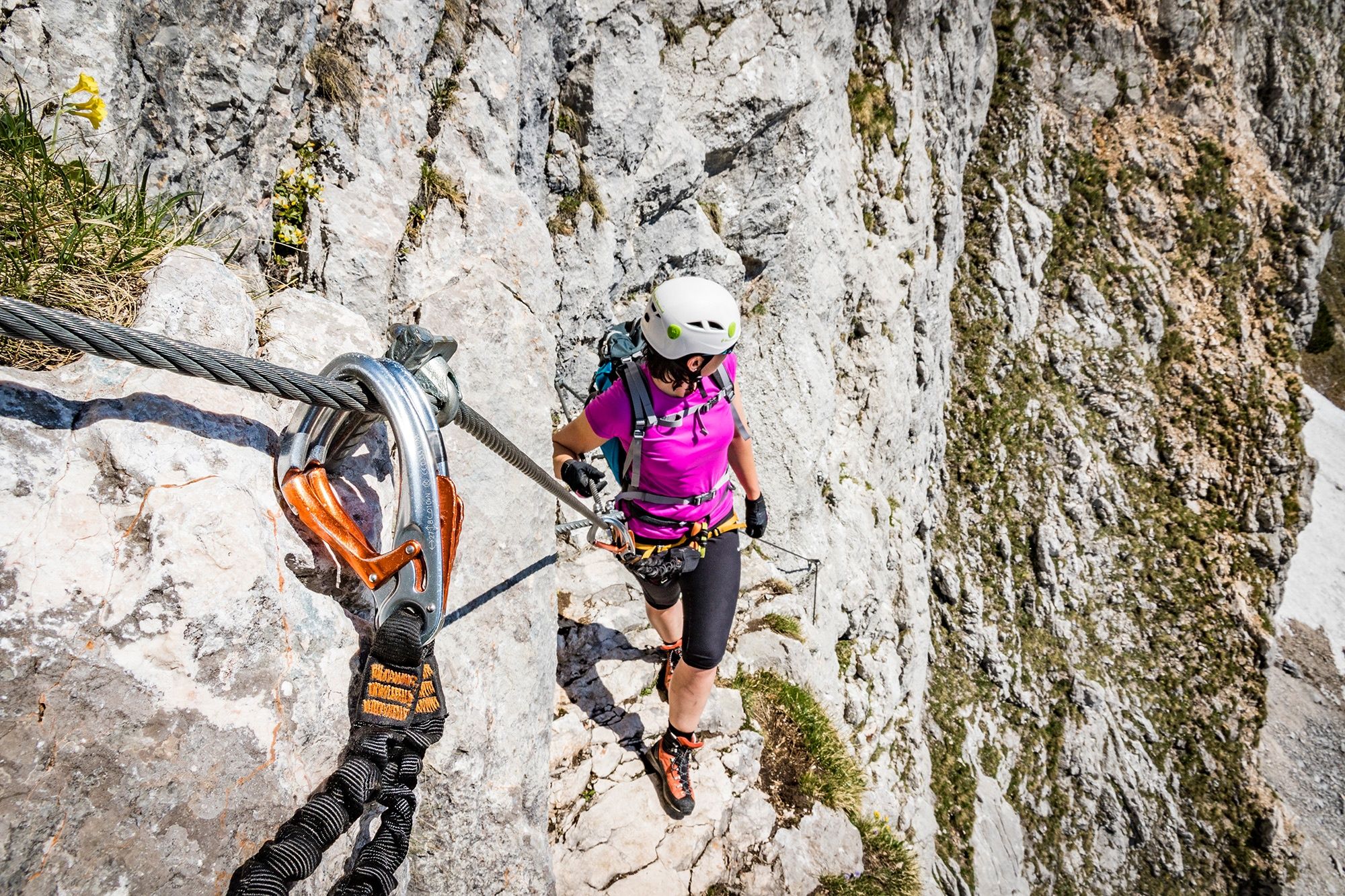
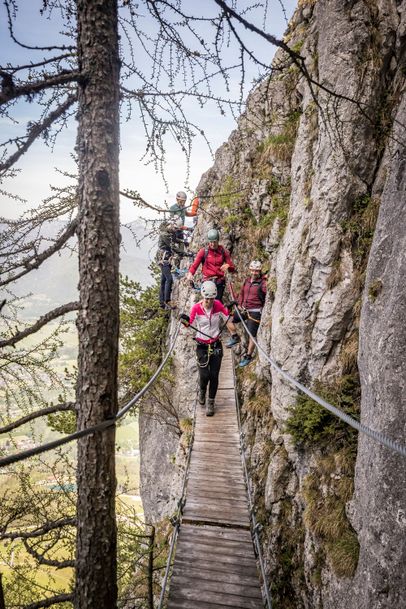
At the end of the ramp begins what is probably the most beautiful and photogenic section of the route, “Fotoquergang.” First, climb over a short overhang onto a ledge that becomes increasingly narrow before traversing left across the smooth rock face in a very exposed position (C).
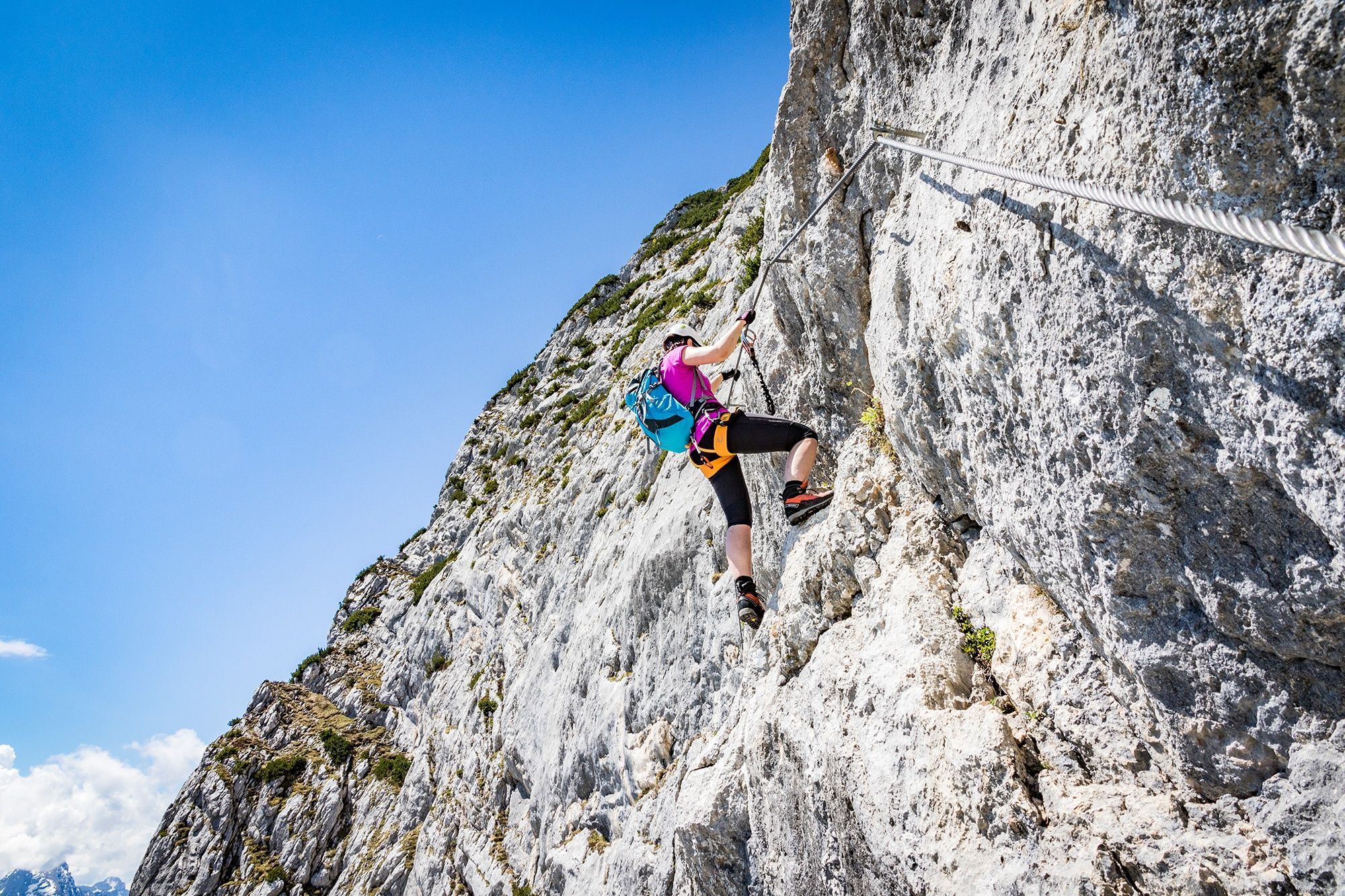
Continue over stepped terrain (B) to the start of “Hanglschuppe.” Using only natural footholds, traverse about 25 meters to the left along a broken-off rock flake, moving hand-over-hand along the steel cable (D). Continue diagonally upward to the left across several rock faces and ledges until you reach “Raue Welt” (C). As the name suggests, this section leads through extremely water-eroded rock (D).
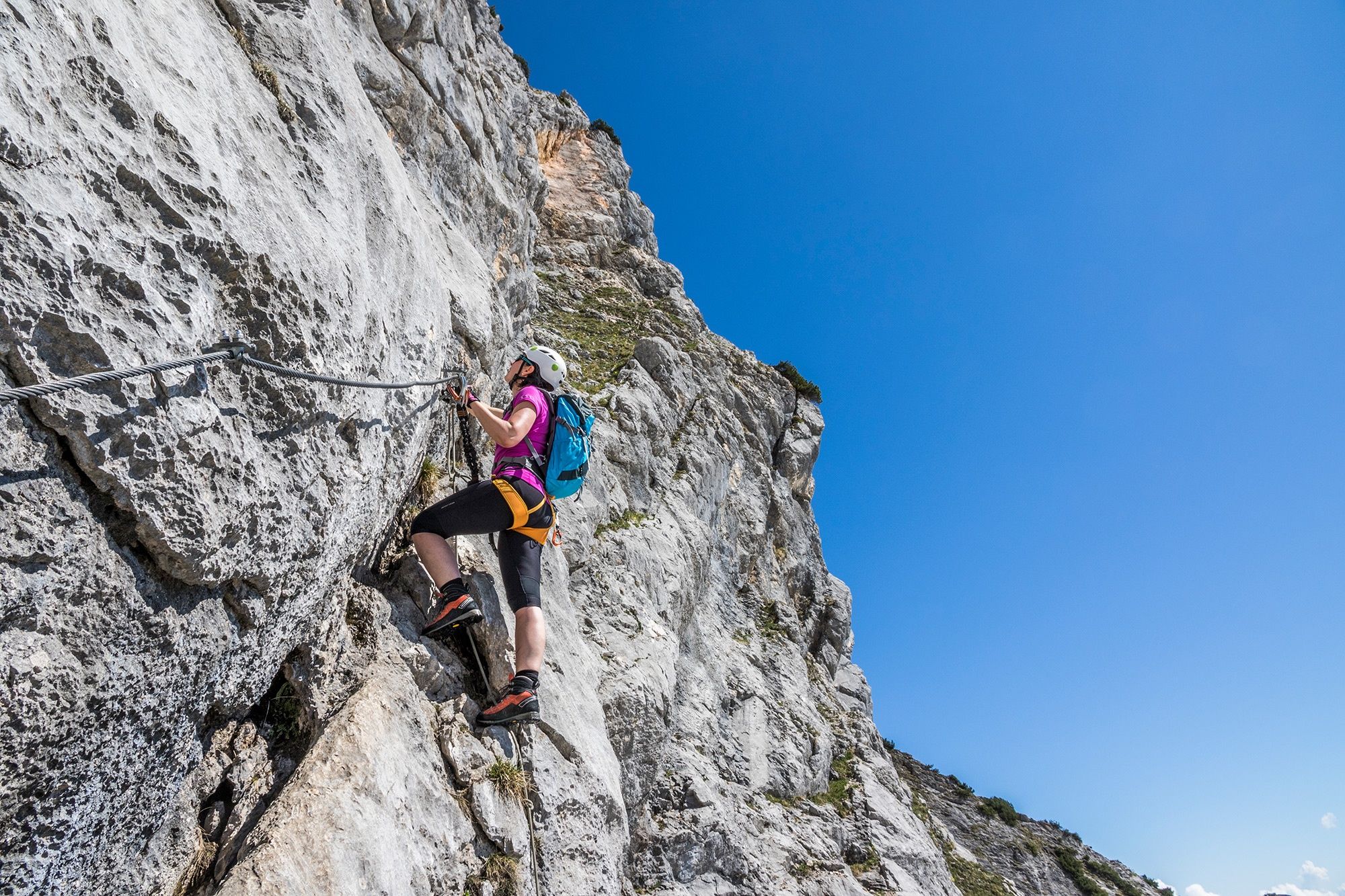
Next, you’ll reach “Latscheneck” (C). Although four metal footholds have been installed here, this vertical section still requires plenty of strength.
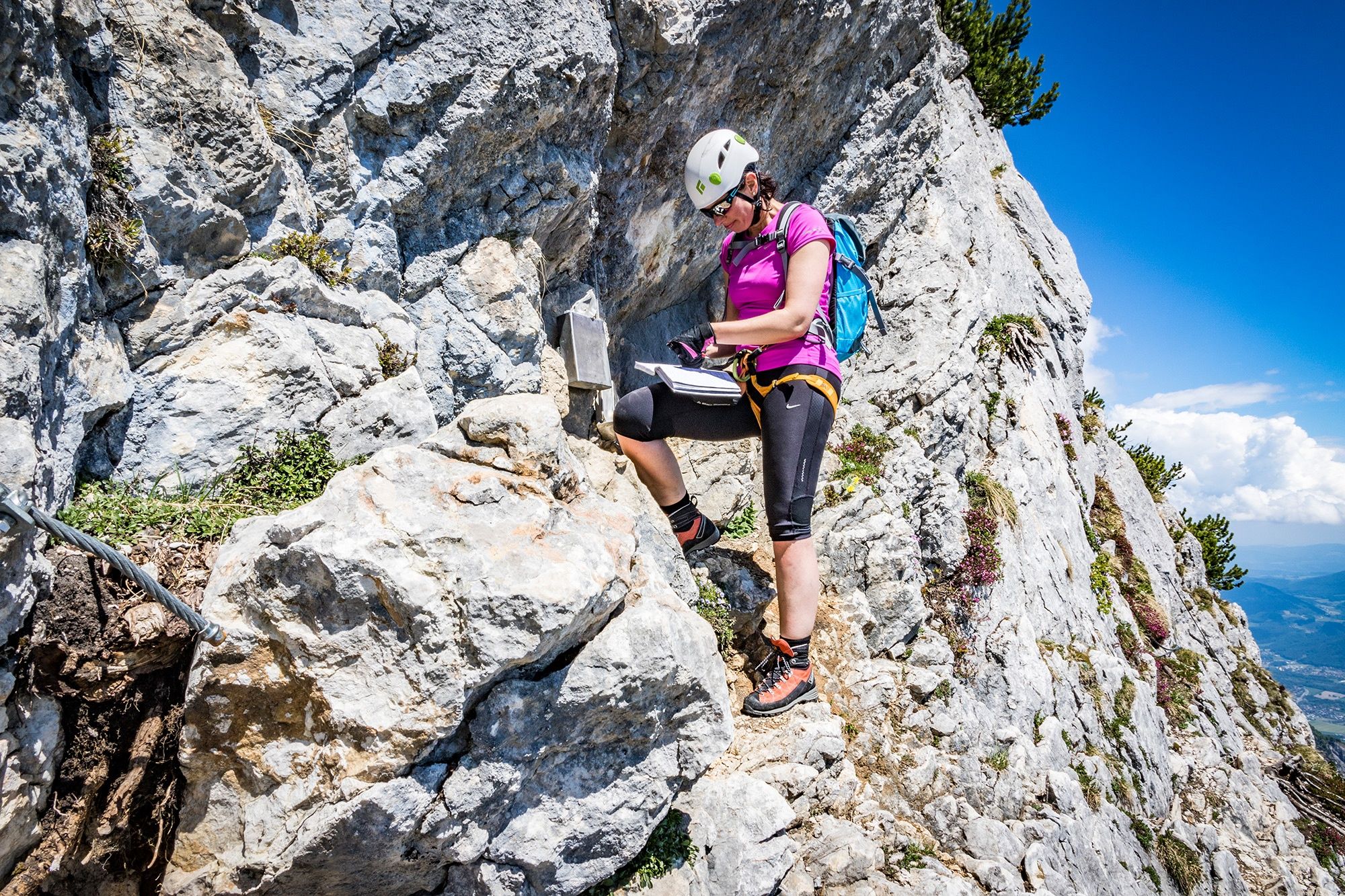
Continue in a right-left sequence to “Wandbuch” (B). From here, the terrain becomes more broken and less steep (B). If you think the hard work is over, think again. “Ausstiegskamin” (C) provides one final challenge, especially as your strength begins to fade.
Continue over easier, broken rocky terrain toward the “Finale.” A short upward climbing section (B), followed by a traverse angling upward to the right, brings you to the end of the via ferrata.
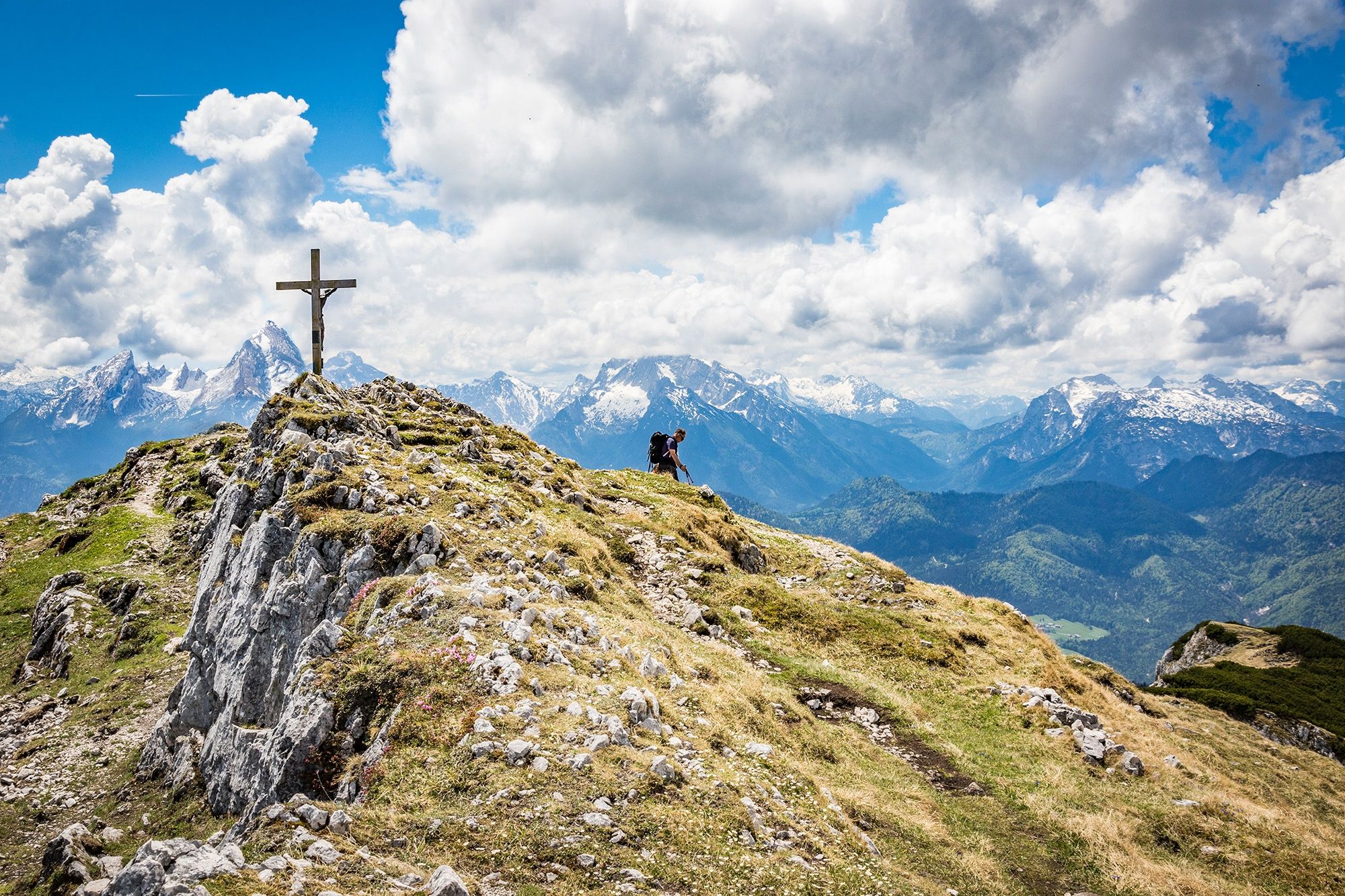
To continue to the summit or Stöhrhaus, stay on the marked, well-worn trail along the ridge.