

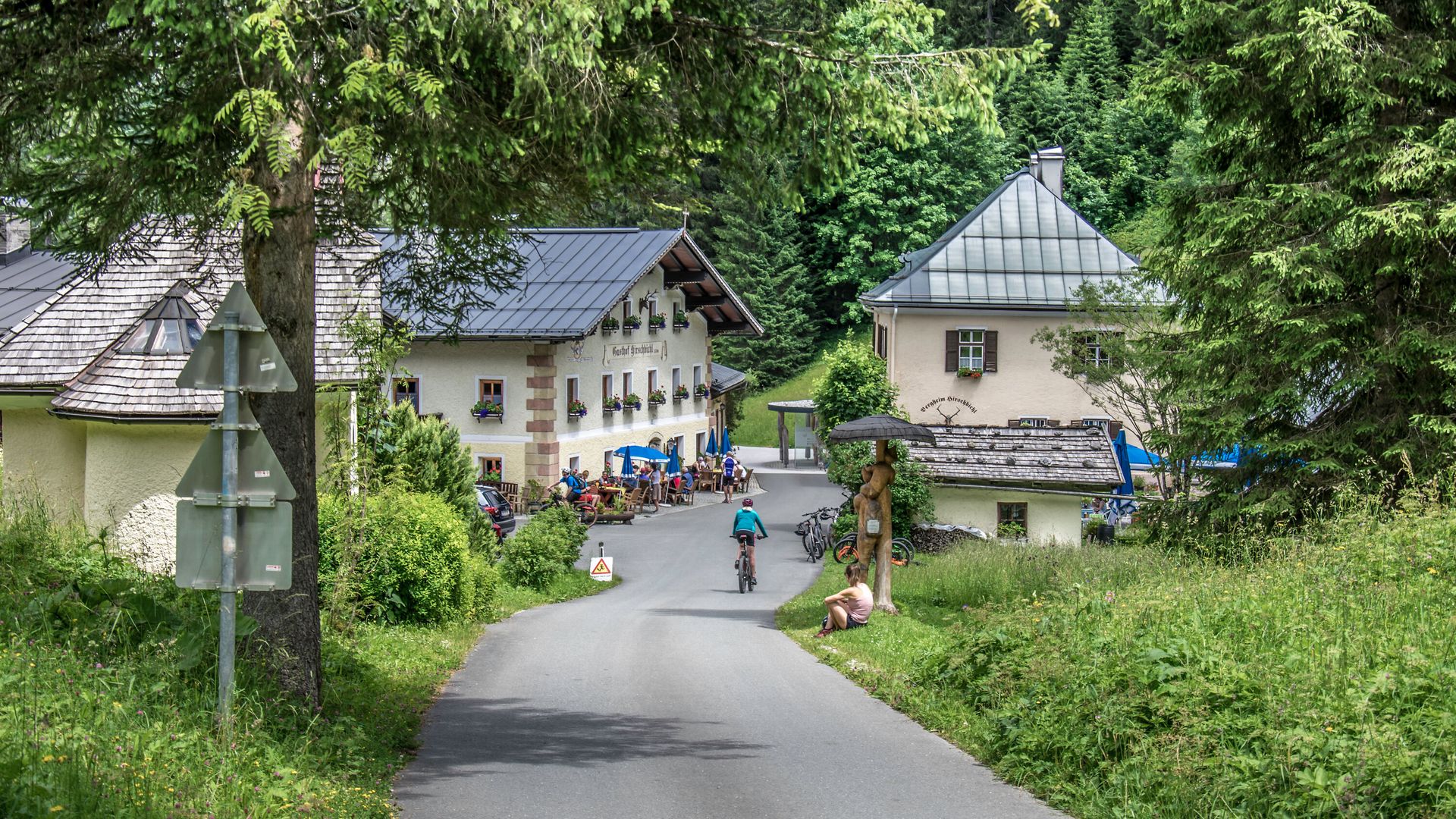
Alpengasthof Hirschbichl
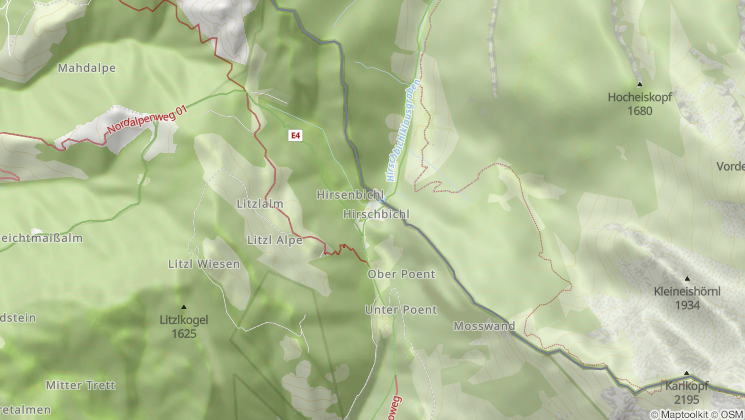
Hirschbichl: A mountain pass on the Bavarian-Austrian border- Open today
- Hintertal
- 1183m
- Beds
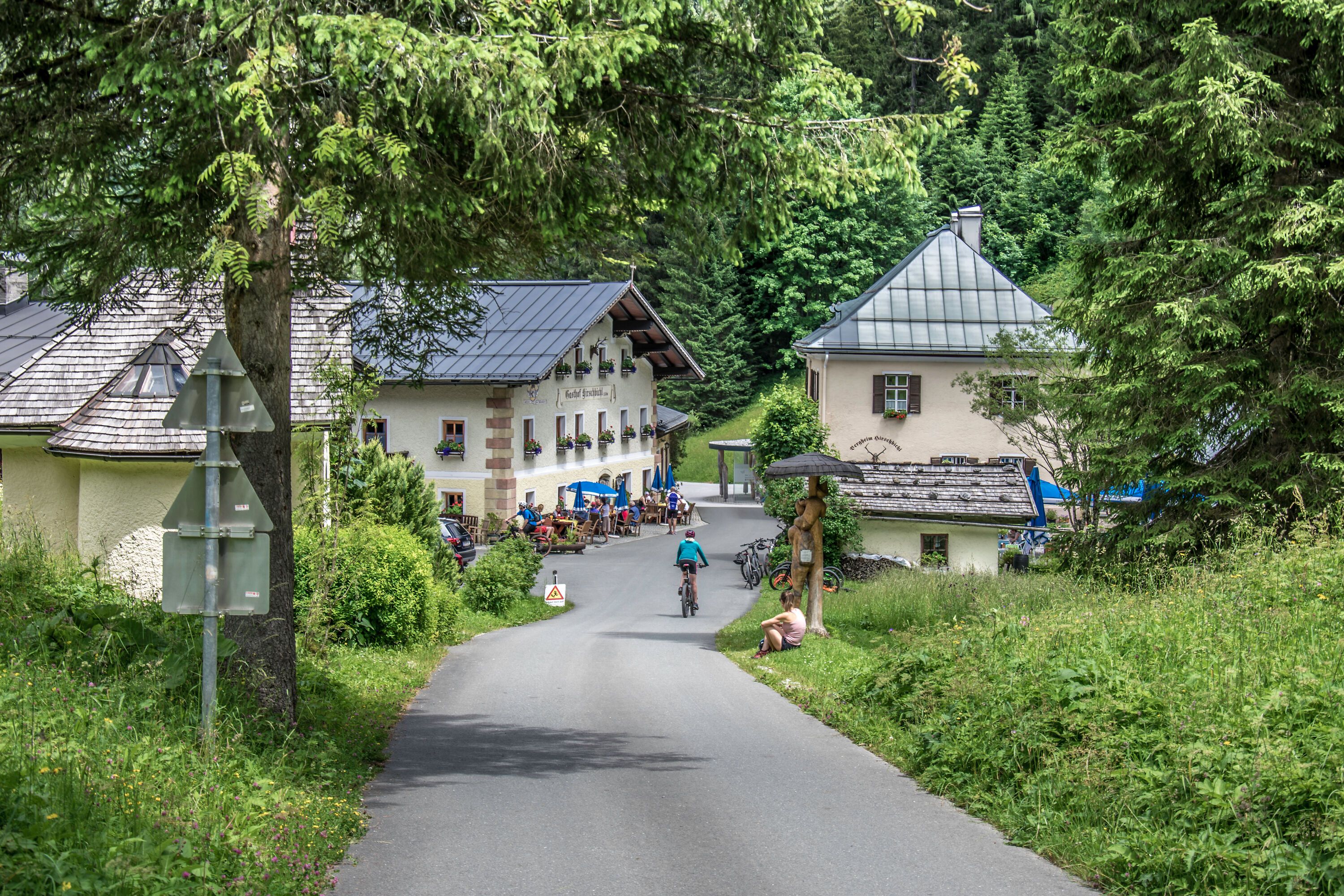
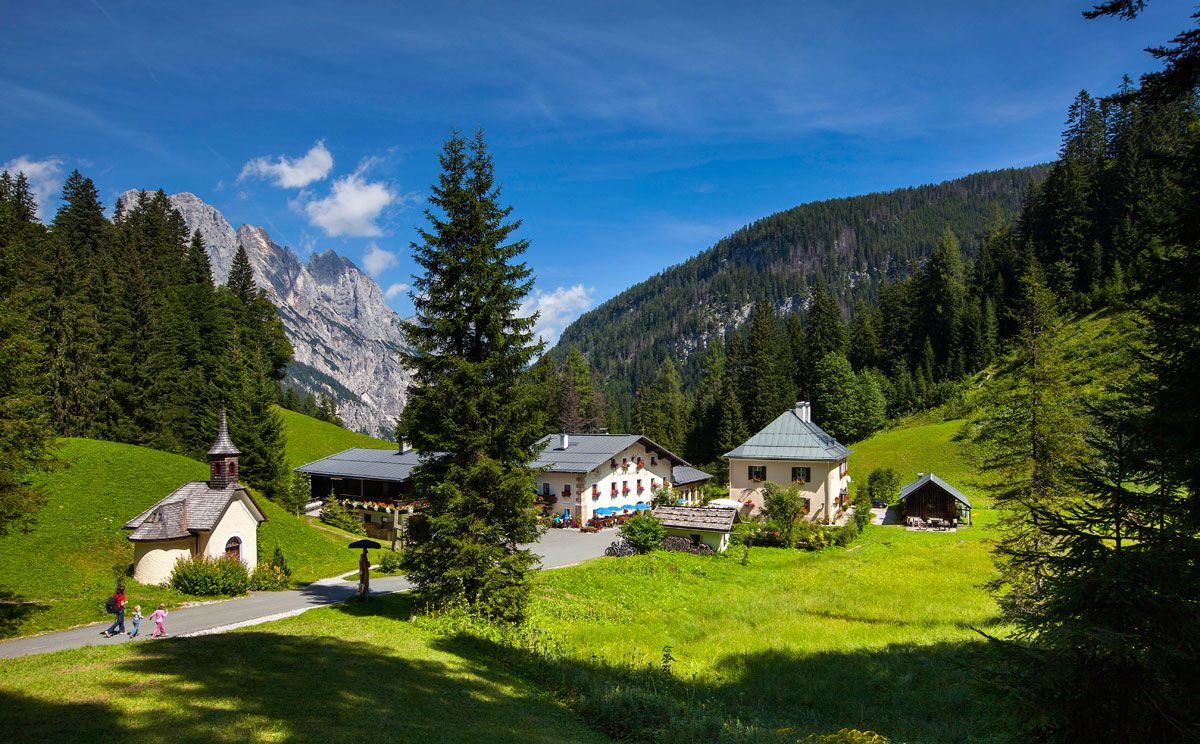
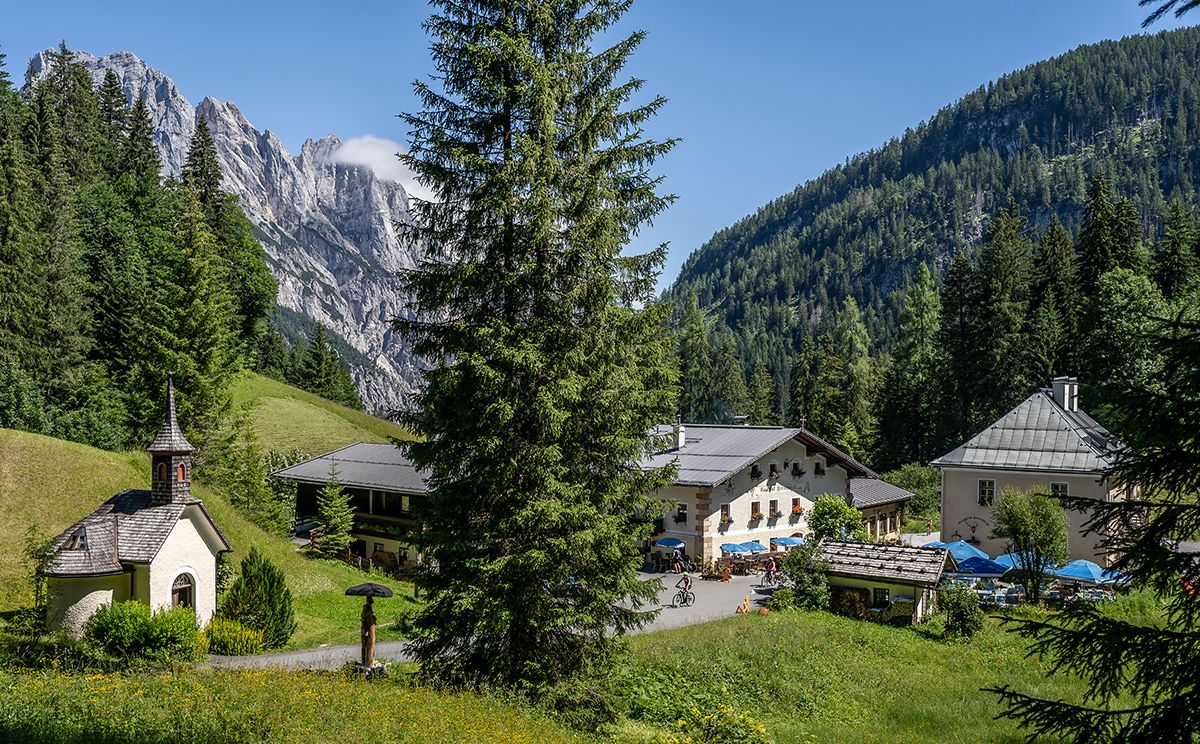
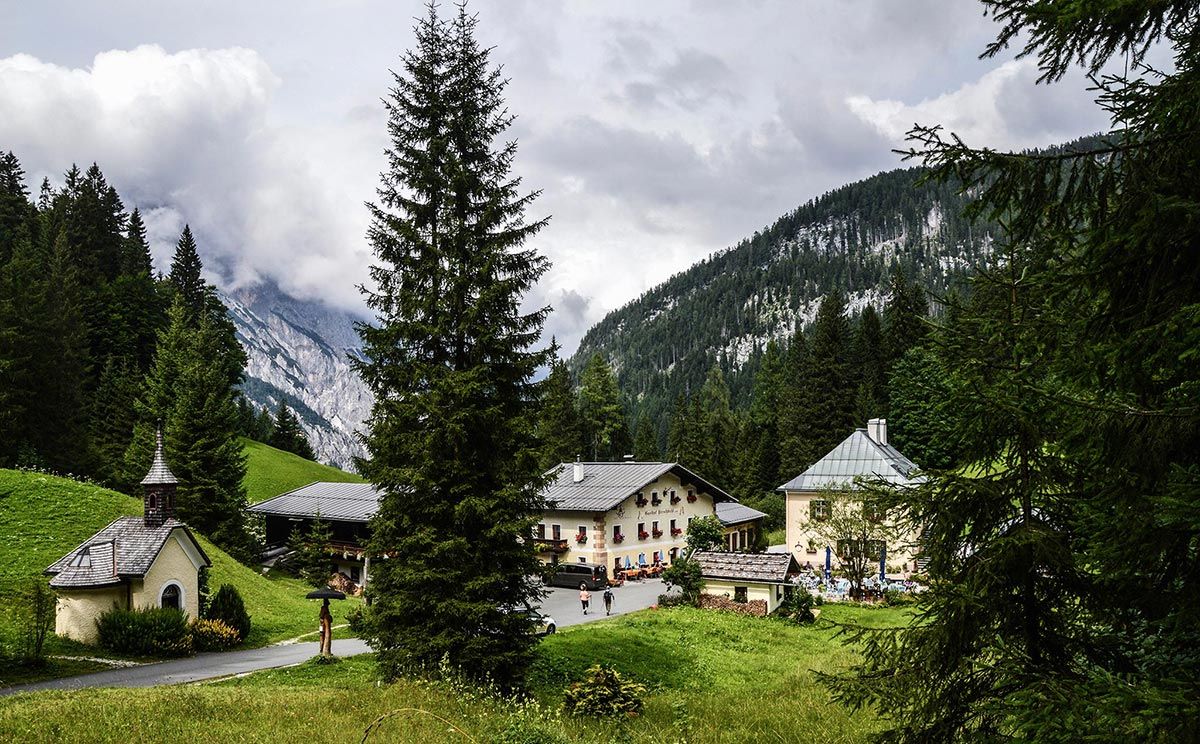
Reach Alpengasthof Hirschbichl, a traditional mountain inn housed in a former customs station on the border between Bavaria and SalzburgerLand, on a scenic hike or mountain bike ride through Klausbach Valley. Right next door, Bergheim Hirschbichl offers comfortable overnight accommodations, making it the perfect base for exploring the surrounding mountains.
The inn is open from early May through mid-October; it is closed on Tuesdays and Wednesdays. Hirschbichl offers vacation apartments, guest rooms, and a shared dormitory for overnight guests.
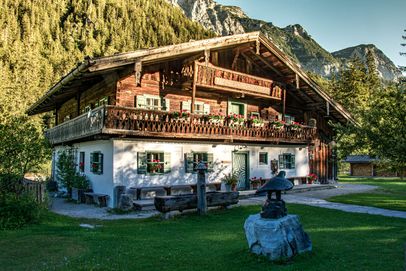
Stay at the historic Hirschbichl customs station
Cozy vacation apartments offer you the ideal place to unwind after a mountain hike and recharge for your next adventure. The choice is yours: from a cozy double room to a small, comfortable dormitory to a homey apartment. You can enjoy breakfast or half-board at Alpengasthof Hirschbichl. If you’d like to cook for yourself, every vacation apartment includes a fully equipped kitchen.
From mountaineering village to mountaineering village: hiking and mountain biking
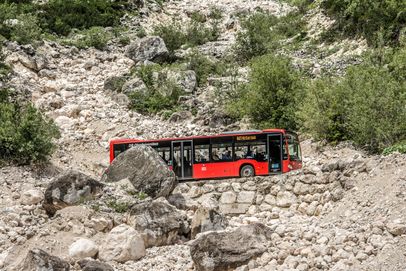
You can hike through the Klausbachtal valley to Hirschbichl, ride a mountain bike or take the ALMErlebnisBUS right to the front door. At Hirschbichl, the two nature reserves—Berchtesgaden National Park and Weißbach Nature Park—meet; at the same time, both Ramsau on the German side and Weißbach near Lofer in the Salzburg Saalachtal are official mountaineering villages. Your options are just as diverse: You can hike to the surrounding alpine pastures, set out on extended mountain bike tours, or climb to the summits of Steinernes Meer. Hirschbichl is the ideal starting point for numerous outdoor activities.
The history of Hirschbichl
The route over the Hirschbichl Pass was first mentioned in an atlas of the time in the year 14 B.C. Starting in 1240, the pass was expanded to transport salt from the salt mines on Dürrnberg near Hallein through Berchtesgaden and over Hirschbichl into the Pinzgau region. Salt carriers traveled the steep pass with horse-drawn carts. But the cross-border Hirschbichl Pass was a strategically important point not only in the 17th-century salt trade but also during World War II.
Today’s Hirschbichl owes its existence less to the salt carriers than to the salt smugglers, who reached their peak in the 16th century. At that time, Hirschbichl was fiercely contested. In order to store the confiscated salt, border guards had to build larger structures in place of their small watch huts. In 1759, permission was finally granted for the first time to construct massive fortifications for protection and to serve beer. Thus, the border crossing became a rest stop.
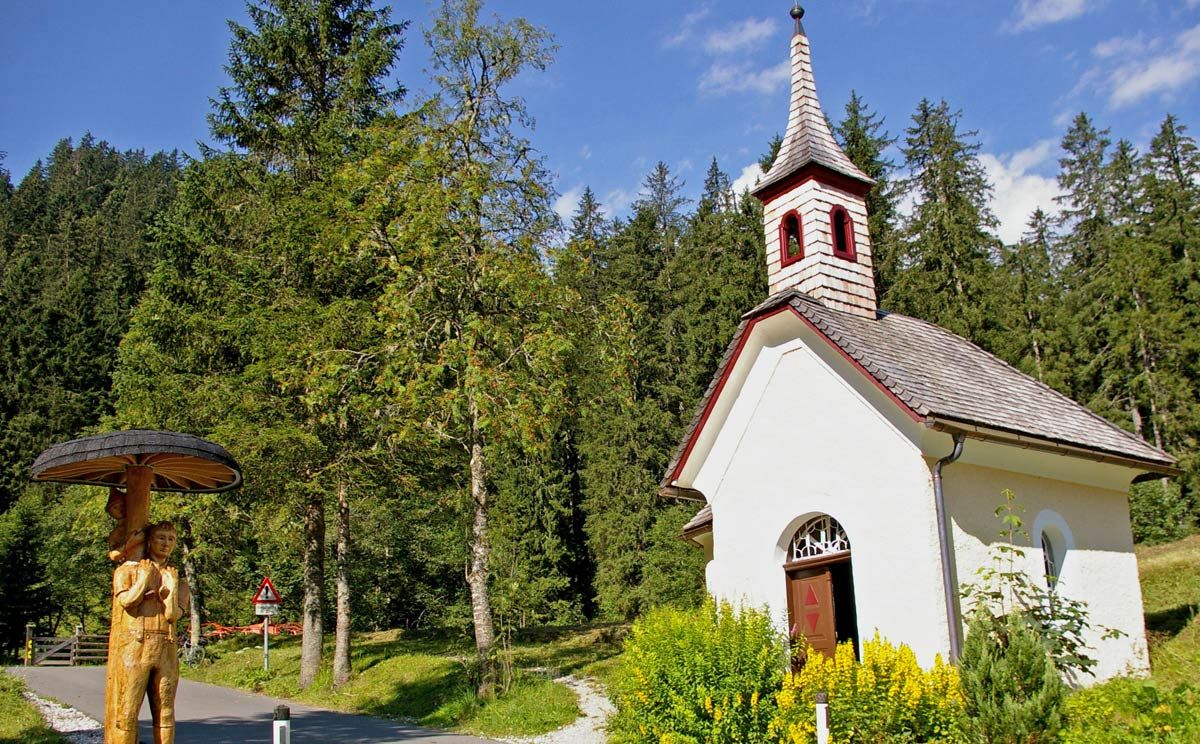
In the early 19th century, fierce battles broke out between Bavaria and France over the Hirschbichl transportation hub. After the border fortifications were completely destroyed, Hirschbichl eventually passed into the possession of the Kofler family, the ancestors of the current owners of the complex, the Hohenwarter family. In 1849, the innkeeper of Hirschbichl built the chapel—at his own expense—with its unique Lourdes Grotto, where you can still pause for a moment today, and where a church service is held every year for the farmers of the surrounding alpine pastures.