The Holy Sepulcher
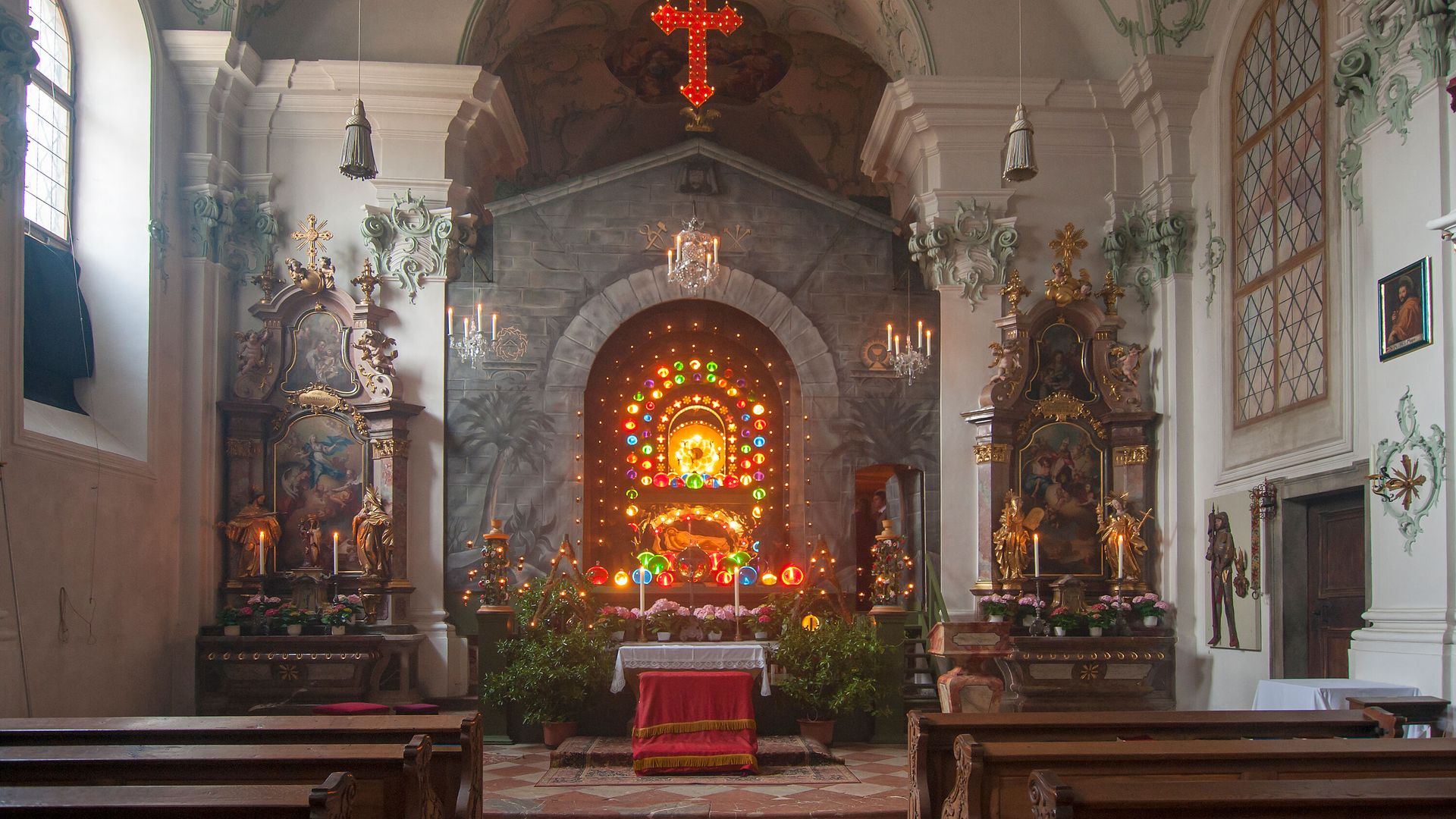
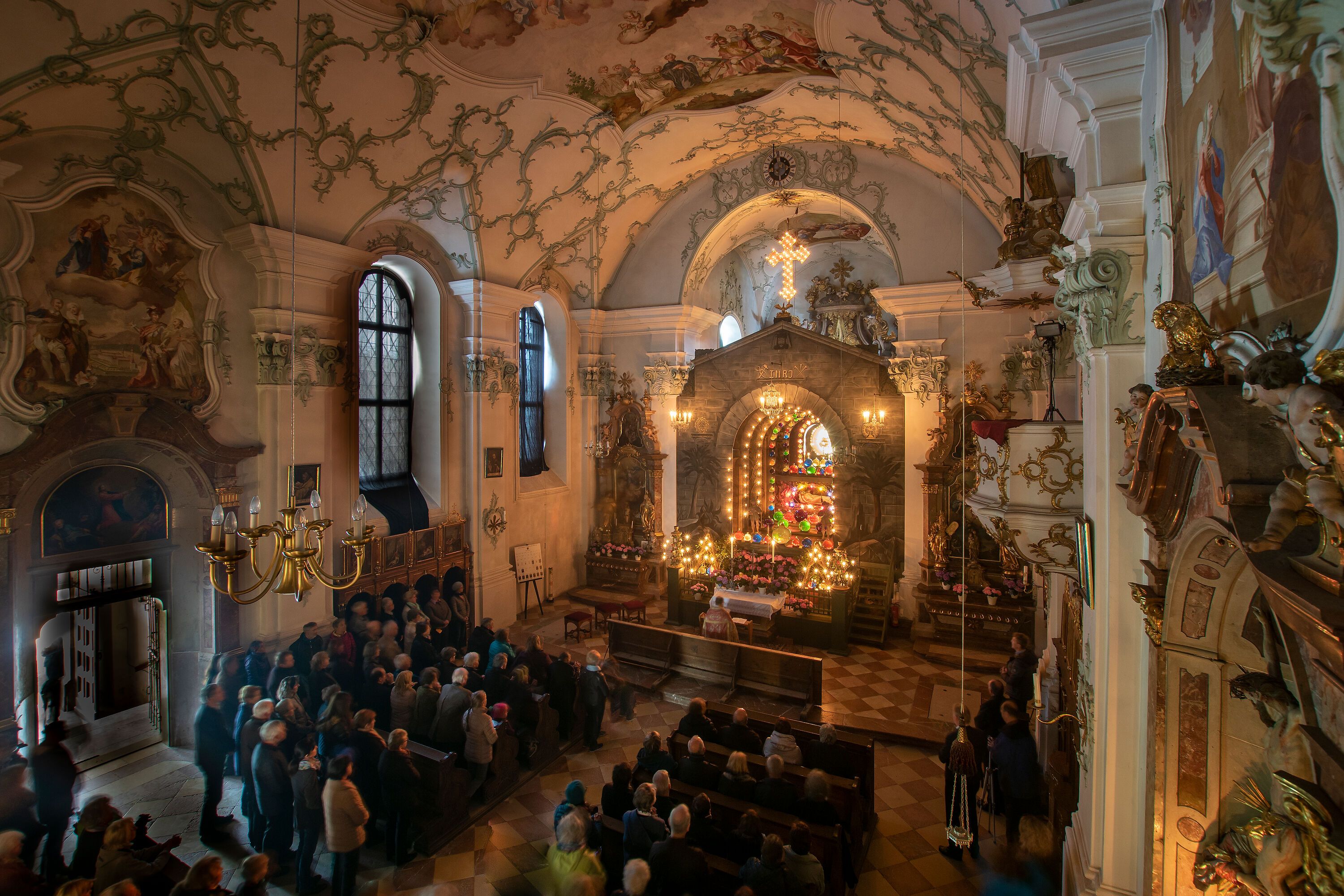
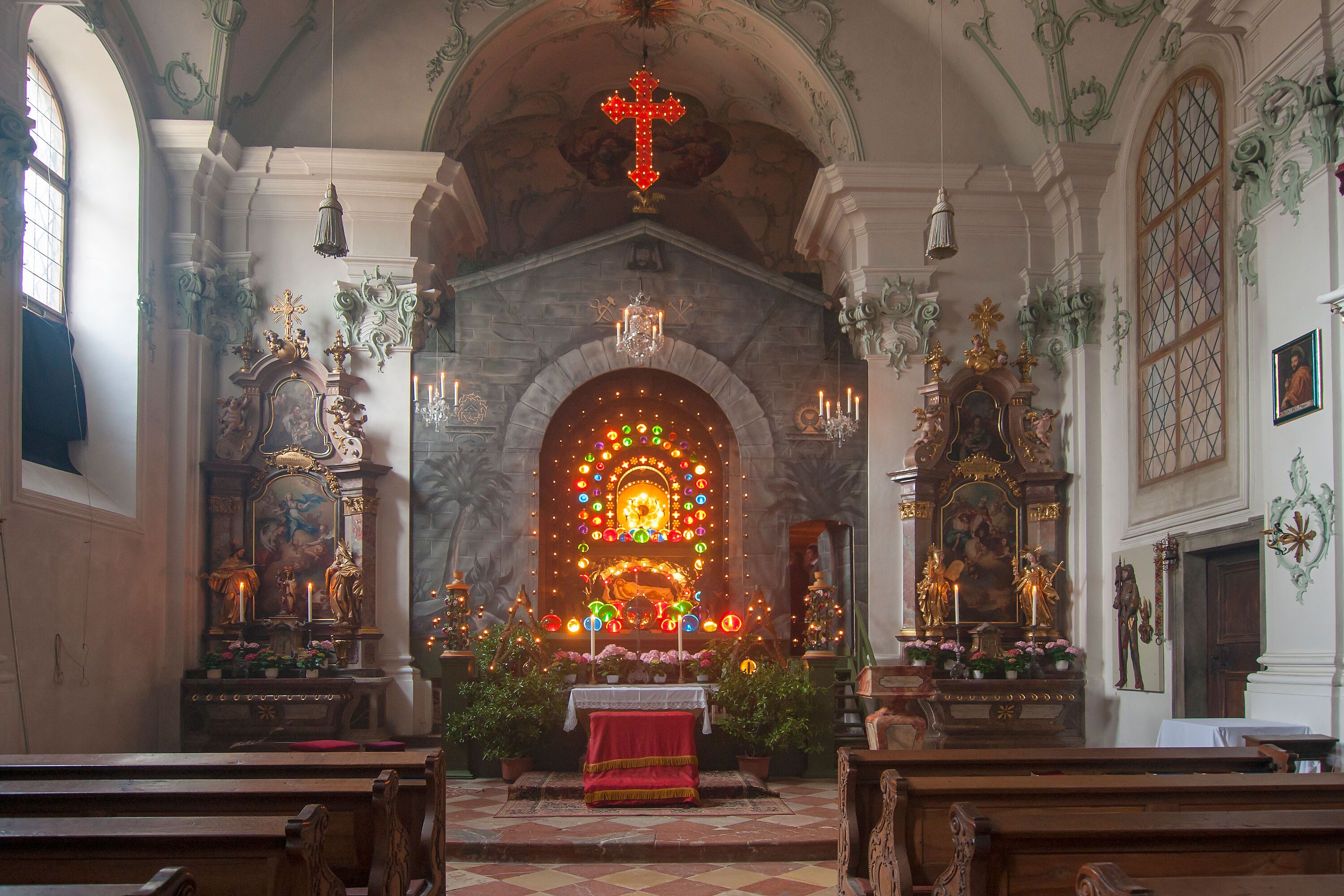
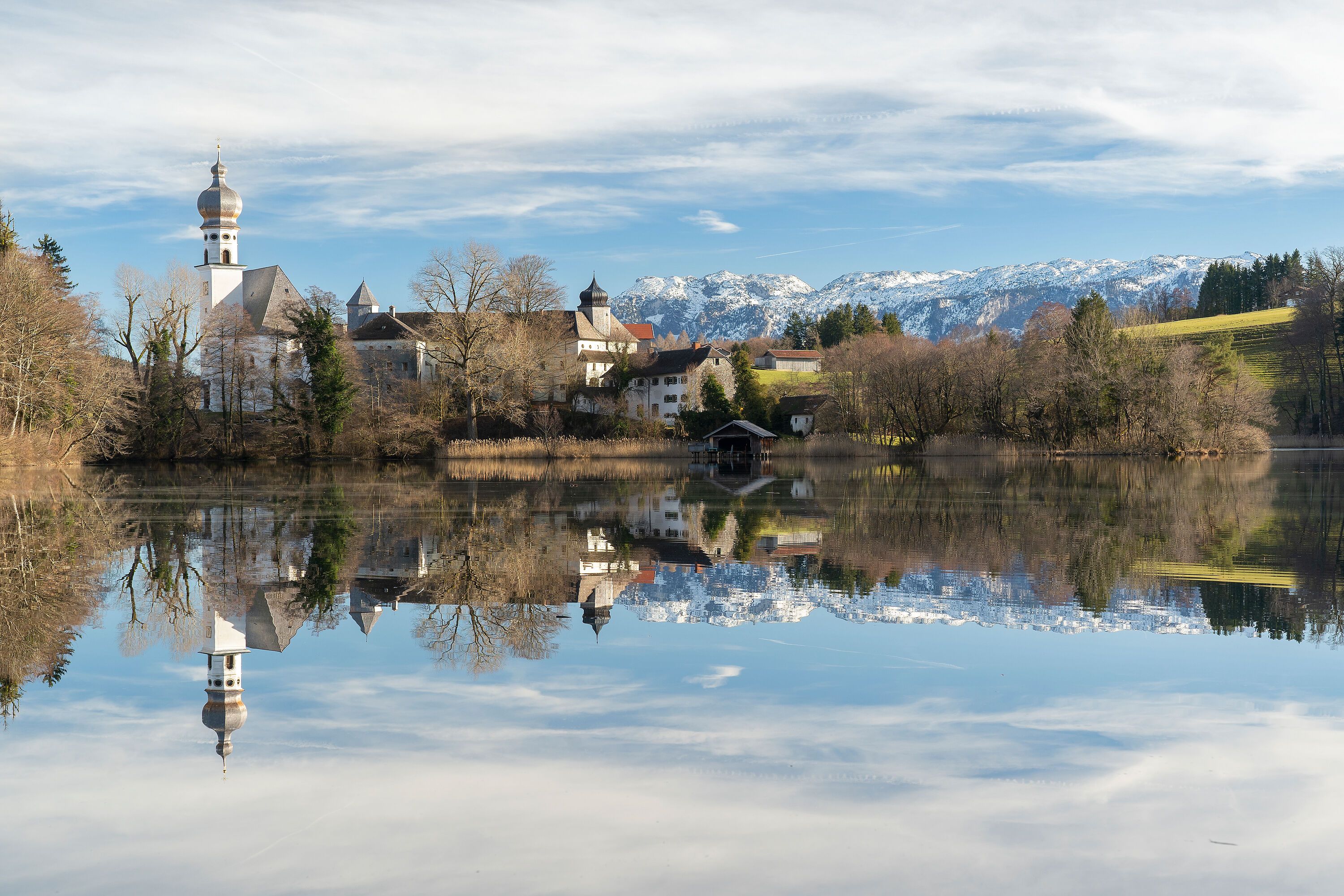
at Höglwörth Monastery ChurchHöglwörth—an Augustinian monastery until its dissolution in 1817—lies in the parish of Anger in the Rupertiwinkel region of Berchtesgadener Land and remains an impressive monastery church to this day. Every three years during Holy Week, the residents of Höglwörth set up “their” Holy Sepulcher, which can be visited on Good Friday and Holy Saturday.
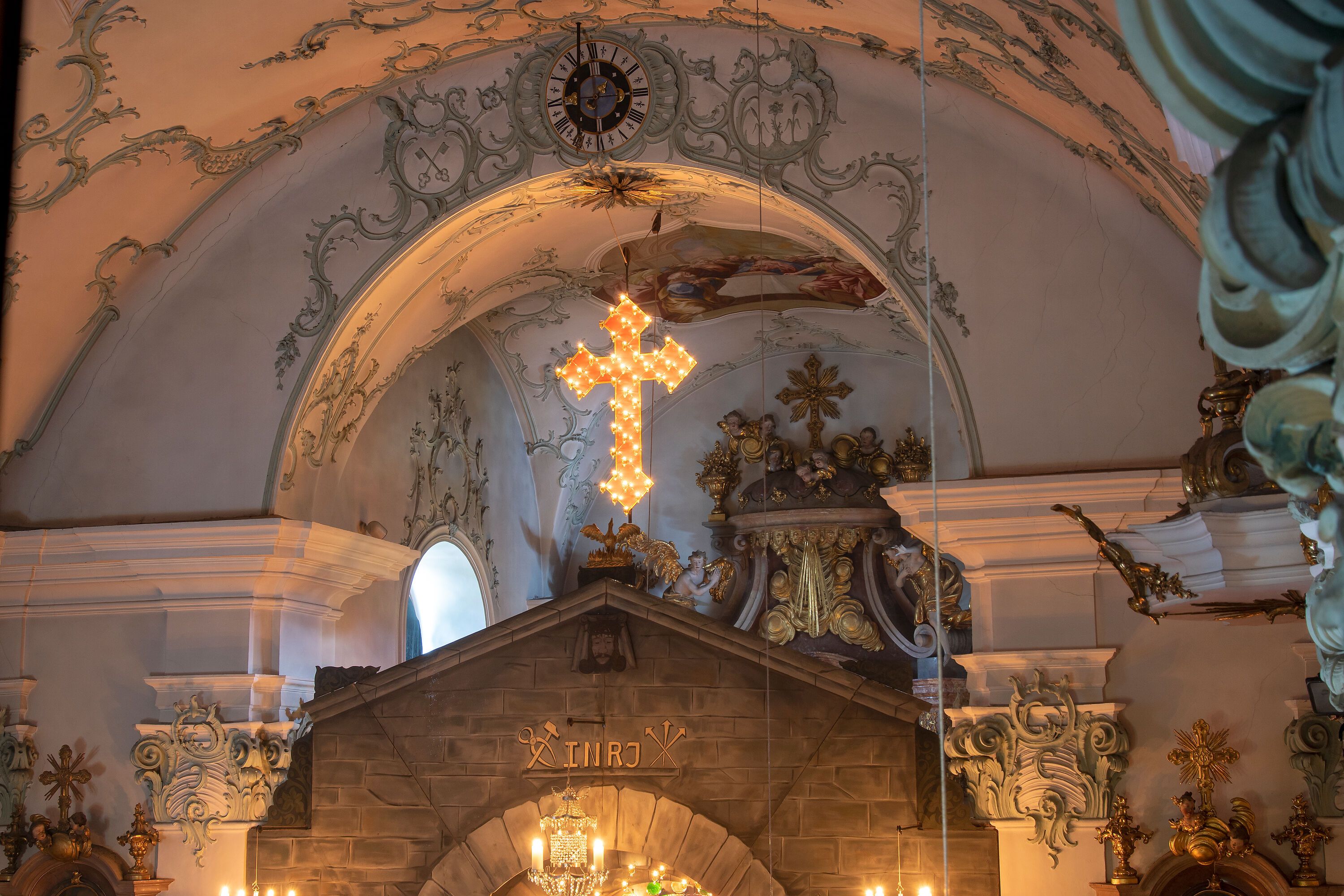
Holy Sepulchers like the one in Höglwörth date back to the Baroque era and were created as a “Theatrum Sacrum,” visually depicting the events surrounding the death of Jesus. The Holy Sepulcher in its current form likely dates to 1836. Measuring five meters wide, six meters deep, and eight meters high, the monumental stage-like structure fills the entire chancel. Its scenery represents the Church of the Holy Sepulcher in Jerusalem.
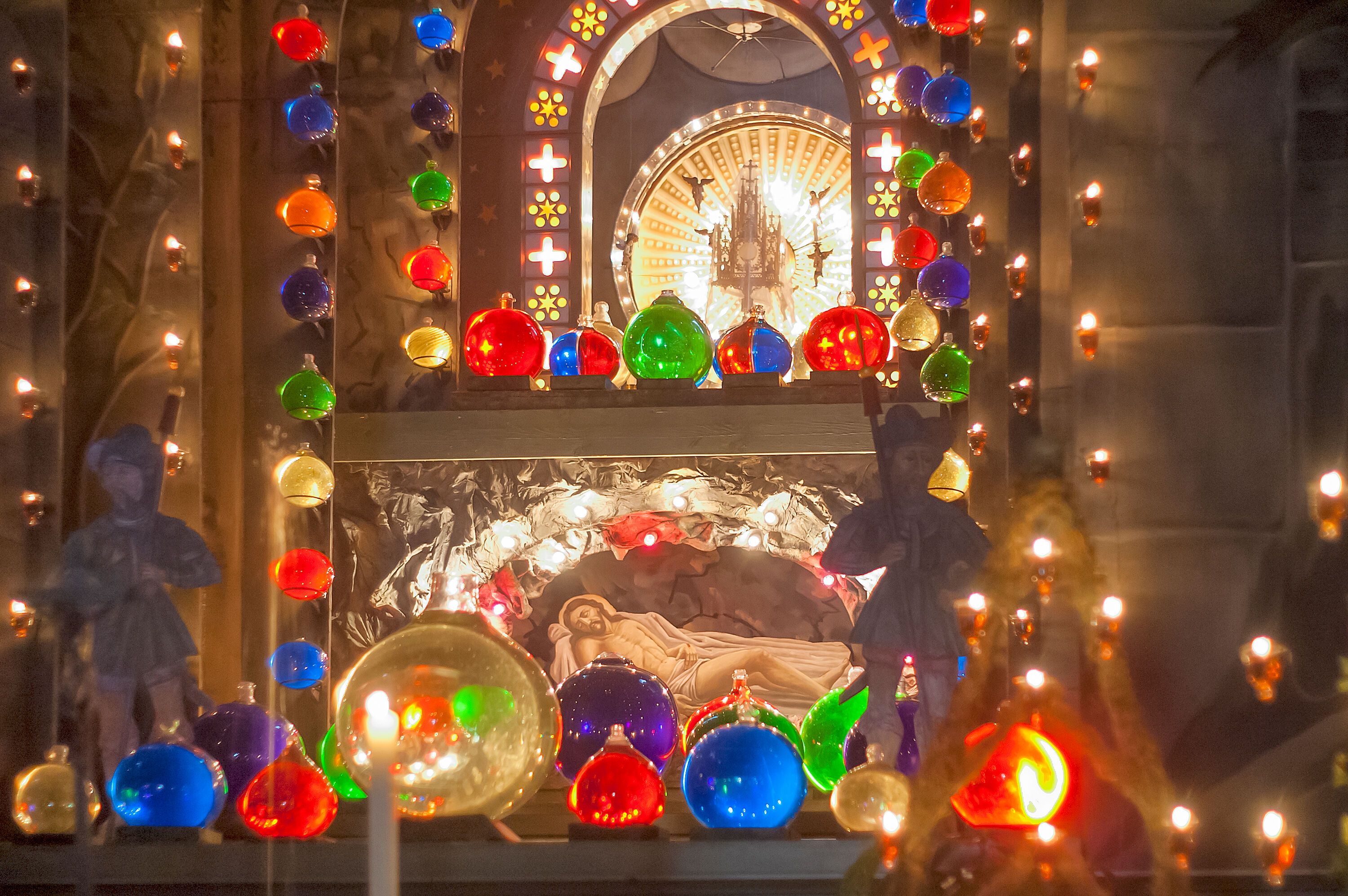
Embedded within the structure are 81 glowing glass spheres filled according to a precise system with colored water — the largest sphere holds 62 liters. Small oil lamps burning behind the glass cast a dim, mystical light into the completely darkened nave of the church.
Few visitors realize the tremendous amount of time and craftsmanship invested by the “Association for the Preservation of the Holy Sepulcher Höglwörth” to maintain this moving display, which continues to fascinate worshippers to this day. Above the Savior resting deep within the tomb, a sun wheel with dancing angels slowly turns. In the foreground, a real fountain bubbles in the garden setting while worshippers quietly pray the rosary — an unforgettable sight.