Aperschnalzen

An ancient tradition that echoes through the valley

The noise drives away the darkness and cold

Aperschnalzen is an age-old, pre-Christian custom practiced in the Bavarian Alpine foothills and the Salzburg region. Its origins are interpreted in different ways. The most common belief is that it serves to drive out winter—loud whip cracks are meant to chase away the dark forces of cold and gloom.

Some farmers, however, see it as a fertility ritual: the sharp cracks of the whips are said to awaken seeds lying dormant beneath the deep snow, stirring them back to life. Another theory suggests that the snapping once served as a form of communication during times of plague—though this has never been proven.

Tradition since 1730

To understand the origins of Aperschnalzen, you have to imagine life centuries ago: harsh winters, dark homes, and the longing for spring’s return. In this setting, the custom takes on a deeper meaning. The first written reference to Aperschnalzen dates back to 1730 in Gois, while official records documenting the tradition exist from 1810 onward. In 1829, the town of Laufen even introduced a legal ban on whip-cracking because of noise complaints.

Historical accounts also tell of performances held in honor of Archduke Ludwig Viktor of Austria: in 1911, groups of farmers, young men, and schoolboys from Siezenheim performed on the palace grounds in Kleßheim. The Viehhausen whip-crackers also took part in a festive parade in Bad Reichenhall in 1924.

Today, Aperschnalzen is practiced in villages along the Saalach and Salzach rivers between Christmas and the beginning of Lent. The historic Rupertiwinkel region holds special significance in preserving the tradition. Following the Congress of Vienna, the city and province of Salzburg officially became part of Austria on May 1, 1816. However, the fertile farming areas of the former Prince-Archbishopric of Salzburg — including the historic administrative districts of Waging, Tittmoning, Teisendorf, and Laufen — remained part of Bavaria and have since formed the Bavarian part of the Rupertiwinkel.

The Aperschnalzen Association, which represents the interests of the whip-cracking groups, officially recognizes only groups based within the Rupertiwinkel.

The Goaßl whip-crackers

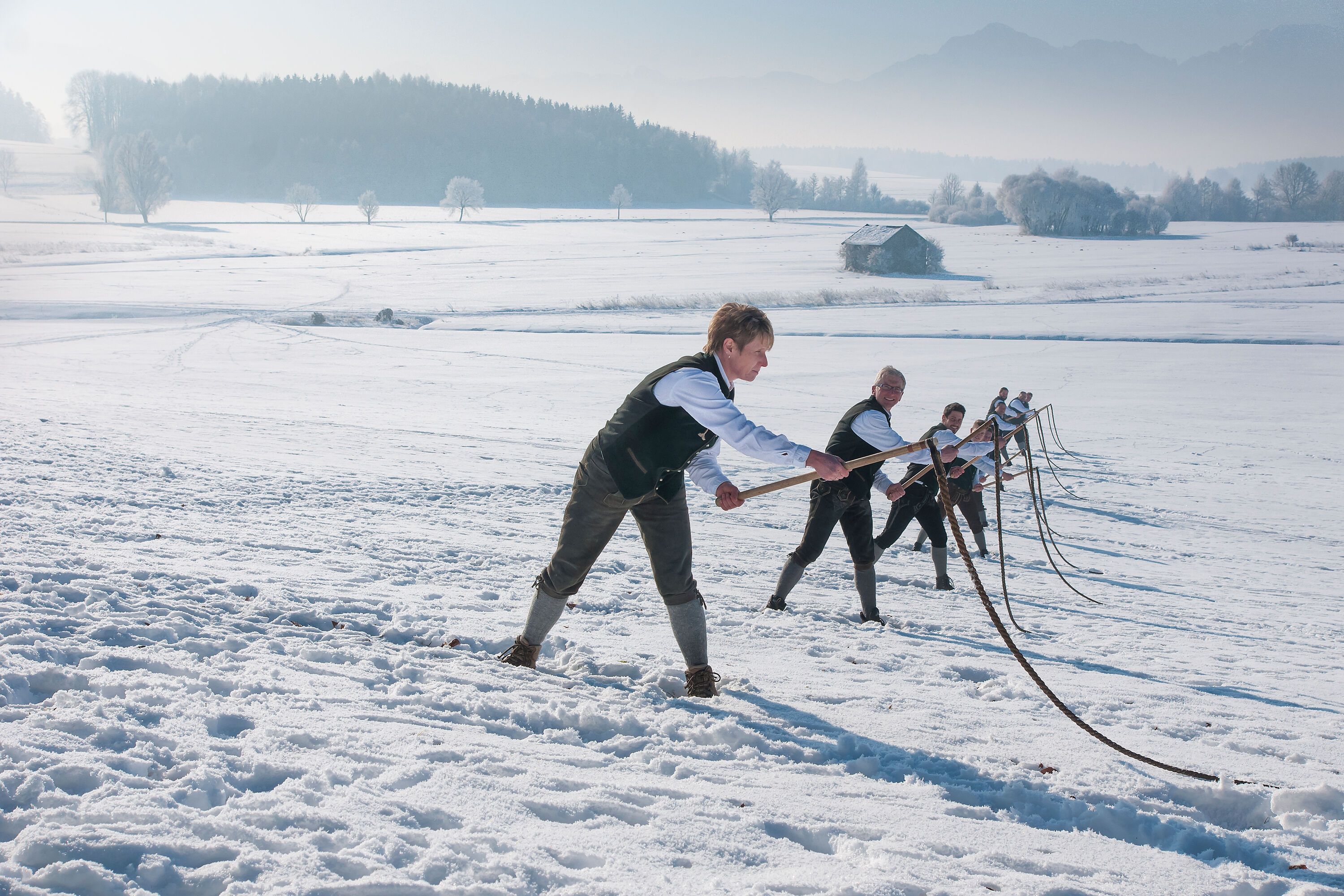
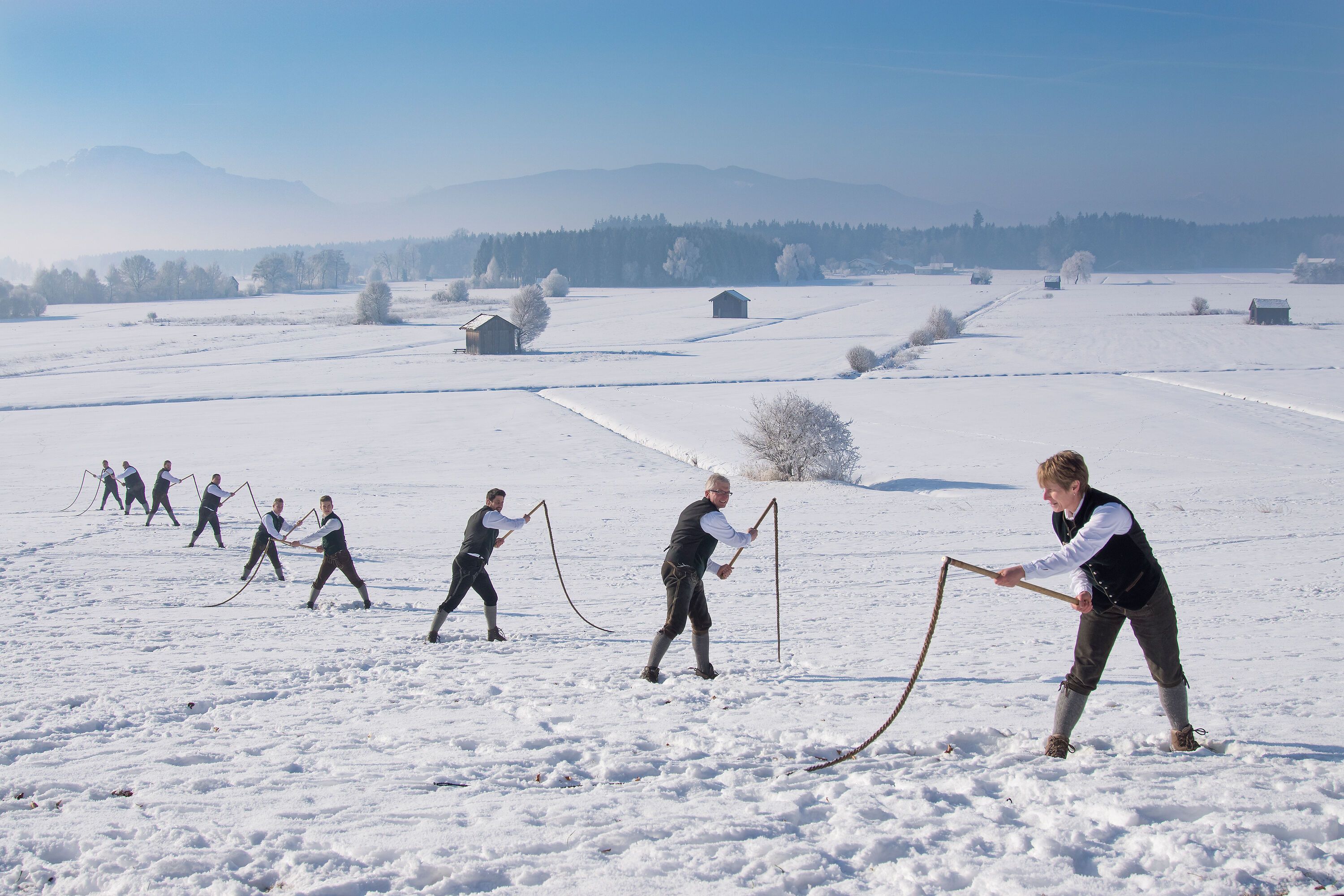
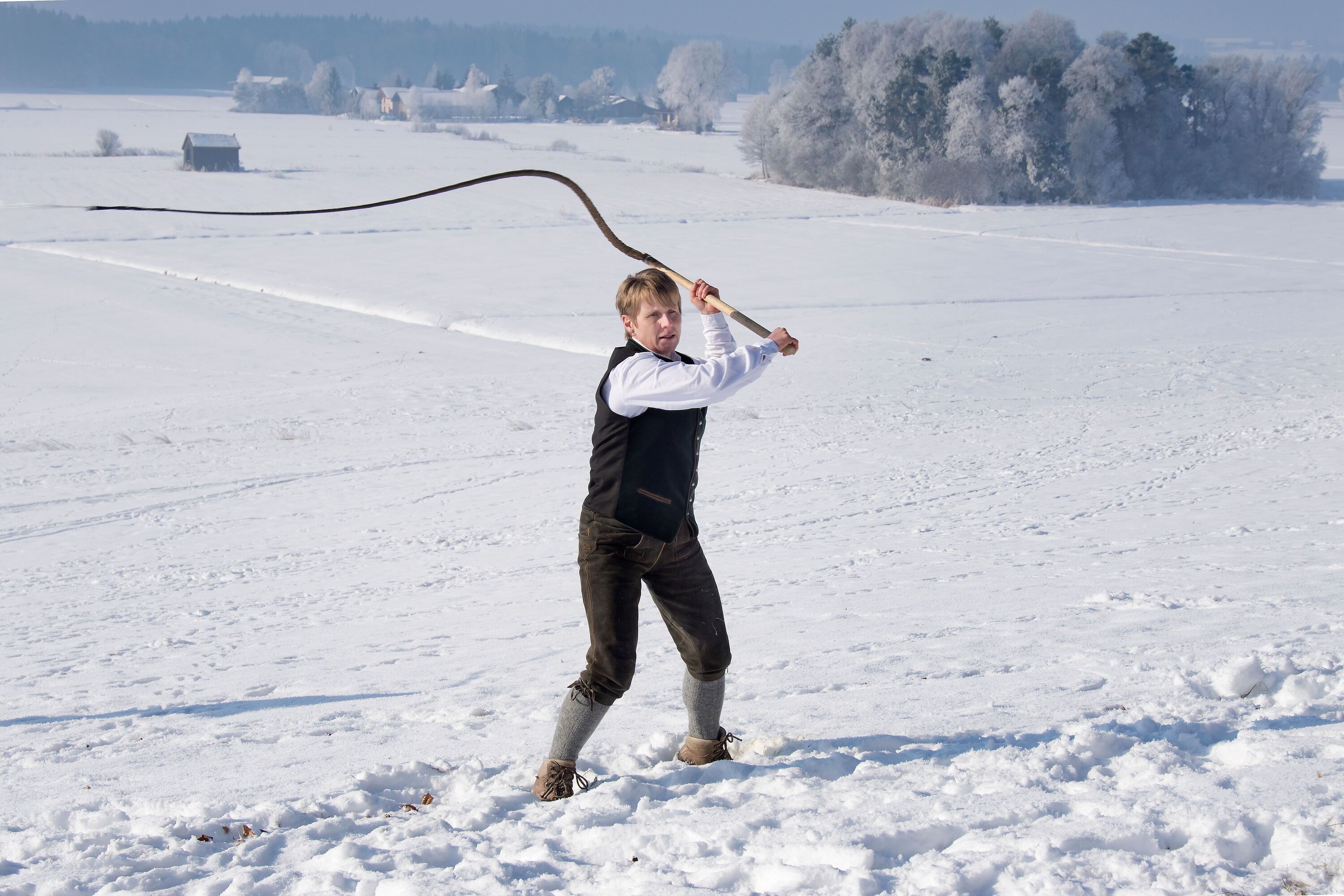
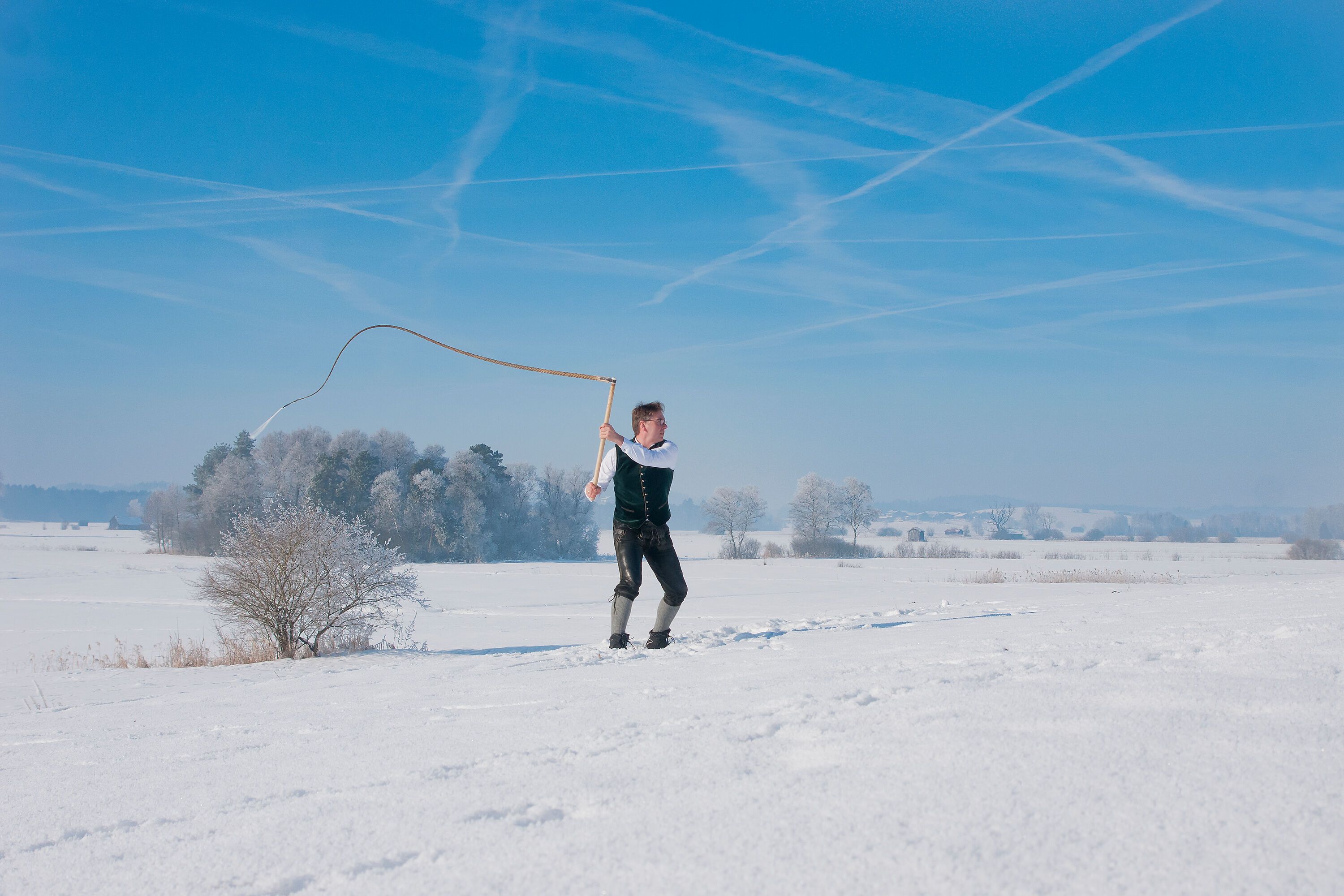
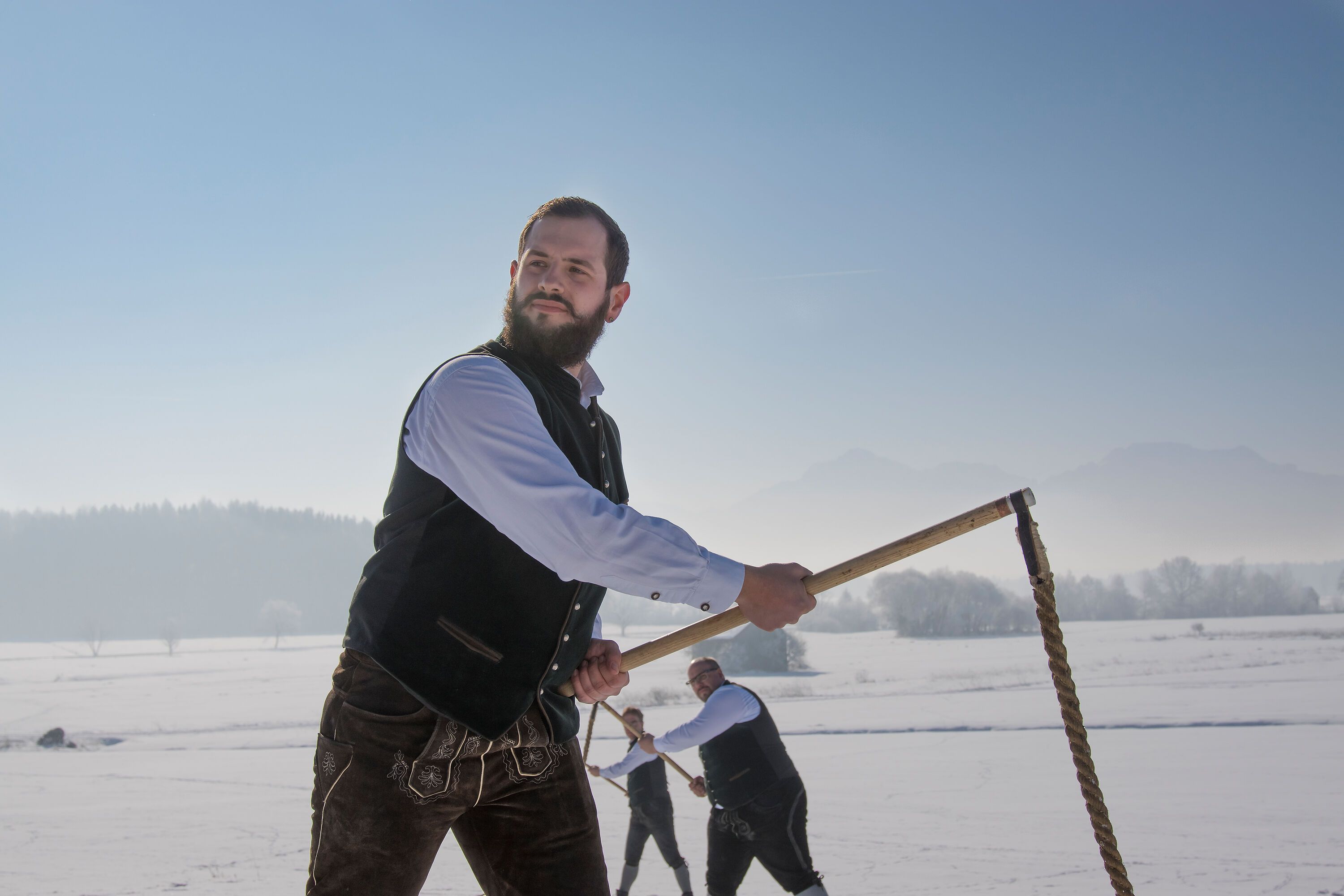
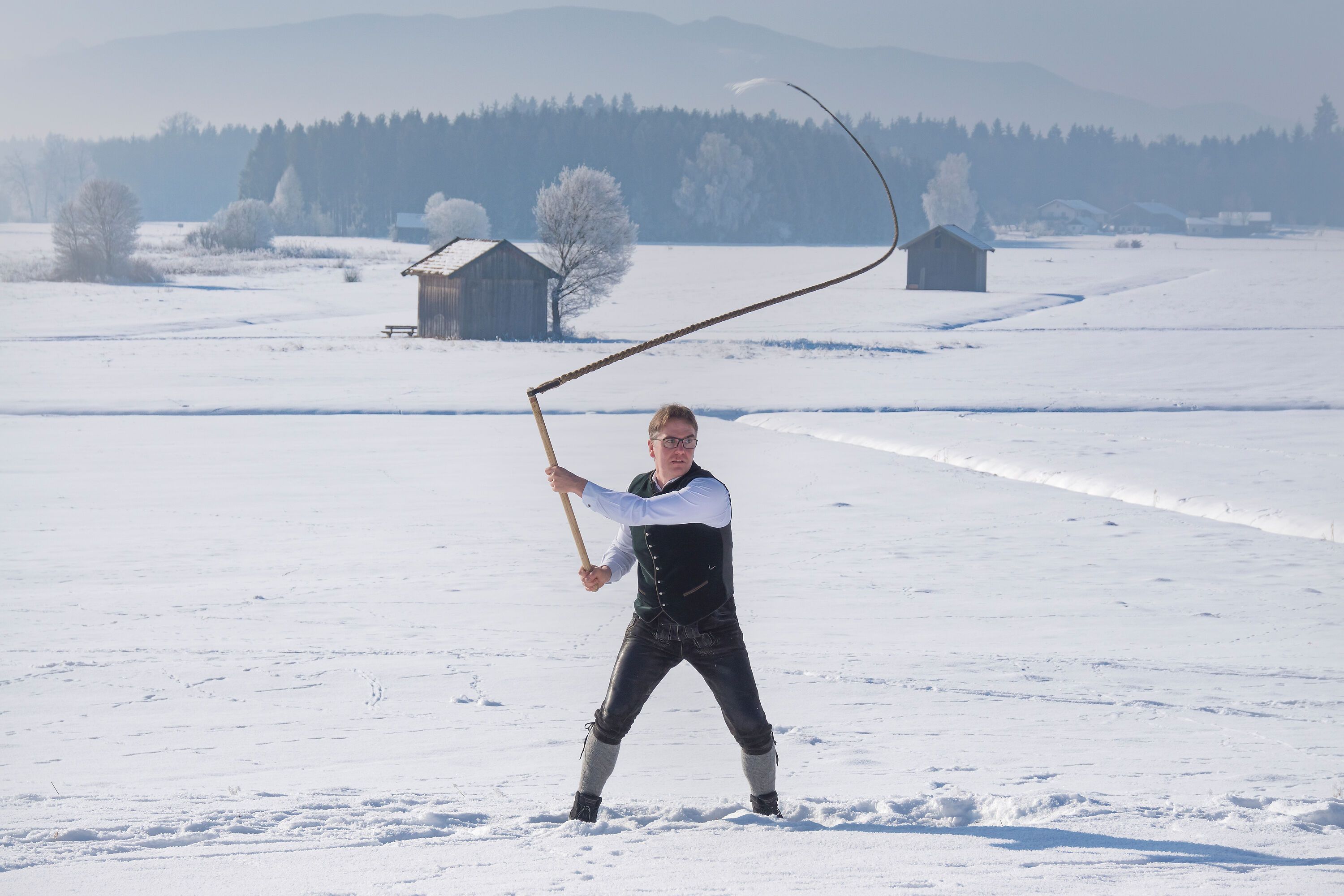
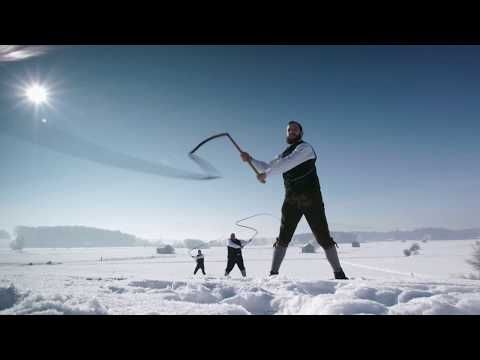
The cracking sound is created using a traditional whip known as a Goaßl. It consists of a wooden handle and a hemp rope that gradually tapers toward the end and is coated with black pitch. A small tassel is attached to the tip of the whip. The loud crack is created through a rapid change of direction.

Aperschnalzen is performed in small groups known as Passen. A Schnalzer group usually consists of nine men, though always an odd number, performing two rounds of cracking. The smallest member of the group often starts the performance with a call, after which all nine men crack their whips one after another. The strongest young man delivers the final crack at the end of the sequence.

In each round, every man cracks the whip nine or eleven times. Since 1954, youth and adult groups have gathered once a year—one week before Carnival Sunday—for the Rupertigau prize whip-cracking competition.

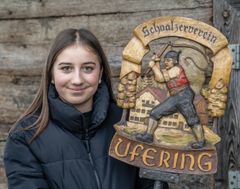
Stefanie Esterer

What I enjoy most is spending time together with the club. Getting out of the house and training together toward a common goal — that’s what inspires me.

Spring traditions in Berchtesgaden

  • Holy Sepulcher Höglwörth

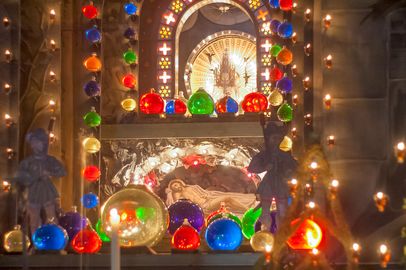
    Experience the Holy Sepulcher at Höglwörth, one of Bavaria’s most impressive Easter traditions. Every three years, glowing glass spheres and baroque scenery transform the monastery church into a mystical spectacle.
  • Palm Sunday

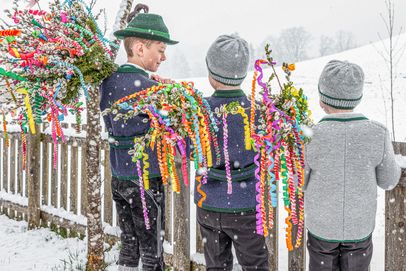
    Discover Palm Sunday in Berchtesgaden with blessed Palmbuschen, church processions, Christian customs, and living Bavarian traditions.
  • Maypole raising

    Experience traditional maypole raising in Berchtesgaden with Bavarian music, festive village celebrations, and authentic Alpine customs.
  • Miners’ Festival

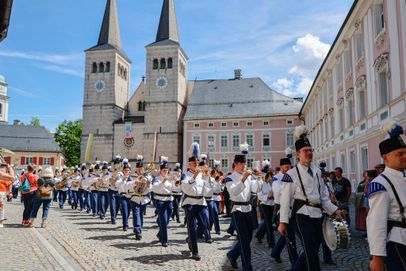
    Experience the Miners’ Festival in Berchtesgaden, a more than 500-year-old Pentecost tradition celebrating Alpine salt, mining heritage, and Bavarian customs.
Spring awakening in Berchtesgaden