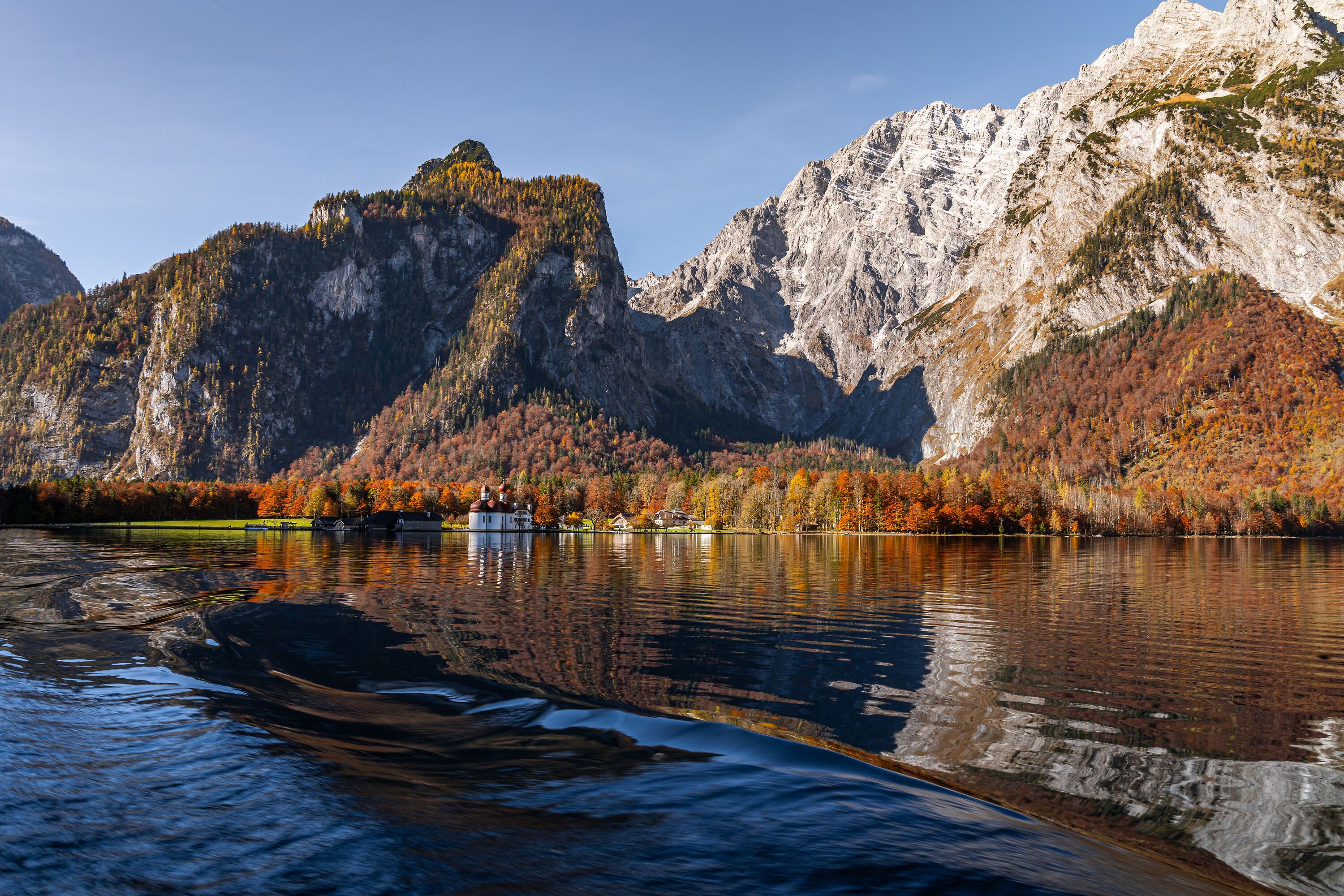
History of St. Bartholomä pilgrimage church
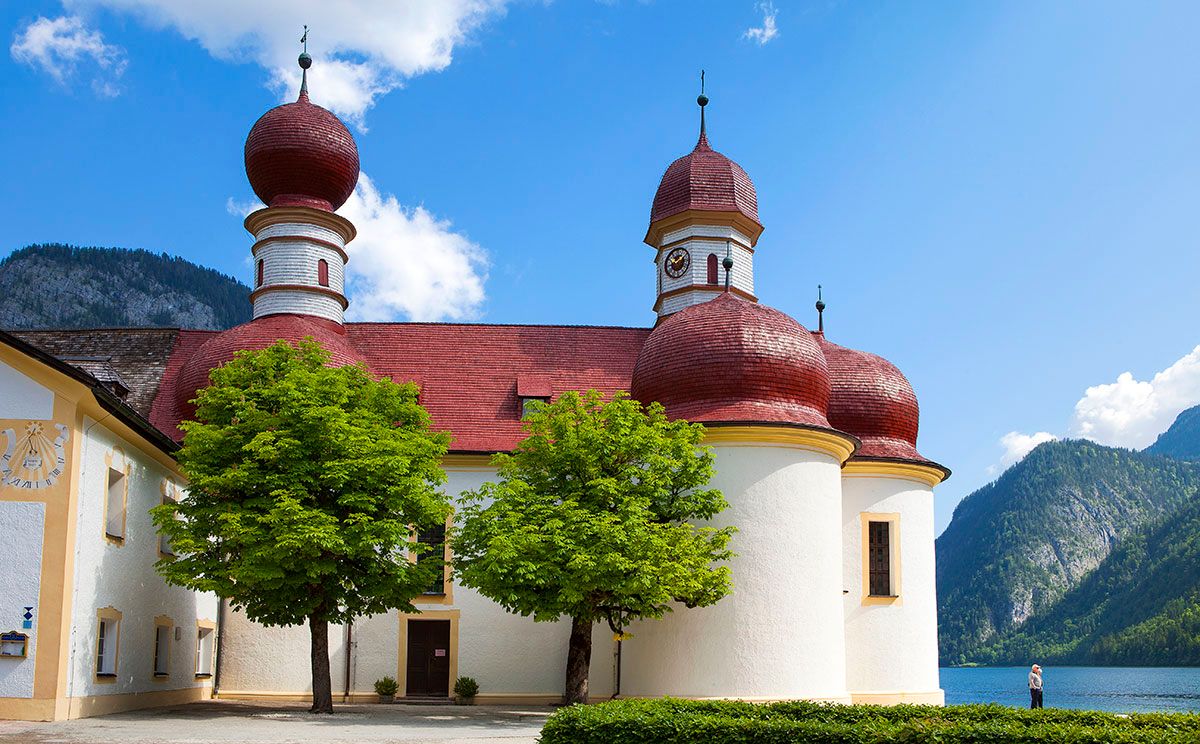
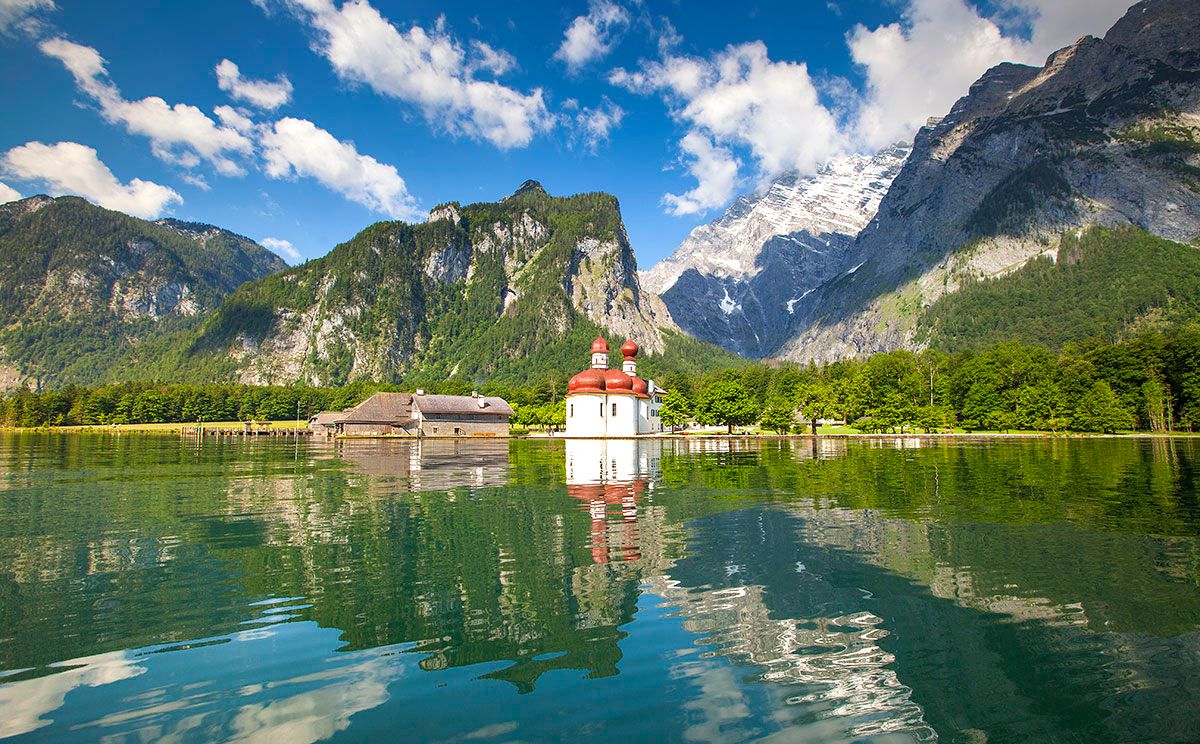
In 1134, Eberwin, the first provost, and Kuno the Younger of Horburg, a co-founder of the Berchtesgaden monastery of Augustinian canons, brought an end to a pagan spring cult by building a church nearby dedicated to the Holy Trinity and the Virgin Mary. Growing numbers of pilgrims made it necessary to enlarge the church in the late 17th century. It was then that the three-apse choir was added on the eastern side.
Among other meanings, the number three symbolizes the Holy Trinity: God the Father, the Son, and the Holy Spirit. This theme from the church’s original 12th-century dedication was revived during the Baroque period and expressed in the architecture through a choir shaped like a three-leaf clover. In Christian number symbolism, three also represents completeness, mediation, and the divine: the Holy Family, the Three Wise Men, and Christ’s resurrection on the third day.
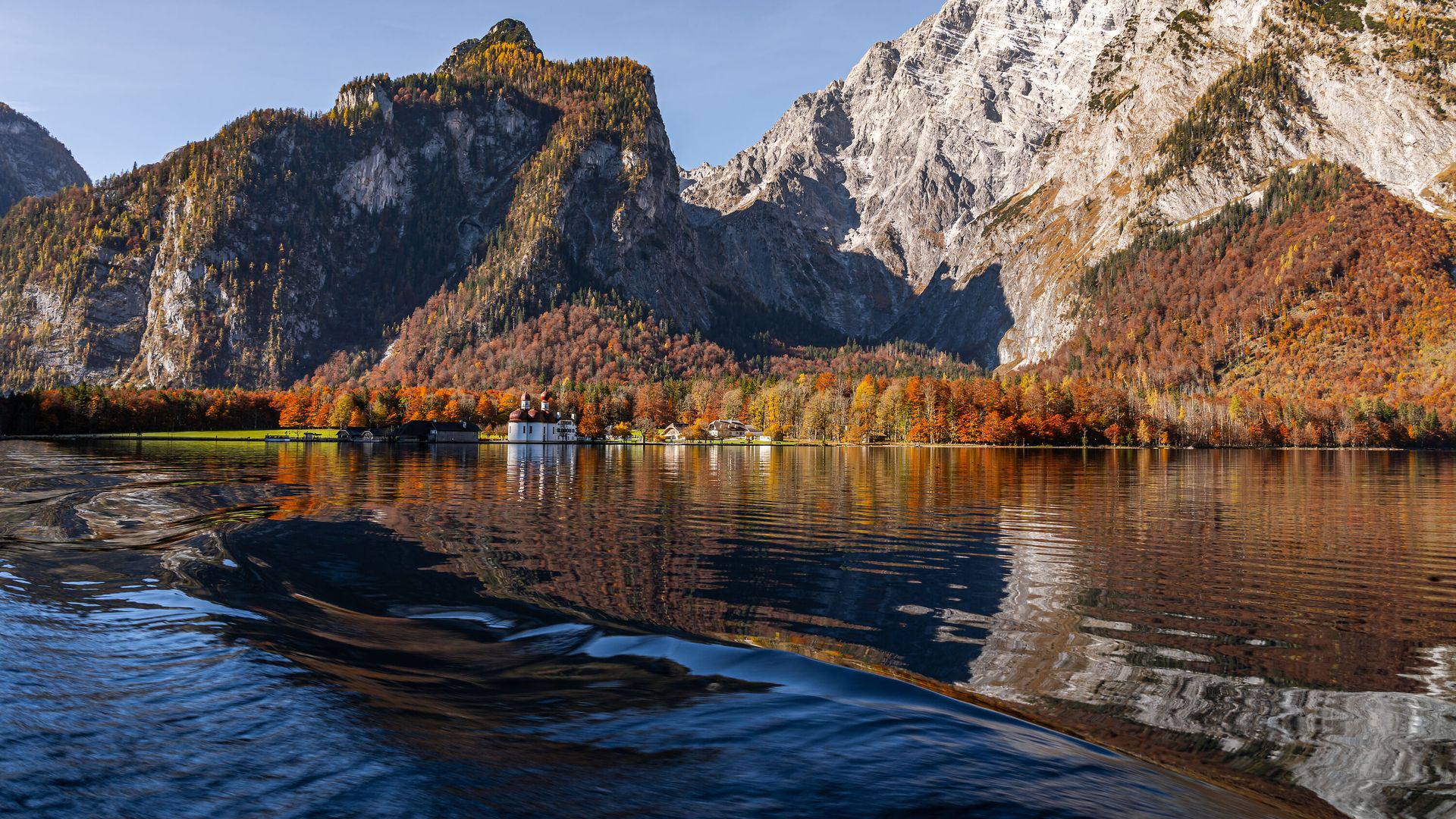
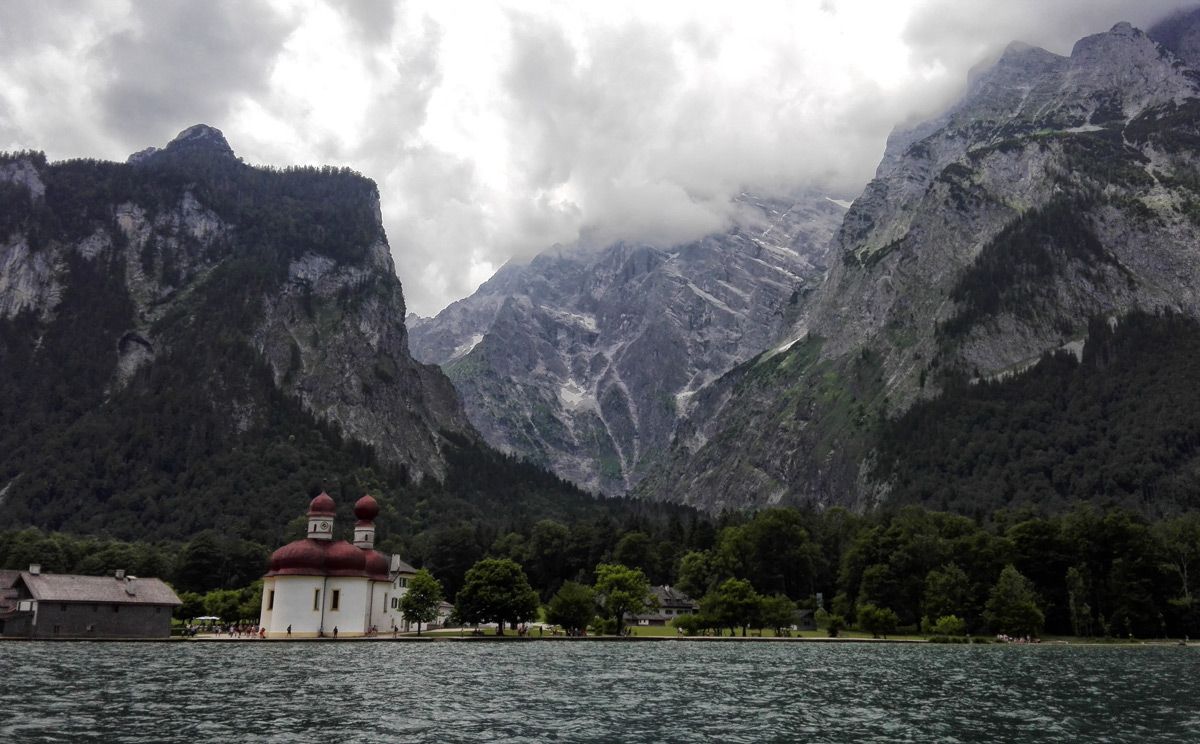
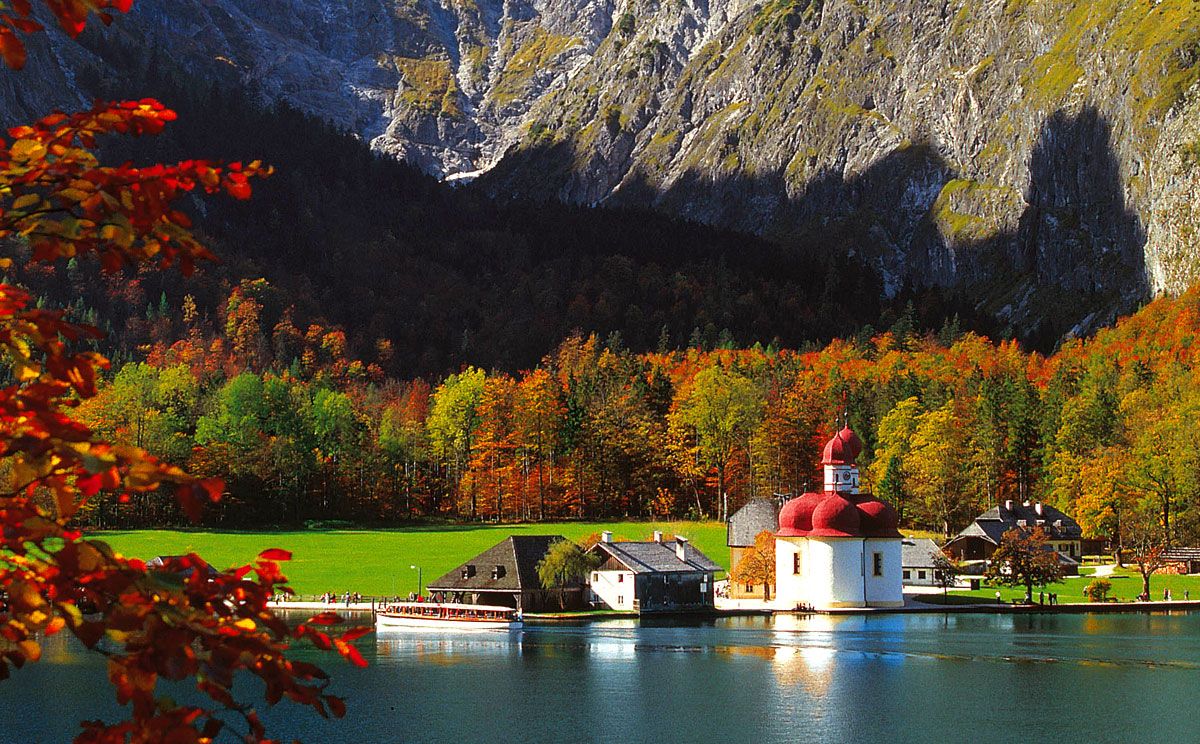
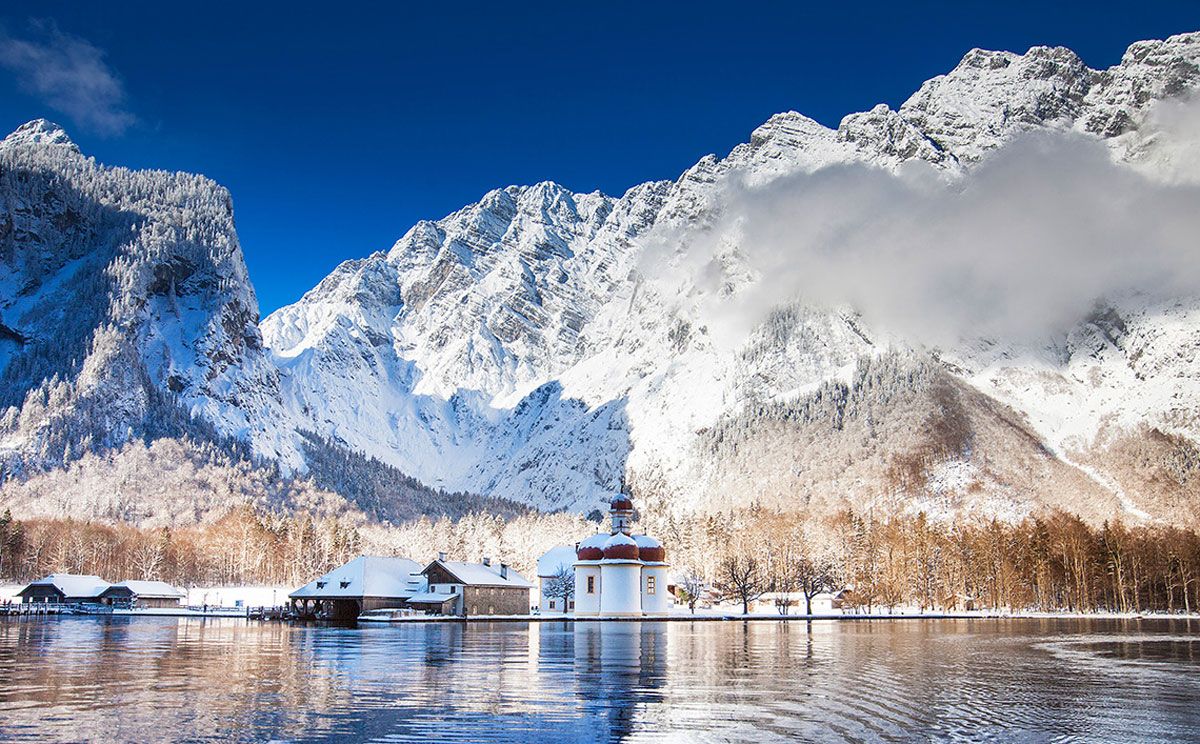
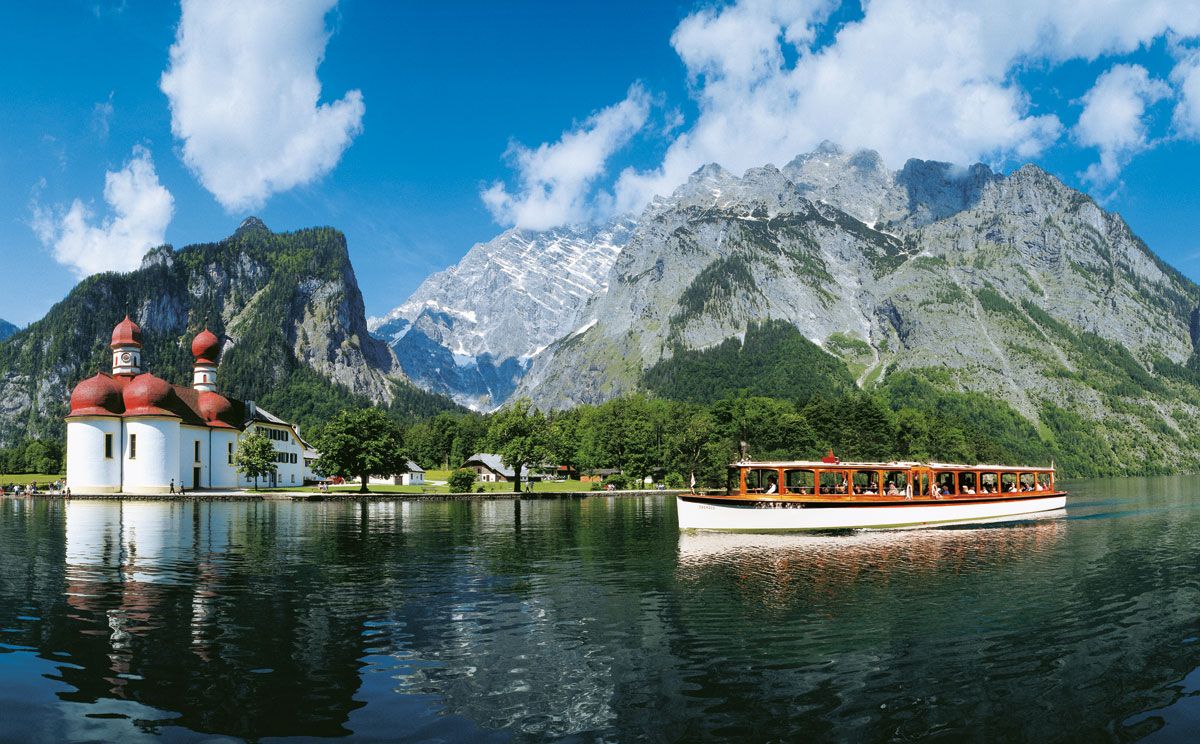
Landmark of Königssee
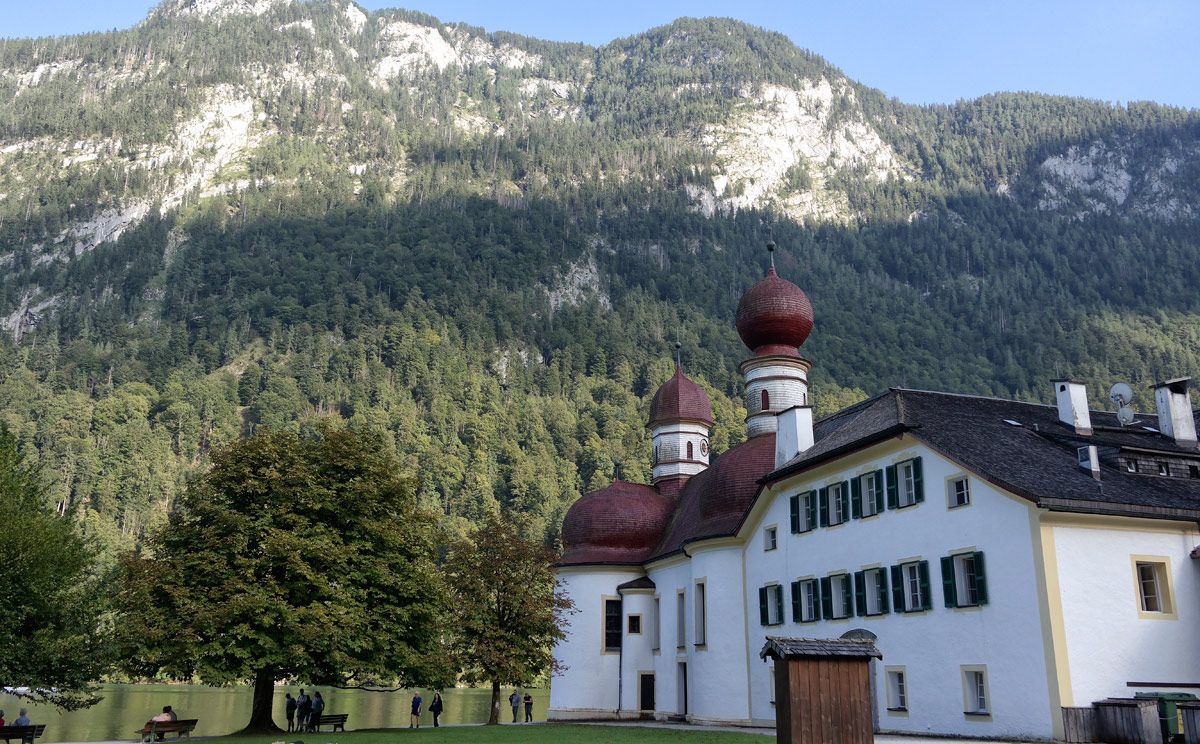
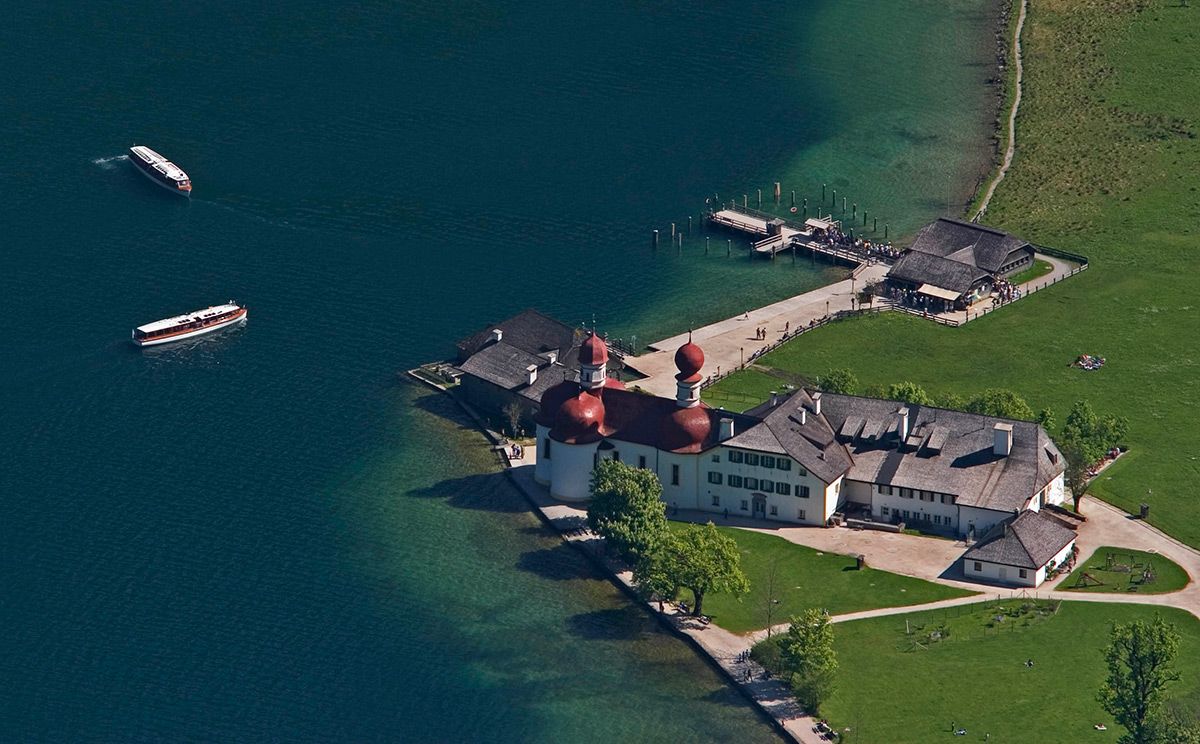
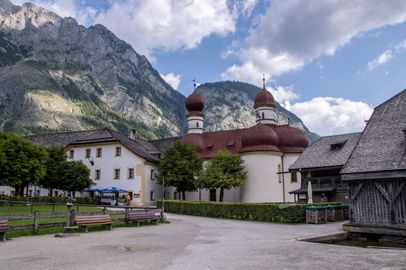
The circular structure on the west side dates from 1733 and connected the church to the hunting lodge. The door is now bricked up. The two-bay nave from the 12th century is flanked by the two circular structures. In 1522, the church’s patron saint changed. Saint Bartholomew, patron saint of shepherds and alpine herders, became the church’s patron. Through the current entrance on the south side, visitors find themselves in the center of the church upon entering. The pulpit and the princely oratory, by their positioning, mark the functional separation between the nave and the choir. To the west, on a gallery, is the oratory for the canons. The stucco work on the vault echoes the round and angular shapes of the floor plan, creating a sense of spatial continuity that enhances the interior’s unified overall effect. In the central conch stands the Baroque high altar, dedicated to the church’s patron saint. The altarpiece also depicts the martyrdom of St. Bartholomew. In the pull-out panel above it is a scene of the Coronation of the Virgin by the Holy Trinity: God the Father, the Son, and the Holy Spirit. In the two semicircular niches on the east side are two donor altars dedicated to St. Catherine and St. James, the patron saint of pilgrims.
Saint Bartholomew
Saint Bartholomew was one of the Twelve Apostles. After the events of Pentecost, he is said to have traveled to Persia to preach the Christian faith there. According to legend, he converted, among others, the Armenian king. As a result, the king’s rival brother is said to have ordered Bartholomew’s death. He had him beaten with clubs and flayed alive. Bartholomew was then crucified upside down. The high altarpiece depicts the martyrdom of the church’s patron saint, whose feast day is August 24.
Spiritual Reflection
And God saw everything that He had made, and behold, it was very good. And there was evening, and there was morning: the sixth day. Genesis 1:31
Here, in the heart of Berchtesgaden National Park, the beauty of creation reveals itself to you in a unique way. As you leave the church, take a moment to experience nature with all your senses. Close your eyes and breathe in the fresh air. Then open your eyes again and take in the landscape even more consciously. Perhaps that will be the moment to say “thank you” for our world.
St. Bartholomä traditional restaurant at Königssee
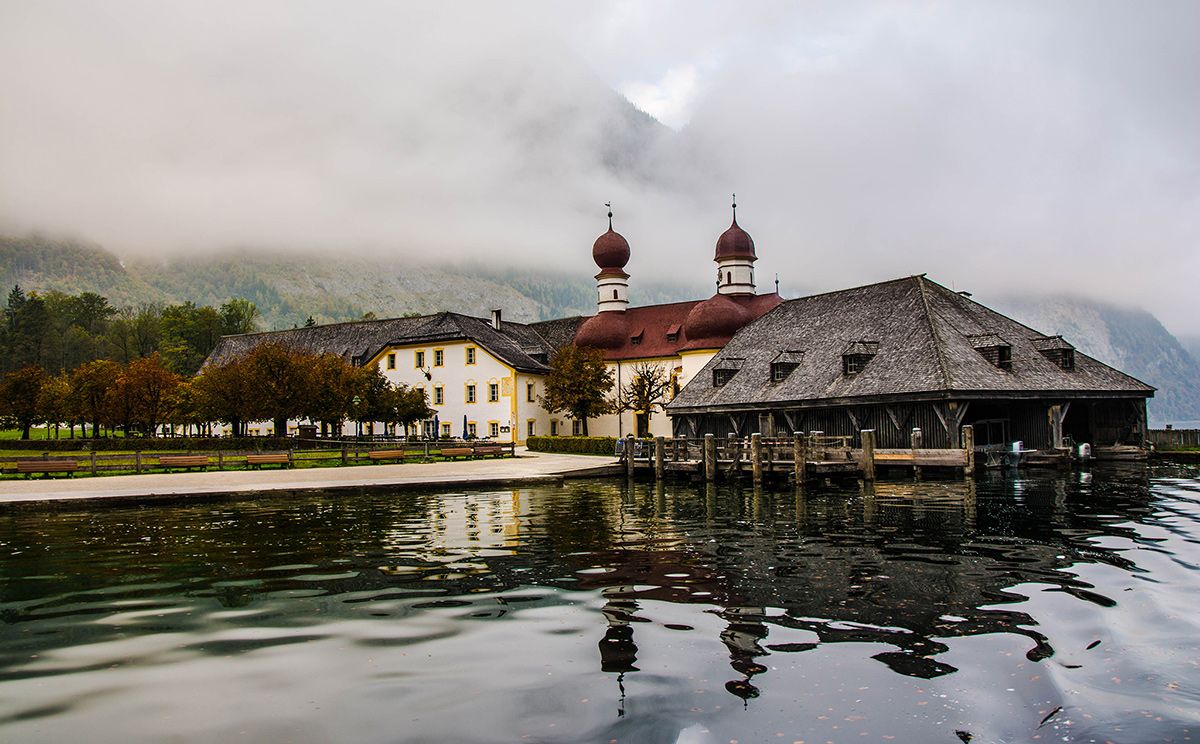
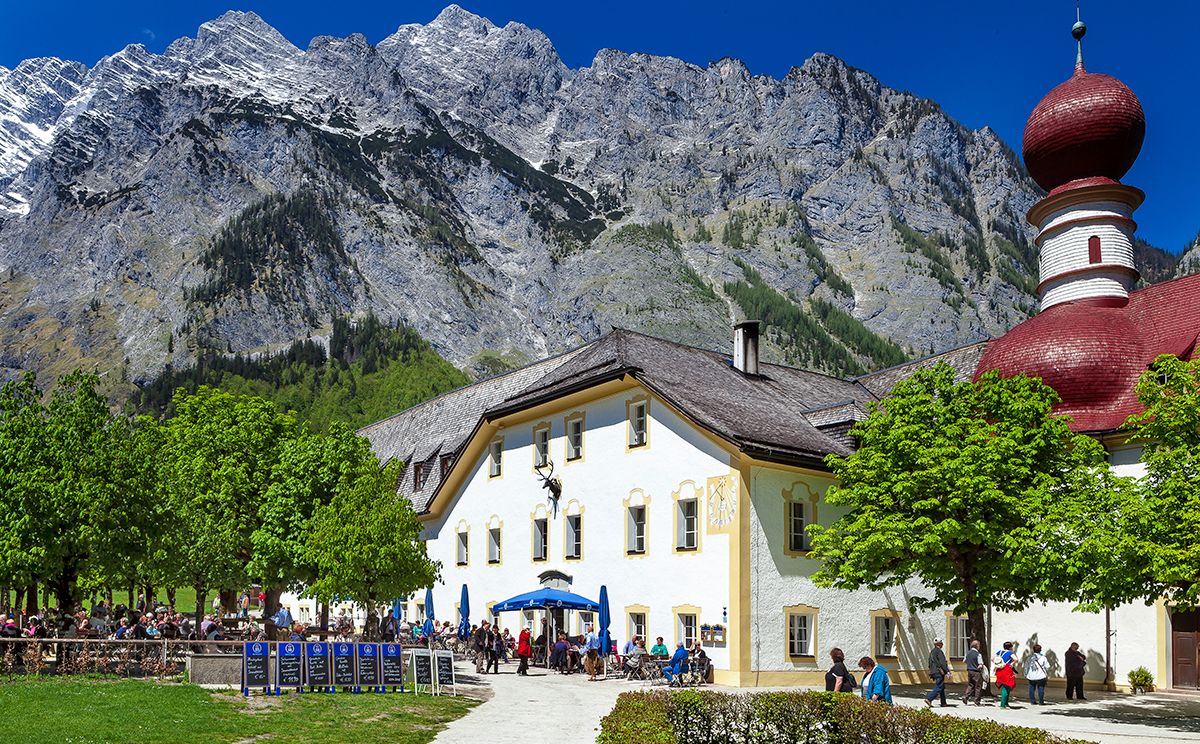
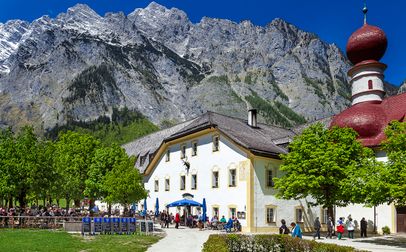
A fisherman’s cottage once stood on the site of the former hunting lodge and today’s restaurant. Around the year 1700, the current building was constructed as a hunting lodge. However, it was more of a functional structure with a rustic character than an actual castle. The Prince-Provosts of Berchtesgaden used the building as a simple hunting lodge until 1803. After secularization, when the Berchtesgaden Augustinian Abbey passed to the House of Wittelsbach, the hunting lodge also came into their possession in 1810. Prince Regent Luitpold of Bavaria, in particular, loved to spend time in St. Bartholomä to go hunting with his guests. The dining room was named “Hoheit” in memory of the Prince Regent.
Since 1912, visitors, hikers, and pilgrims have enjoyed food and drinks beneath old chestnut trees and in the dining rooms. Today, the former hunting lodge is home to the historic St. Bartholomä restaurant, also known as Bartholomä-Wirt.