Cows aboard boats
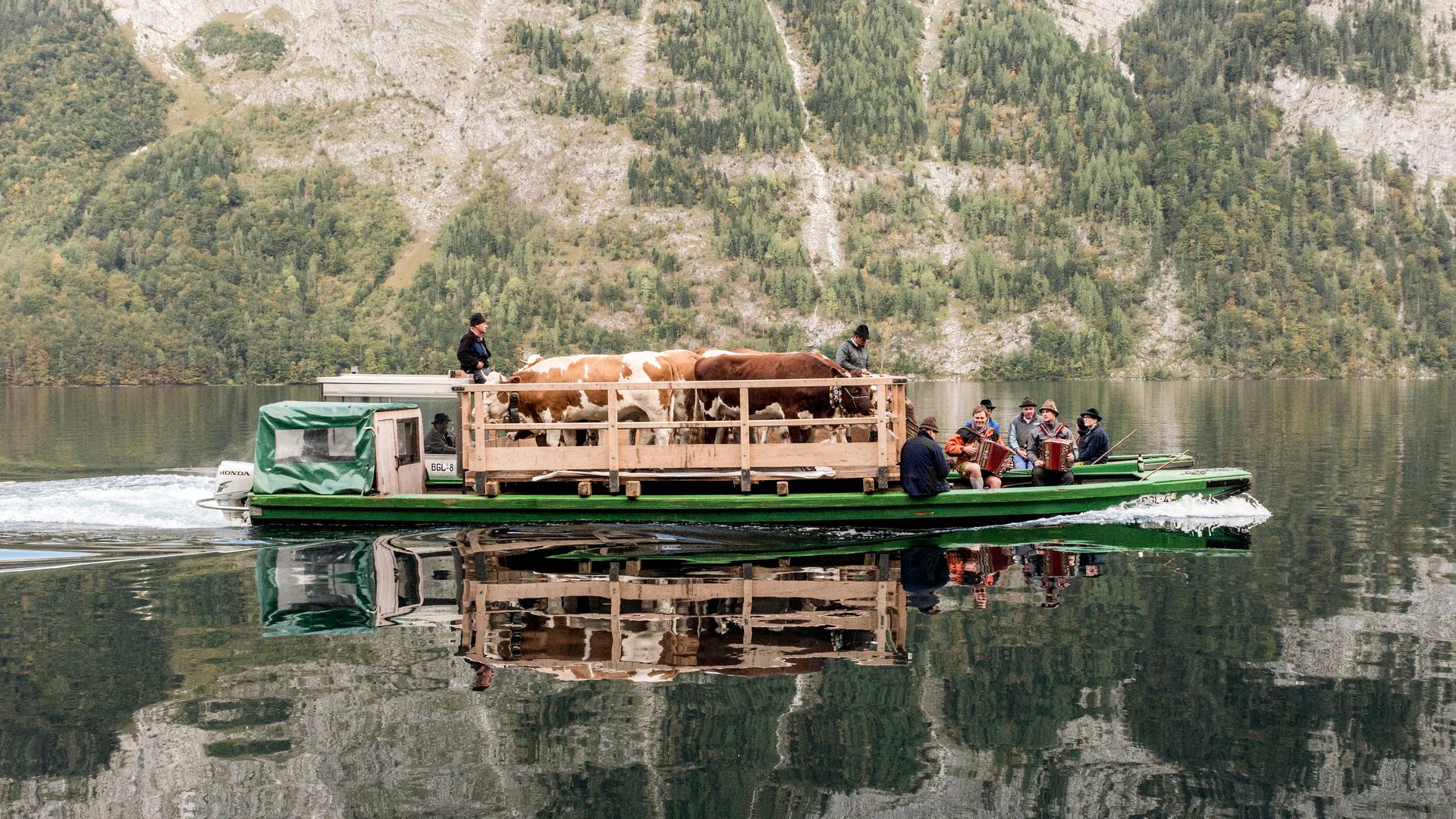
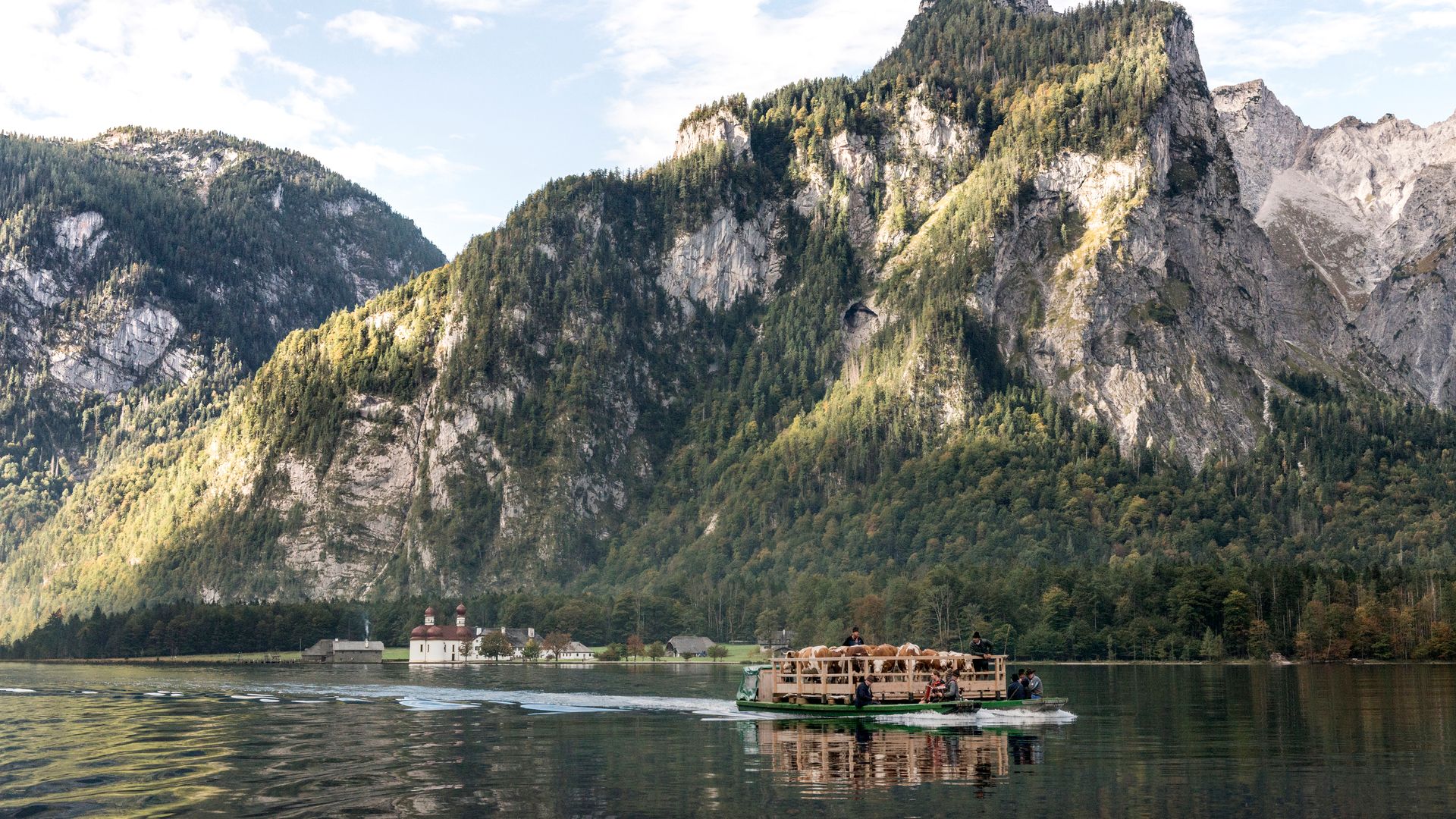
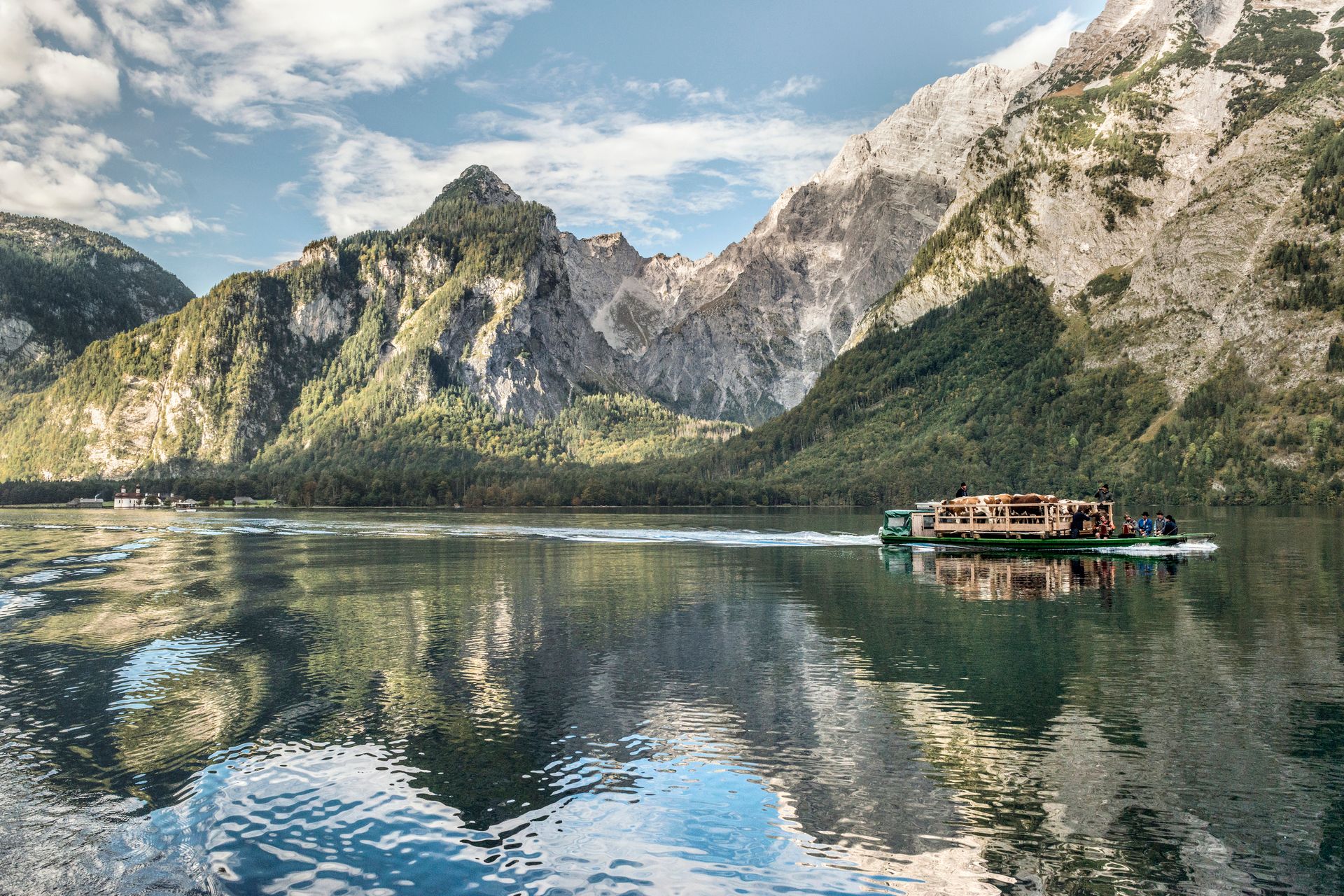
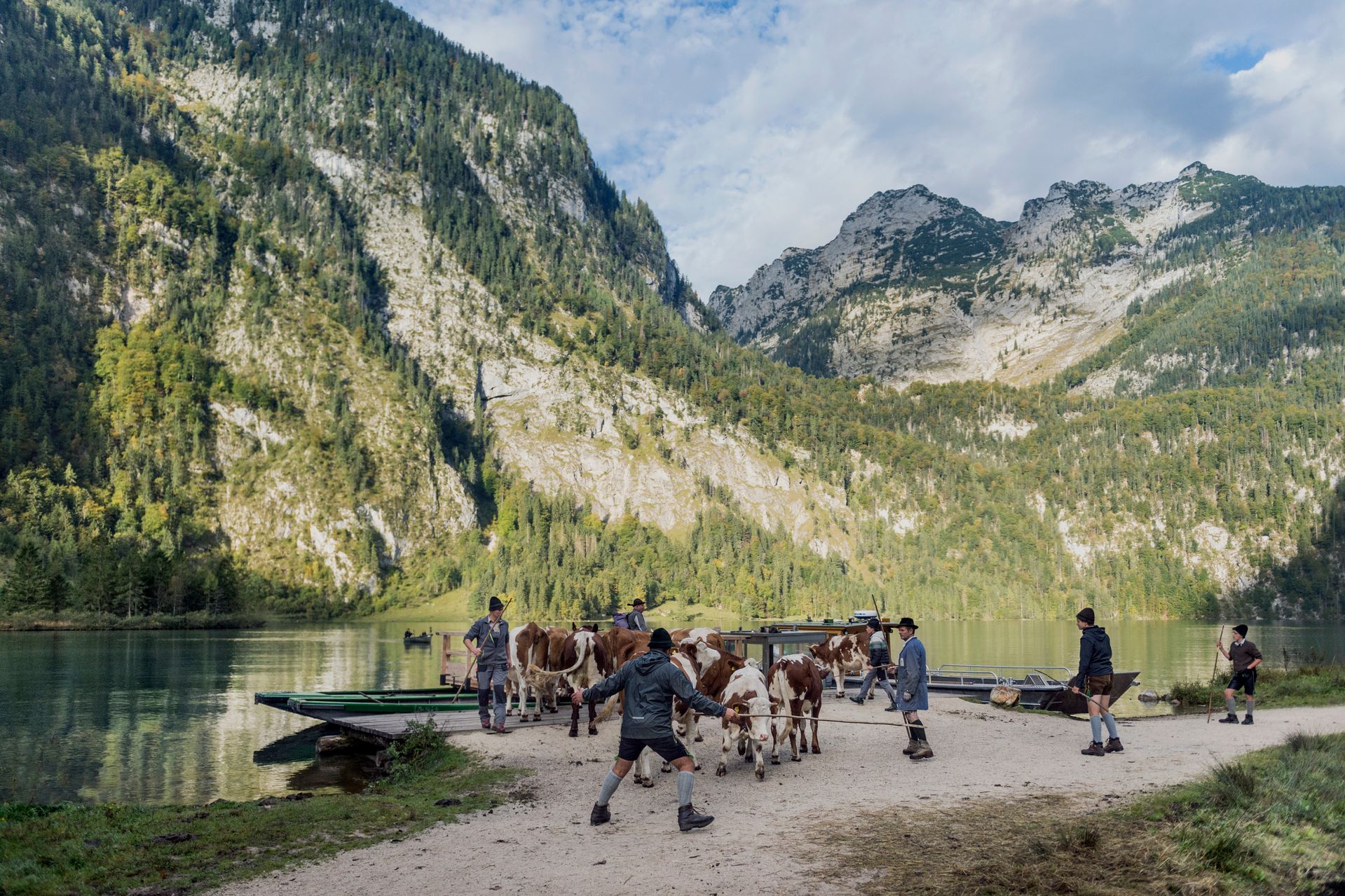
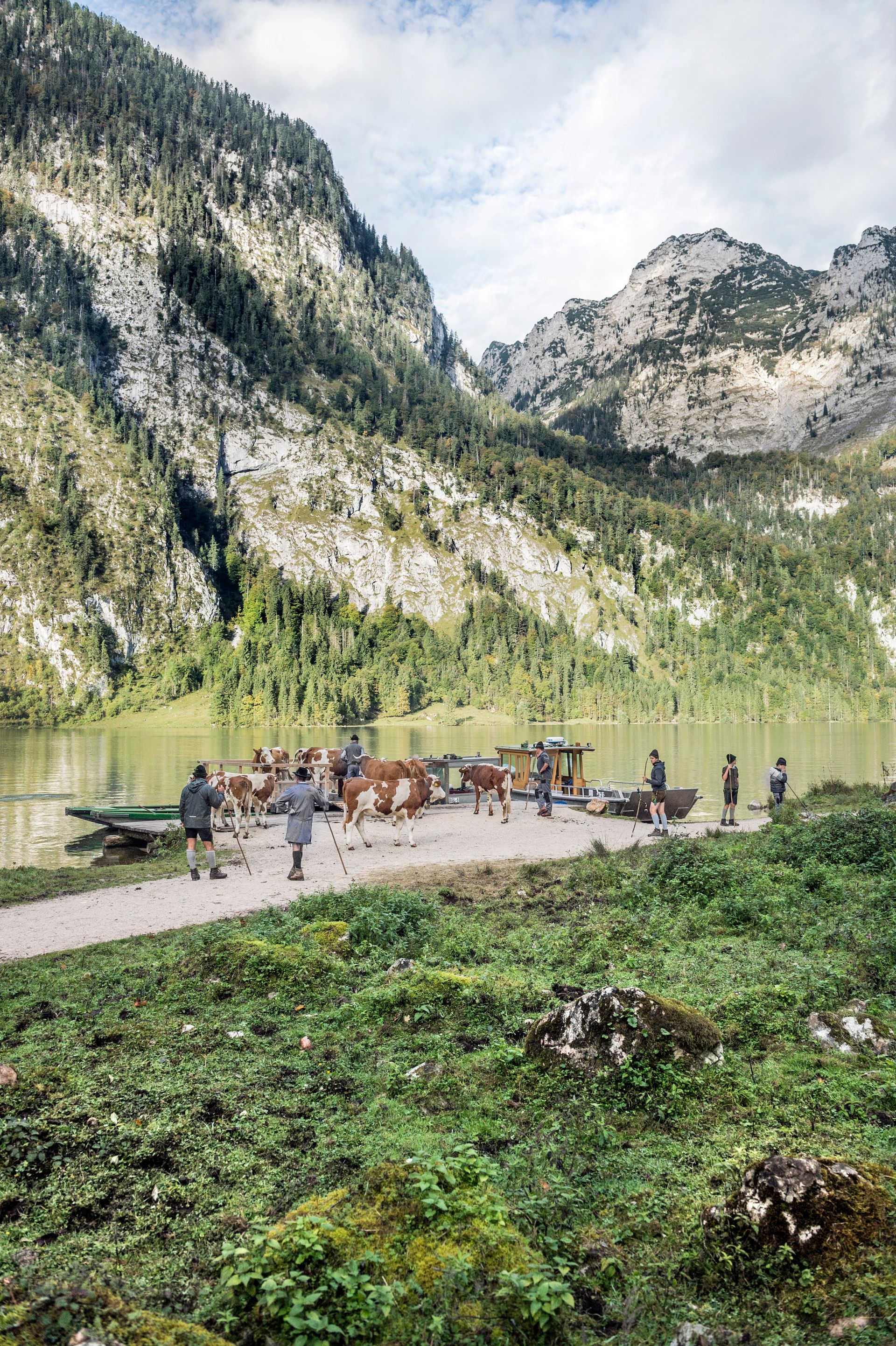
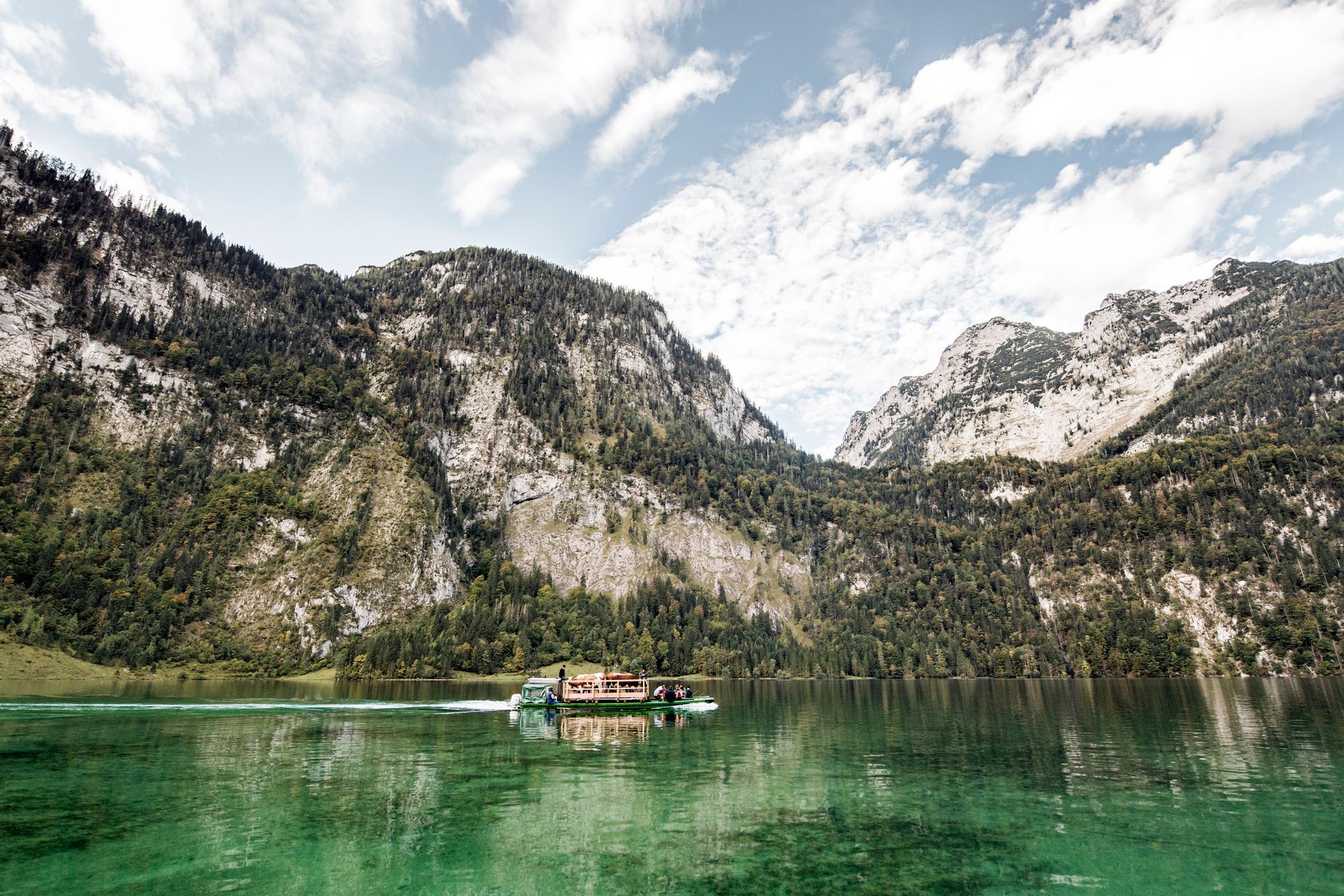
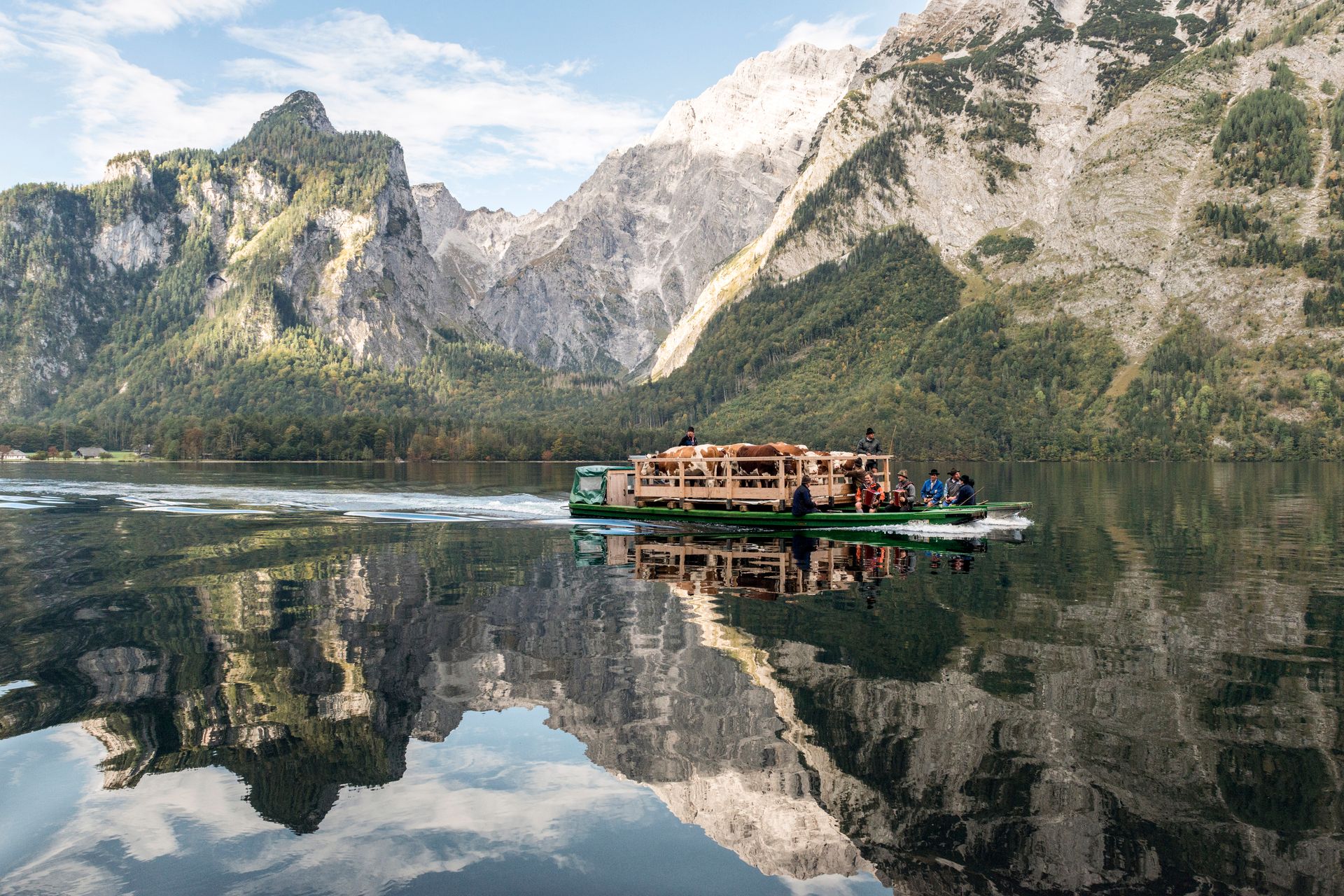
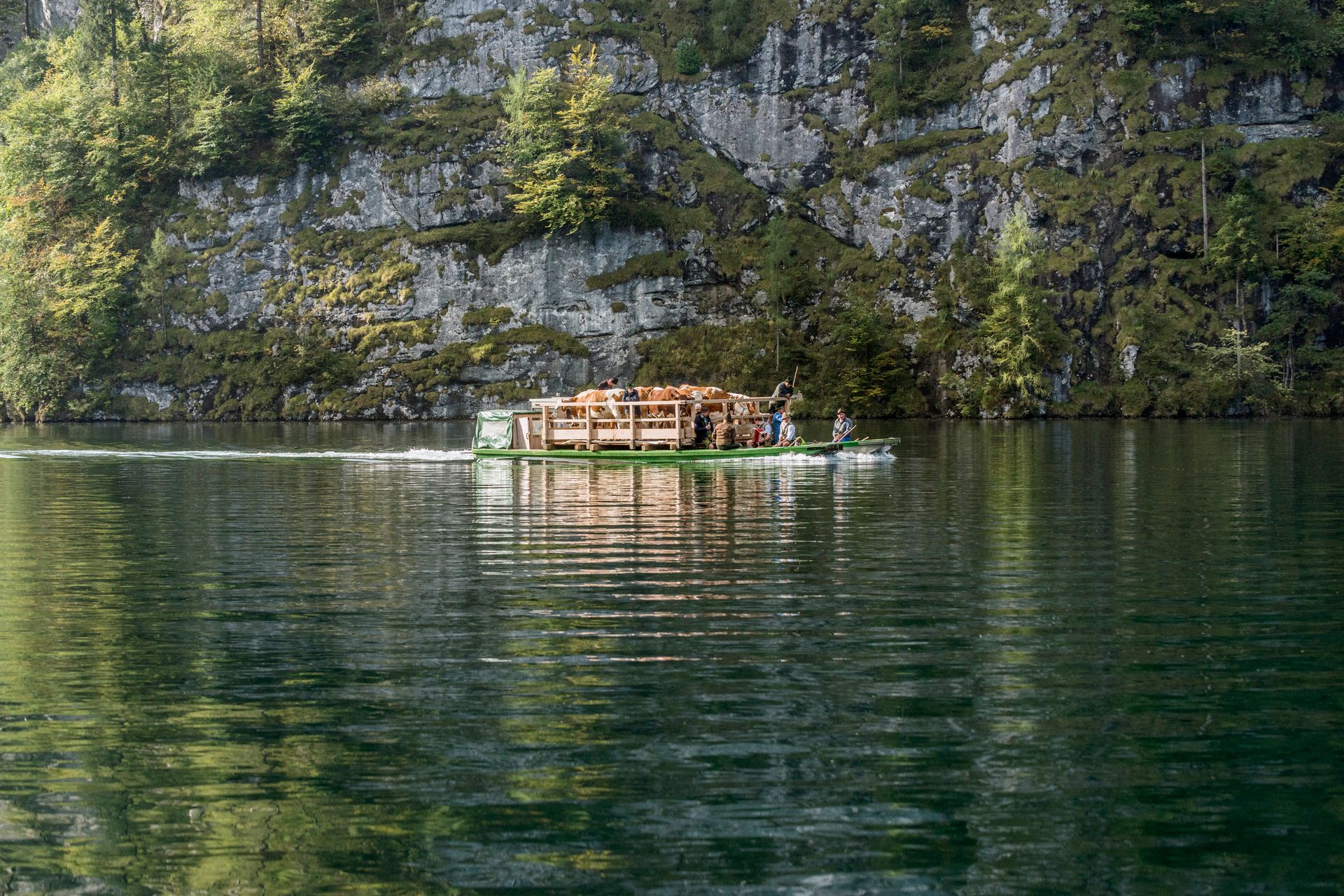
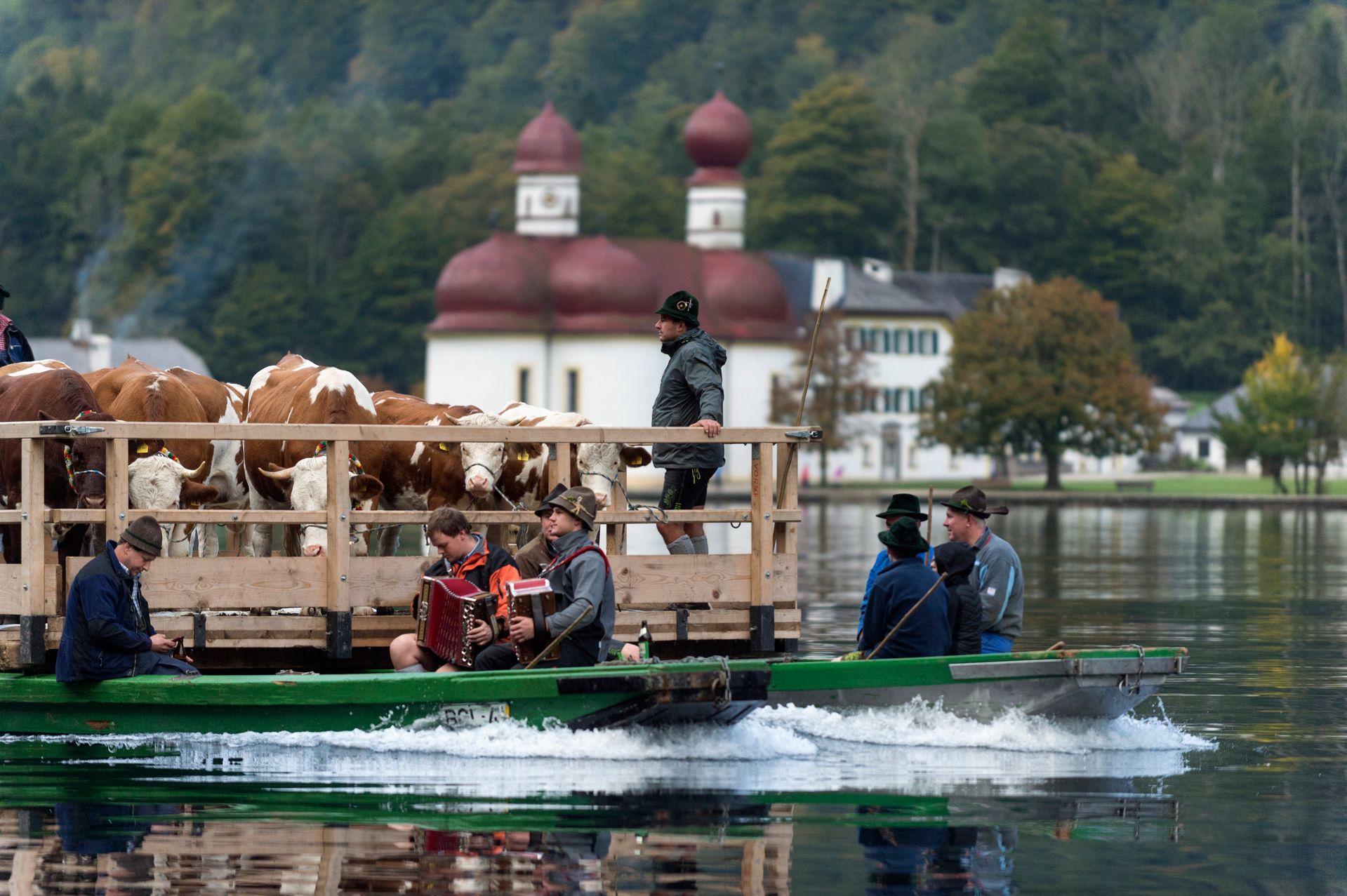
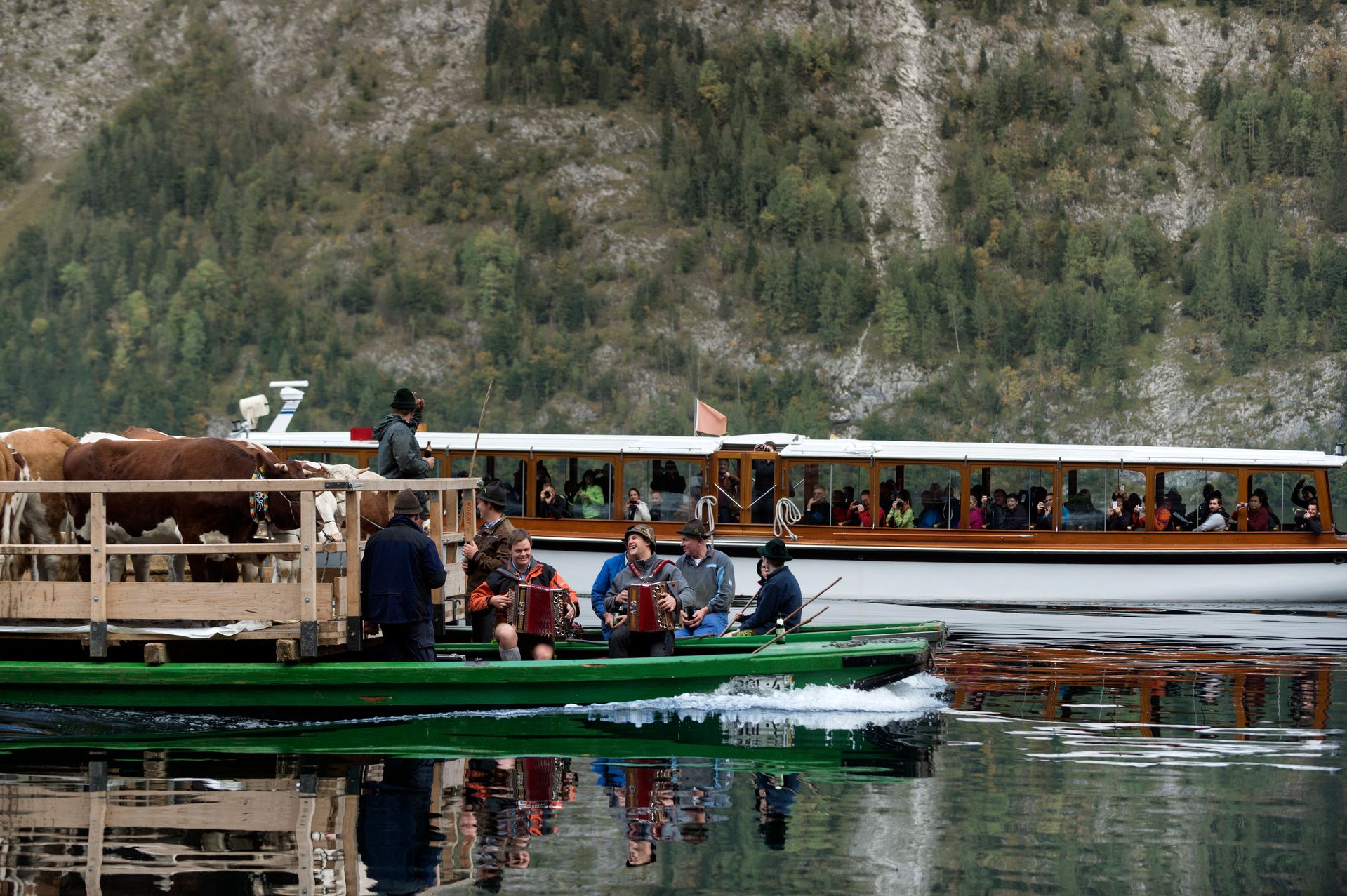
The cattle drive across KönigsseeIn early summer, large transport boats with flat bottoms and low entry ramps—known as Landauer boats—ferry cows and alpine herders from Seelände across to the eastern shore of Lake Königssee. There, the cattle spend around 100 days grazing the lush alpine pastures along the shores of Königssee and Obersee.
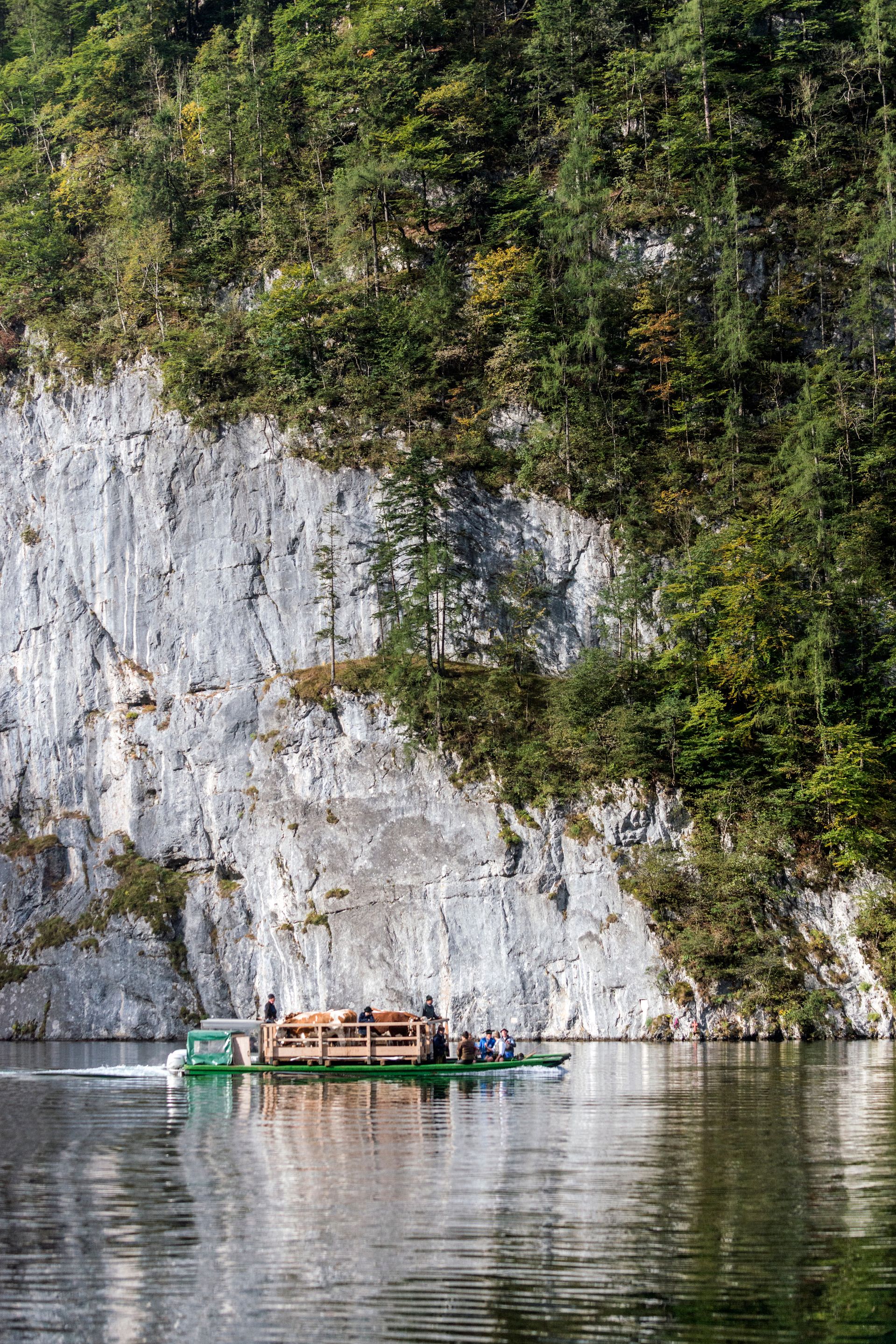
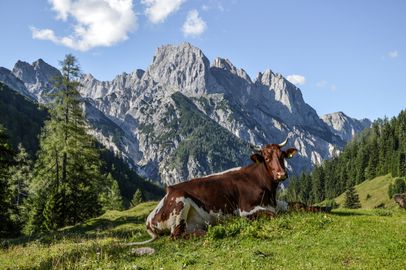
In the past, the cows were rowed across Königssee. For around 100 years now, however, gentle motor power has brought them back home. The roughly 30 cows returning from the alpine pastures on the southern shores of Königssee and Obersee are the only cattle in the entire Alpine region to travel home to their barns by boat—on a one-hour journey across the lake.
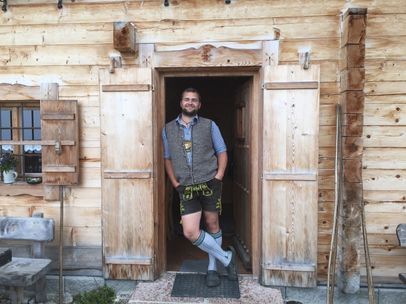
“Whether cows step onto a livestock trailer or onto a boat—it makes no difference in terms of excitement and stress,” says Max Hofreiter, one of the three farmers who send their cattle to spend the summer on the alpine pastures around Königssee and Obersee. During the boat transfer aboard the traditional wooden Landauer boats of the Königssee fleet, there has never been an accident. What can happen, however, is that a cow falls to its death on the mountain or a calf is stillborn on the alpine pasture. “Then there’s no decorating,” says Hofreiter. “All the work would have been for nothing.”
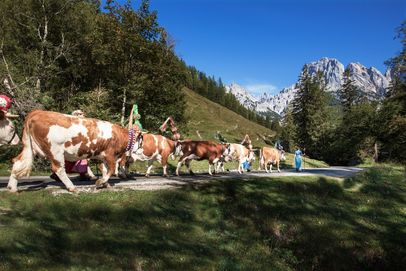
That work begins after August 24, the feast day of Saint Bartholomew, when the farmers start putting in long night shifts. It takes around 30 hours to complete a Fuikl — the elaborate crown-like headdress for the cows, crafted from small spruce trees whose branches are carefully bound together and decorated with handmade flowers and rosettes.
“Young cattle wear the slightly simpler Latschenboschen—those take about ten hours to make,” Hofreiter explains, speaking of many late nights spent crafting the decorations. The animals are only adorned once the boat trip is over and they have solid ground beneath their hooves again. And only if the alpine summer passed without misfortune.