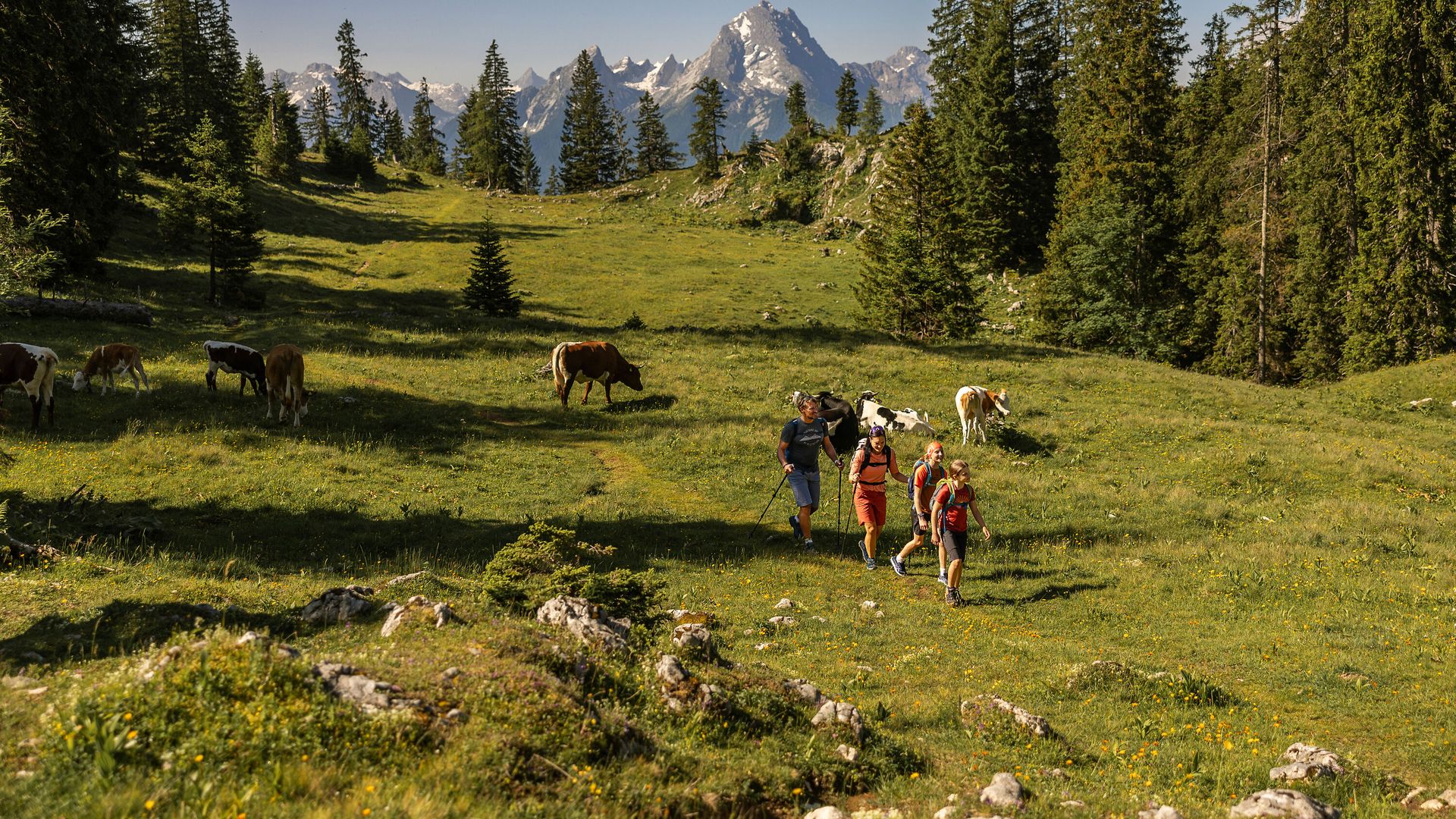
Staying safe around cows on alpine pastures

How to behave around grazing animals

During the summer months on alpine pastures, encounters between hikers and grazing animals can occasionally lead to risky situations. While reported incidents are very rare, it’s still important to stay alert when hiking across alpine meadows and other open grazing areas.

With a bit of awareness and the right behavior, you can easily avoid dangerous situations. Take a moment to understand how pasture animals behave—and follow a few simple guidelines to keep your hike safe and enjoyable.

Be especially cautious if you’re hiking with a dog. Crossing paths with a herd of cows can quickly become a critical situation.

On alpine pastures, you’ll encounter different types of cattle herds:

  • Mother cows and their calves: The young animals are curious, but be careful: Mother cows will impulsively defend their calves due to their strong protective instinct.
  • Young cattle: These younger animals are primarily boisterous, very active, and curious. Contact with humans can quickly lead to uncontrolled movements.
  • Dairy herds: This herd consists of cows that are milked regularly. The cows are accustomed to close contact with humans, which is why this type of herd behaves the most calmly.

How to behave around cows on alpine pastures

Stay on marked hiking trails whenever possible—but keep in mind that many routes across alpine pastures lead through open grazing areas. To help you avoid dangerous situations, the Bavarian Farmers’ Association has defined twelve key guidelines:

  1. An alpine pasture is not a petting zoo—avoid direct contact with animals.
  2. Don’t take selfies with grazing animals.
  3. Keep a safe distance.
  4. Give herds with calves a wide berth—mother cows will protect their calves.
  5. Move calmly and steadily through the pasture.
  6. Avoid sudden movements—animals can startle easily.
  7. Keep noise to a minimum.
  8. Never separate individual animals from the herd.
  9. Keep your dog on a leash! Cows instinctively react nervously to dogs. In case of danger: Let your dog off the leash.
  10. Watch for warning signs from the cows, such as lowering their heads, pawing the ground, or bellowing.
  11. Do not approach cows from the front. Cows have a wide peripheral vision.
  12. Never turn your back on cows without keeping an eye on them.

Caution: Dogs and cows on alpine pastures

If a hiker with a dog encounters a cow or a calf, the animal will usually stop and stare at the dog. It will lift and lower its head, crouch slightly, and snort—this means it is sniffing intensely because its vision is relatively poor. Then the cow usually takes a few, often slow, steps toward its target before breaking into a run.

Whenever possible, keep your distance from grazing animals—especially calves. Don’t pet or feed them. This can make them more reactive toward other hikers and lead to misunderstandings where people feel threatened. If a herd appears restless or animals begin to focus on you, keep your distance and, if needed, take a detour.

Always keep your dog on a leash and prevent it from approaching or chasing the herd. To cows—especially protective mothers—dogs can resemble potential predators and may be perceived as a threat. In Berchtesgaden National Park, leashes are mandatory, and the same applies across alpine pastures and grazing areas outside the park.

If a situation escalates, stay calm and do not run. In an absolute emergency, use a hiking pole to deliver a firm, targeted strike to the animal’s nose. Otherwise, move away slowly and steadily, without turning your back on the animals. That’s the safest way to handle a tense encounter. When possible, avoid crossing open grazing areas with your dog altogether.

That said, most cows on alpine pastures are calm and peaceful. Follow these guidelines, and nothing will stand in the way of a safe and enjoyable alpine hike.

Open pastures in the valley

Encounters between people and cows don’t just happen on alpine pastures high in the mountains. You’ll also come across free-range grazing areas down in the valley. Stay especially alert here: roads often run through these pastures, and cows may suddenly step onto the roadway.