

St. Sebastian Parish Church in Ramsau
One of Bavaria’s best-known churches- Open at all times
- Ramsau
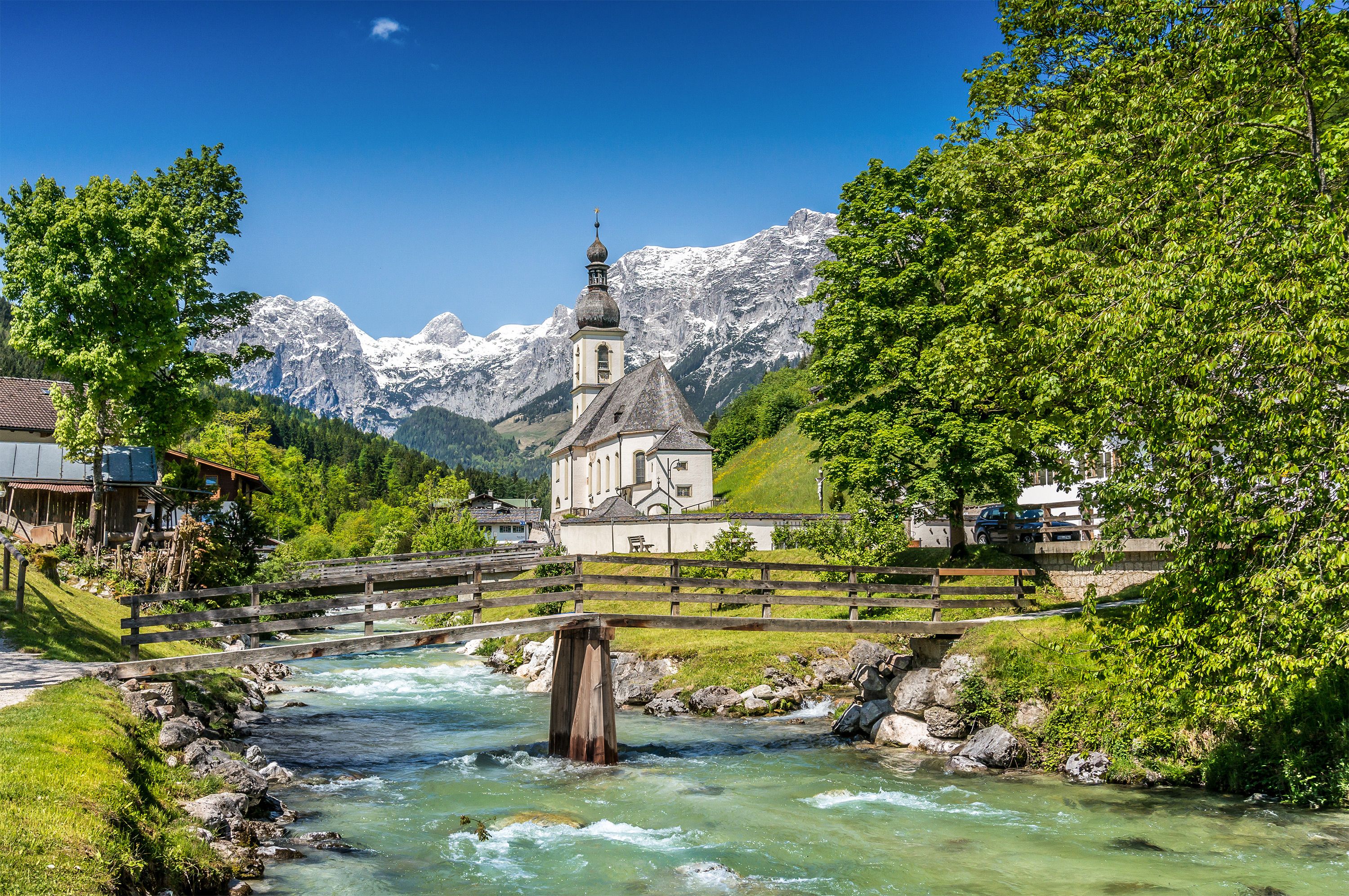
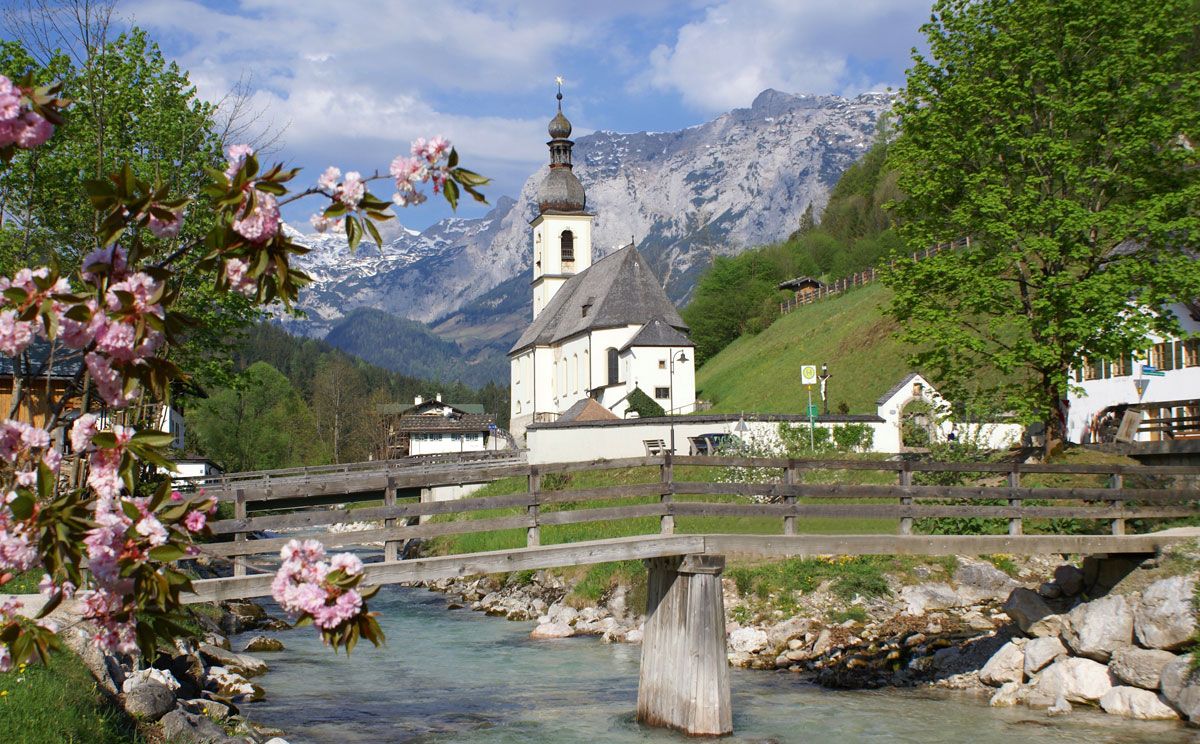
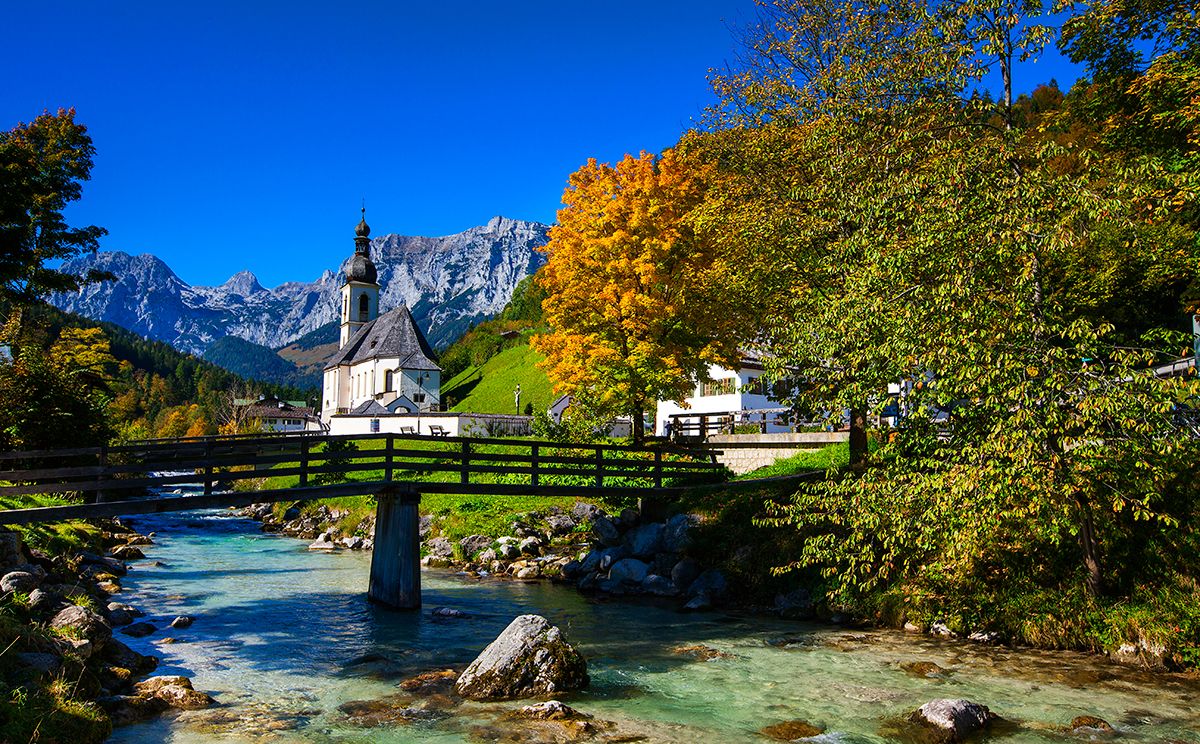
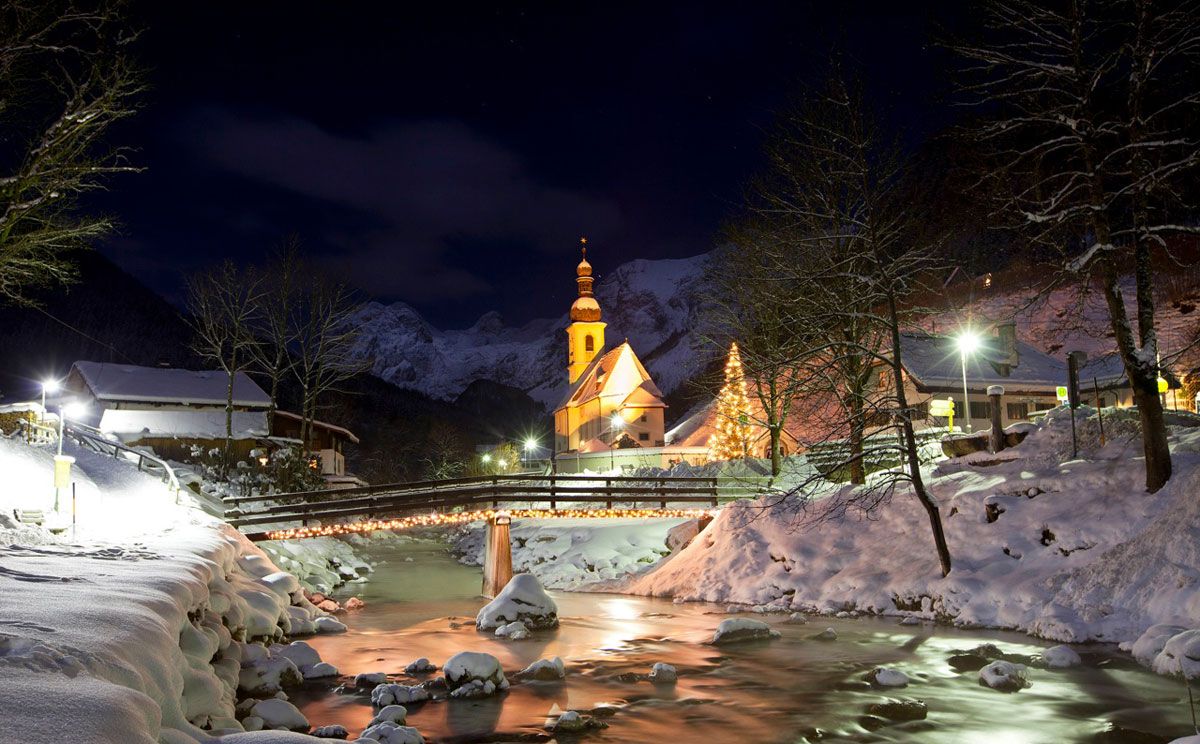
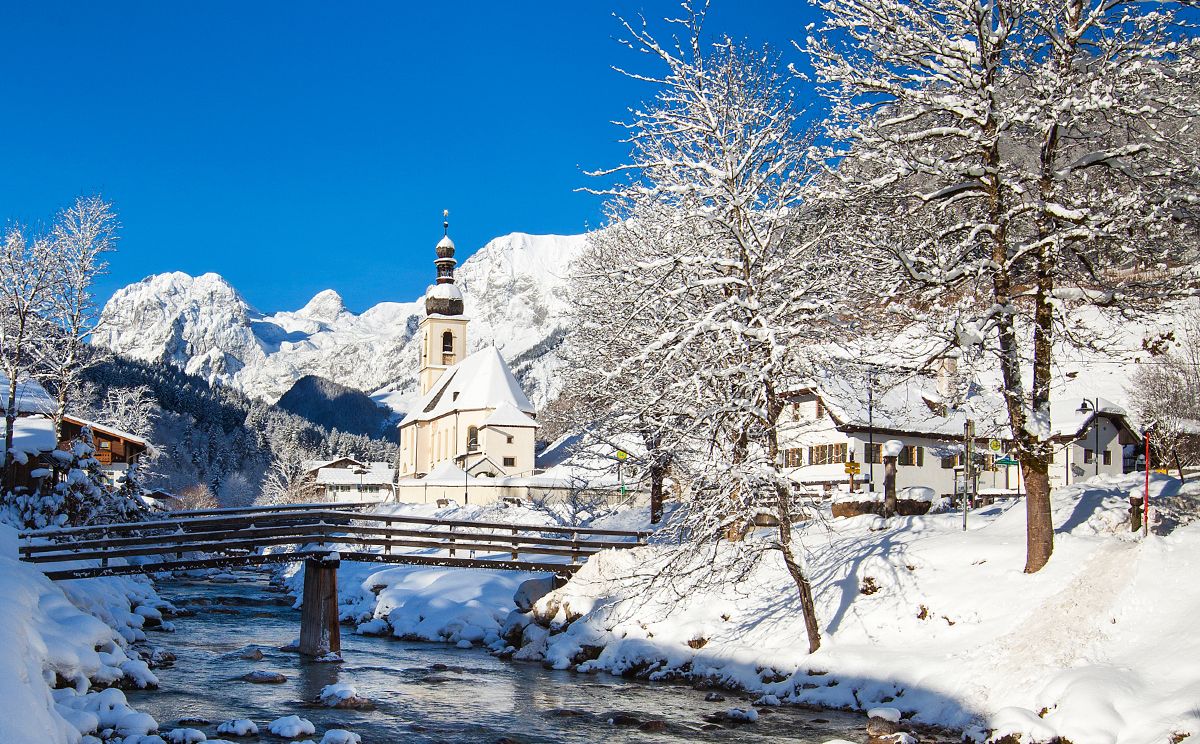
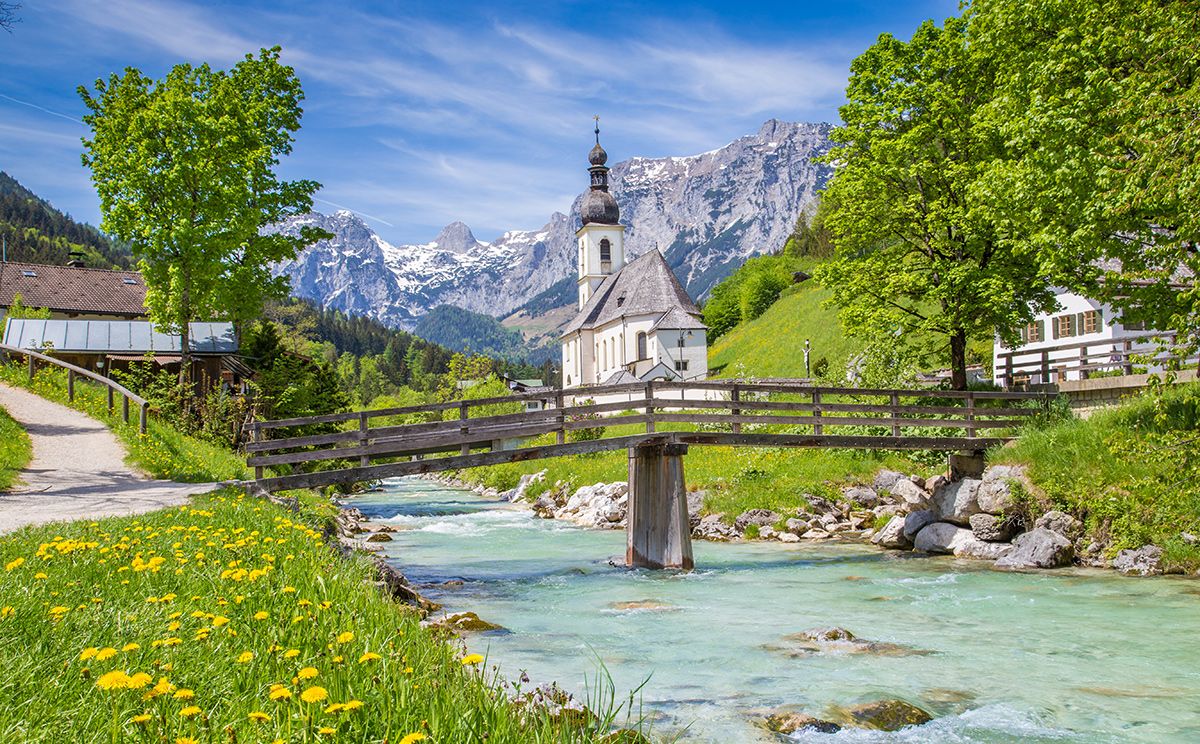
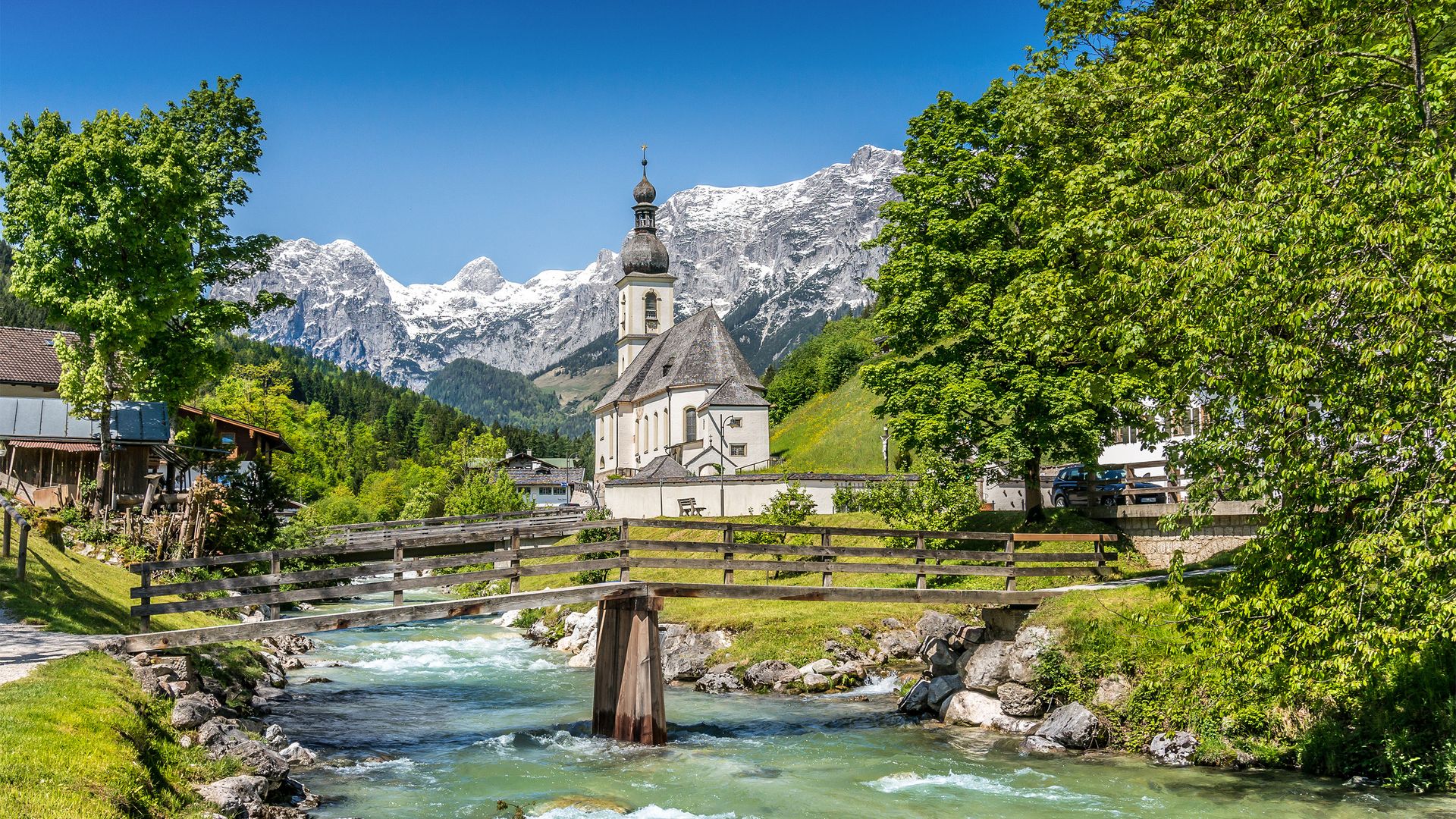
St. Sebastian Church is a place of spiritual inspiration set against the impressive backdrop of the Berchtesgaden Alps. With the Reiter Alm massif rising behind it, it’s no wonder the church is such a popular photo motif. The historic Oberwirt was once a wine tavern and lodging place for travelers and haulers along the old trade route through Ramsau.
In the mountaineering village of Ramsau, you’ll discover one of Bavaria’s best-known churches: St. Sebastian Parish Church. Just a few meters away is the historic Oberwirt, a traditional Ramsau inn popular with locals and visitors alike.
The name and history of Ramsau
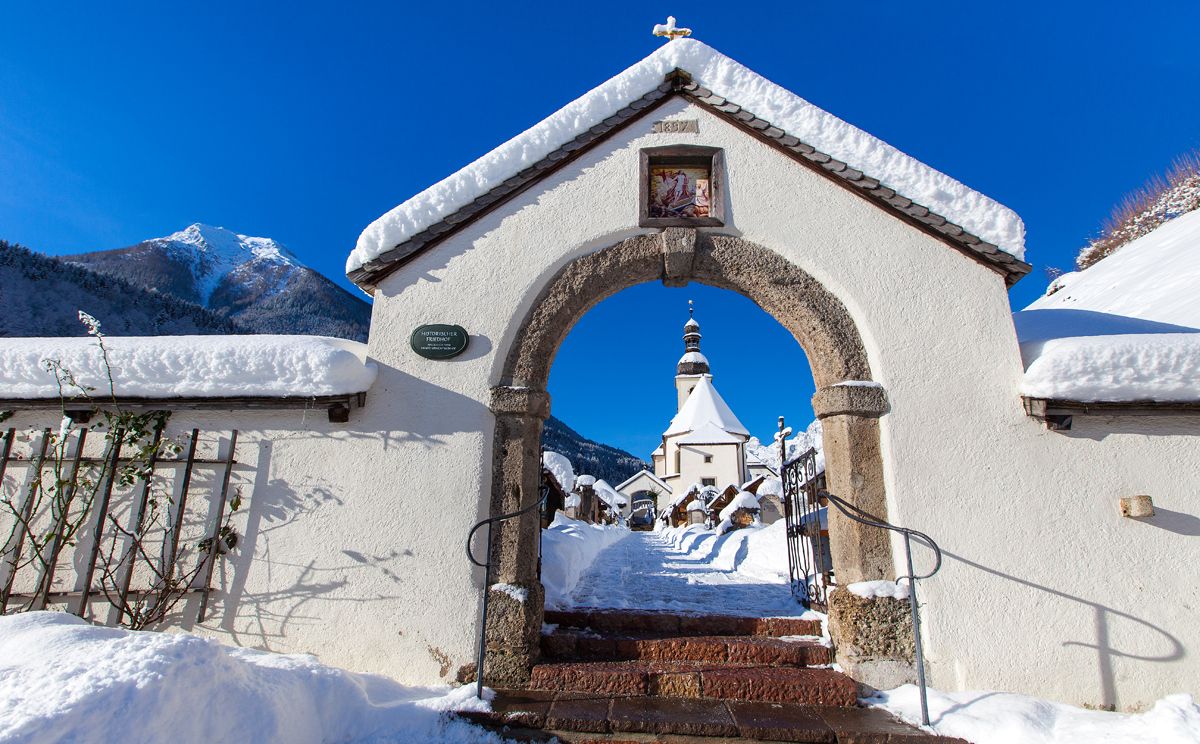
Ramsau was first documented in 1295 as “ramsaw.” The place name probably derives from the Tyrolean words rams, meaning debris deposited by water, and au, meaning fertile land beside water. Construction of the church began in 1512 along the old trade route used by salt packhorse drivers traveling between Berchtesgaden and Hirschbichl Pass in Pinzgau, Austria, close to an existing tavern. It was probably built in response to strong demand from local residents, as their mother church in Berchtesgaden was several hours away on foot. Today, the church surrounded by its historic cemetery, the former sacristan’s house, and the rectory to the west form an impressive architectural ensemble.
St. Sebastian Parish Church in Ramsau
The church in Ramsau was built in 1512 under Prince-Provost Gregor Rainer and is dedicated to St. Sebastian and St. Fabian. Particularly noteworthy are the intricately carved figures of Christ and the Twelve Apostles dating from the 15th century. For 150 years, the church was served from Berchtesgaden. Beginning in 1657, a canon lived at the church as an independent vicar, and a rectory was established for him in 1659. Today, you enter the parish church from the west through the portal at the base of the tower, which dates from 1700. On the organ gallery in the two-bay extension stands a very rare and historically significant Steinmeyer organ with sliderless windchests and mechanical key and stop action.
Along the gallery parapet, twelve figures of the Apostles dating from around 1420/30 stand out for their individual attributes. The saints are delicately carved with a courtly elegance. Particularly characteristic are the soft, graceful folds of their garments, which fall in deep curves from the waist. At the center is Christ as Salvator Mundi (“Savior of the World”), an artistic motif that emerged in the Late Middle Ages. Christ raises his right hand in blessing and holds an orb topped by a cross in his left. The orb symbolizes Christ’s dominion over the world. Researchers are uncertain about the figures’ original intended location because they predate the construction of the church.
Turn your gaze eastward and the high altar draws your eye into the narrower, three-bay original Late Gothic structure. The Early Baroque altarpiece comes from an earlier altar and depicts the martyrdom of St. Sebastian, tied to a tree and pierced by arrows. The figure to the left represents St. Wendelin, patron saint of herdsmen. To the right stands St. Roch, depicted with a pilgrim’s staff and a plague sore. Above the altarpiece in the center, St. George is shown fighting the dragon. The angel on the left side of the pediment, holding scales for weighing souls and a flaming sword, is the Archangel Michael.
The church has been immortalized by renowned landscape painters, particularly from the viewpoint known as Malerwinkel, with the Ramsauer Ache and Ertlsteg footbridge in the foreground and Reiter Alm in the background. This iconic view of St. Sebastian has also become a classic motif on photographs and postcards.